

Climatic Factors Responsible for Plant Phenological Changes
Plant seasonal phenological processes have an important role in regulation of the
hydrological cycle as well as the energy exchange process between terrestrial
ecosystems and the surrounding atmosphere. Similarly, plant response towards
climate change can help us in interpretation of climate. After the era of
industrialisation when climatic factors were being disturbed by anthropogenic activity, an imbalance between these factors was created that may lead to changes in plant
phenology. To study the extent of impact of these changes on forest phenology, first
we need to know the relationship between climatic factors and phenology. In this
chapter we mainly focus on only some important climatic factors such as carbon
dioxide concentration, temperature, precipitation, and photoperiod.
Carbon Dioxide Concentration
Carbon dioxide, which is an essential gas in the process of photosynthesis in
autotrophs, also regulates the phenology of plants and is observed to increase in
the atmosphere because of anthropogenic activities mainly resulting from
industrialisation. Statistical data show that before industrialisation (1750) carbon
dioxide concentration was 250 ppm, and the post-industrialisation era witnessed an
increase of carbon dioxide gas; in year 2000 it was elevated to 370 ppm, and further
increased to 412 ppm in 2019. This elevation is observed more in the Northern
Hemisphere because there is more human activity there compared to the Southern
Hemisphere. Concentration of carbon dioxide in the atmosphere rises and falls in
different seasons of a year and shows a Keeling curve. This variation is caused by the
activities of plants on Earth: through photosynthesis and respiration, plants consume
CO 2 gas during spring and summer, and release it in fall and winter seasons. After
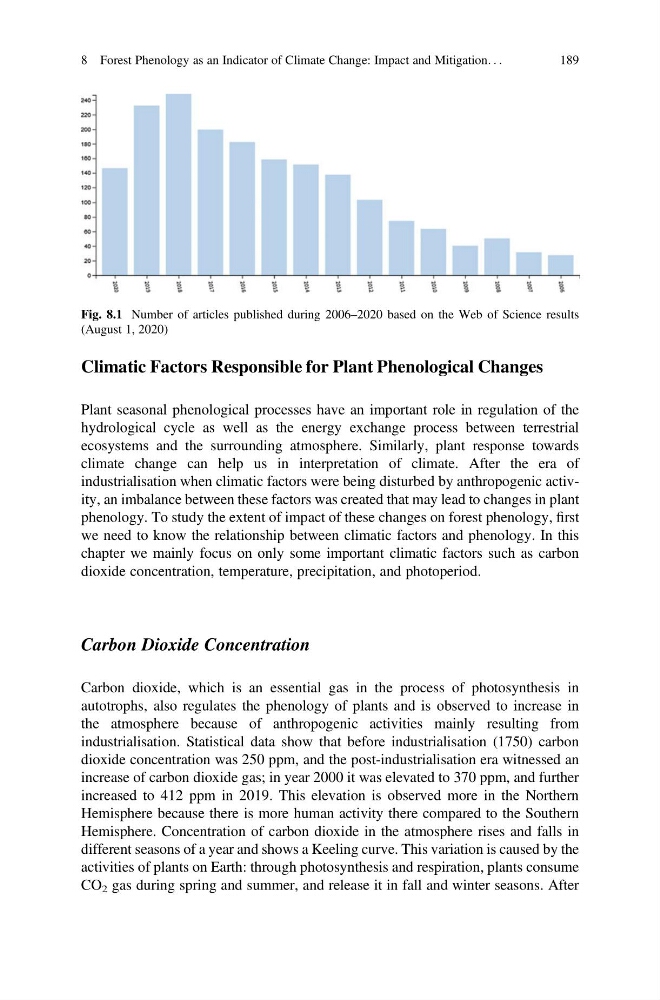
Fig. 8.1 Number of articles published during 2006–2020 based on the Web of Science results
(August 1, 2020)
8 Forest Phenology as an Indicator of Climate Change: Impact and Mitigation. . .
189
Plant seasonal phenological processes have an important role in regulation of the
hydrological cycle as well as the energy exchange process between terrestrial
ecosystems and the surrounding atmosphere. Similarly, plant response towards
climate change can help us in interpretation of climate. After the era of
industrialisation when climatic factors were being disturbed by anthropogenic activity, an imbalance between these factors was created that may lead to changes in plant
phenology. To study the extent of impact of these changes on forest phenology, first
we need to know the relationship between climatic factors and phenology. In this
chapter we mainly focus on only some important climatic factors such as carbon
dioxide concentration, temperature, precipitation, and photoperiod.
Carbon Dioxide Concentration
Carbon dioxide, which is an essential gas in the process of photosynthesis in
autotrophs, also regulates the phenology of plants and is observed to increase in
the atmosphere because of anthropogenic activities mainly resulting from
industrialisation. Statistical data show that before industrialisation (1750) carbon
dioxide concentration was 250 ppm, and the post-industrialisation era witnessed an
increase of carbon dioxide gas; in year 2000 it was elevated to 370 ppm, and further
increased to 412 ppm in 2019. This elevation is observed more in the Northern
Hemisphere because there is more human activity there compared to the Southern
Hemisphere. Concentration of carbon dioxide in the atmosphere rises and falls in
different seasons of a year and shows a Keeling curve. This variation is caused by the
activities of plants on Earth: through photosynthesis and respiration, plants consume
CO 2 gas during spring and summer, and release it in fall and winter seasons. After
Fig. 8.1 Number of articles published during 2006–2020 based on the Web of Science results
(August 1, 2020)
8 Forest Phenology as an Indicator of Climate Change: Impact and Mitigation. . .
189