

1.3 Prediction and Rationalisation of Energetic Material Sensitivity
25
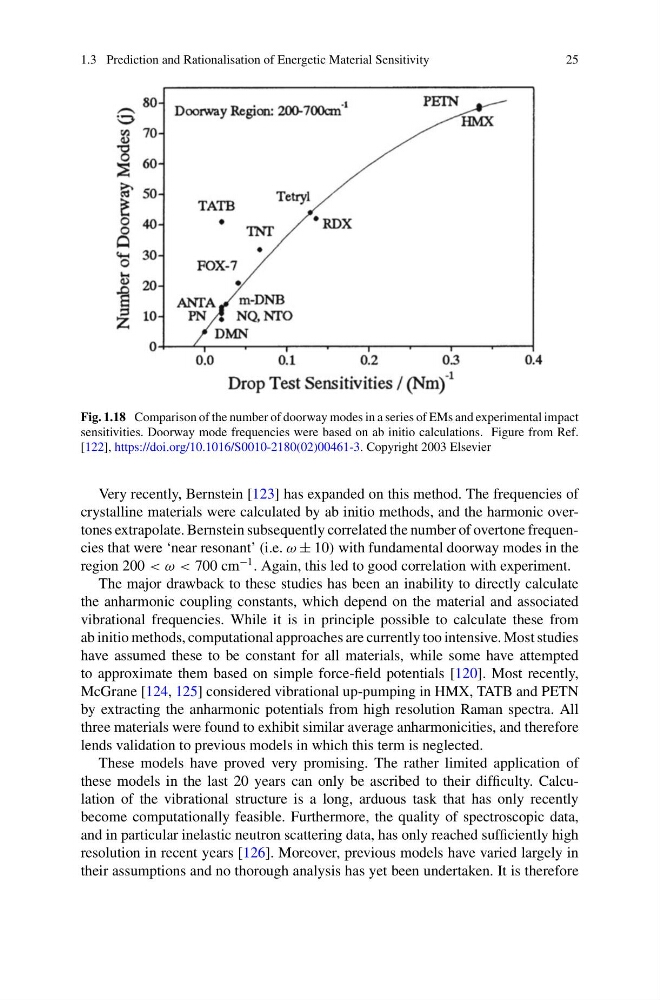
Fig. 1.18 Comparison of the number of doorway modes in a series of EMs and experimental impact
sensitivities. Doorway mode frequencies were based on ab initio calculations. Figure from Ref.
[122], https://doi.org/10.1016/S0010-2180(02)00461-3. Copyright 2003 Elsevier
Very recently, Bernstein [123] has expanded on this method. The frequencies of
crystalline materials were calculated by ab initio methods, and the harmonic overtones extrapolate. Bernstein subsequently correlated the number of overtone frequencies that were ‘near resonant’ (i.e. ω ± 10) with fundamental doorway modes in the
region 200 < ω < 700 cm
−1 . Again, this led to good correlation with experiment.
The major drawback to these studies has been an inability to directly calculate
the anharmonic coupling constants, which depend on the material and associated
vibrational frequencies. While it is in principle possible to calculate these from
ab initio methods, computational approaches are currently too intensive. Most studies
have assumed these to be constant for all materials, while some have attempted
to approximate them based on simple force-field potentials [120]. Most recently,
McGrane [124, 125] considered vibrational up-pumping in HMX, TATB and PETN
by extracting the anharmonic potentials from high resolution Raman spectra. All
three materials were found to exhibit similar average anharmonicities, and therefore
lends validation to previous models in which this term is neglected.
These models have proved very promising. The rather limited application of
these models in the last 20 years can only be ascribed to their difficulty. Calculation of the vibrational structure is a long, arduous task that has only recently
become computationally feasible. Furthermore, the quality of spectroscopic data,
and in particular inelastic neutron scattering data, has only reached sufficiently high
resolution in recent years [126]. Moreover, previous models have varied largely in
their assumptions and no thorough analysis has yet been undertaken. It is therefore
25
Fig. 1.18 Comparison of the number of doorway modes in a series of EMs and experimental impact
sensitivities. Doorway mode frequencies were based on ab initio calculations. Figure from Ref.
[122], https://doi.org/10.1016/S0010-2180(02)00461-3. Copyright 2003 Elsevier
Very recently, Bernstein [123] has expanded on this method. The frequencies of
crystalline materials were calculated by ab initio methods, and the harmonic overtones extrapolate. Bernstein subsequently correlated the number of overtone frequencies that were ‘near resonant’ (i.e. ω ± 10) with fundamental doorway modes in the
region 200 < ω < 700 cm
−1 . Again, this led to good correlation with experiment.
The major drawback to these studies has been an inability to directly calculate
the anharmonic coupling constants, which depend on the material and associated
vibrational frequencies. While it is in principle possible to calculate these from
ab initio methods, computational approaches are currently too intensive. Most studies
have assumed these to be constant for all materials, while some have attempted
to approximate them based on simple force-field potentials [120]. Most recently,
McGrane [124, 125] considered vibrational up-pumping in HMX, TATB and PETN
by extracting the anharmonic potentials from high resolution Raman spectra. All
three materials were found to exhibit similar average anharmonicities, and therefore
lends validation to previous models in which this term is neglected.
These models have proved very promising. The rather limited application of
these models in the last 20 years can only be ascribed to their difficulty. Calculation of the vibrational structure is a long, arduous task that has only recently
become computationally feasible. Furthermore, the quality of spectroscopic data,
and in particular inelastic neutron scattering data, has only reached sufficiently high
resolution in recent years [126]. Moreover, previous models have varied largely in
their assumptions and no thorough analysis has yet been undertaken. It is therefore