

that Acari and Collembola are associated with specific ectomycorrhizal fungi,
whereas other soil mesofauna are associated with a broader range of fungal species.
This finding also suggests Acari and Collembola may serve as indicators for specific
ectomycorrhizal species.
Given the tendency of Acari and Collembola to associate with specific
ectomycorrhizal fungi and their importance in the uptake of ectomycorrhizae in
soil, we focused on identifying which species of ectomycorrhizal fungi are associated with Acari and Collembola at the four study sites. The results are shown in
Fig. 3.11. At Akita, Acari showed high peak for Laccaria sp., and Collembola
showed high peaks for Paxillus sp. and Tuber sp. At Chokai, Acari-associated
fungi were dominated by Phyllactinia sp., Tuber sp., and Laccaria sp., whereas
Collembola from the same site were associated with Inocybe sp. and Paxillus sp. In
Collembola at Ikari, Trichoderma sp. and Inocybe sp. were detected. At Iwaki, the
predominant ectomycorrhizal fungi consumed by Acari were Trichoderma sp. and
Tuber sp., whereas at Nagano, Acari were predominantly associated with Laccaria
sp. and Collembola with Paxillus sp.
Inonotus sp. (Basidiomycota: Hymenochaetales) causes a common fungal disease
of birch trees, including Betula ermanii, and Laccaria sp. (Basidiomycota:
Agaricales) is a common mycorrhizal symbiont (Martin et al. 2008; Plett et al.
2011) that Acari is reported to prefer for grazing (Schneider et al. 2005).
Trichoderma sp. is a fast-growing soil fungus reported to be effective for biocontrol
of plant-pathogenic fungi and soil-borne disease (Wells et al. 1972), whereas
Phyllactinia sp. is an Ascomycete known to cause powdery mildew on leaves and
stems in a broad range of host plants, including Quercus serrata (Homma 1937),
which is present at two of our study sites. Tuber species are obligate ectomycorrhizal
fungi and form ectomycorrhizal associations with pine (Pinus spp.), fir (Abies spp.),
birch (Betula spp.), aspen (Populus spp.), oak (Quercus spp.), hazel (Corylus
avellana L.), and rockrose (Cistus spp.) and also form mycorrhizal associations
with orchids (Bidartondo et al. 2004; De Roman et al. 2005). In Japan, Inocybe
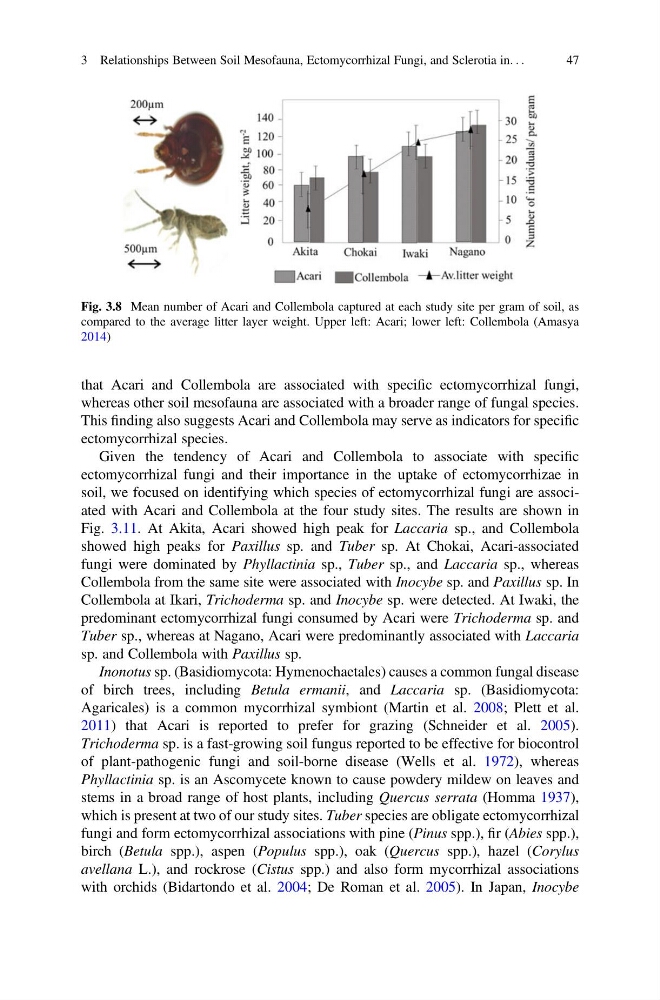
Fig. 3.8 Mean number of Acari and Collembola captured at each study site per gram of soil, as
compared to the average litter layer weight. Upper left: Acari; lower left: Collembola (Amasya
2014)
3 Relationships Between Soil Mesofauna, Ectomycorrhizal Fungi, and Sclerotia in. . .
47
whereas other soil mesofauna are associated with a broader range of fungal species.
This finding also suggests Acari and Collembola may serve as indicators for specific
ectomycorrhizal species.
Given the tendency of Acari and Collembola to associate with specific
ectomycorrhizal fungi and their importance in the uptake of ectomycorrhizae in
soil, we focused on identifying which species of ectomycorrhizal fungi are associated with Acari and Collembola at the four study sites. The results are shown in
Fig. 3.11. At Akita, Acari showed high peak for Laccaria sp., and Collembola
showed high peaks for Paxillus sp. and Tuber sp. At Chokai, Acari-associated
fungi were dominated by Phyllactinia sp., Tuber sp., and Laccaria sp., whereas
Collembola from the same site were associated with Inocybe sp. and Paxillus sp. In
Collembola at Ikari, Trichoderma sp. and Inocybe sp. were detected. At Iwaki, the
predominant ectomycorrhizal fungi consumed by Acari were Trichoderma sp. and
Tuber sp., whereas at Nagano, Acari were predominantly associated with Laccaria
sp. and Collembola with Paxillus sp.
Inonotus sp. (Basidiomycota: Hymenochaetales) causes a common fungal disease
of birch trees, including Betula ermanii, and Laccaria sp. (Basidiomycota:
Agaricales) is a common mycorrhizal symbiont (Martin et al. 2008; Plett et al.
2011) that Acari is reported to prefer for grazing (Schneider et al. 2005).
Trichoderma sp. is a fast-growing soil fungus reported to be effective for biocontrol
of plant-pathogenic fungi and soil-borne disease (Wells et al. 1972), whereas
Phyllactinia sp. is an Ascomycete known to cause powdery mildew on leaves and
stems in a broad range of host plants, including Quercus serrata (Homma 1937),
which is present at two of our study sites. Tuber species are obligate ectomycorrhizal
fungi and form ectomycorrhizal associations with pine (Pinus spp.), fir (Abies spp.),
birch (Betula spp.), aspen (Populus spp.), oak (Quercus spp.), hazel (Corylus
avellana L.), and rockrose (Cistus spp.) and also form mycorrhizal associations
with orchids (Bidartondo et al. 2004; De Roman et al. 2005). In Japan, Inocybe
Fig. 3.8 Mean number of Acari and Collembola captured at each study site per gram of soil, as
compared to the average litter layer weight. Upper left: Acari; lower left: Collembola (Amasya
2014)
3 Relationships Between Soil Mesofauna, Ectomycorrhizal Fungi, and Sclerotia in. . .
47