

Copper oxalate is most likely produced by viable cells as a detoxification process
carried out in fungal beads. According to Wen et al. (2016), ECM fungi enhanced
nutrient absorption in host plant, which likely promoted a higher Cu tolerance in
pine. C. geophilum has beneficial effects on heavy metal phytoextraction (Wen et al.
2016). Recent studies showed that, C. geophilum can withstand high Cu concentration in the in vitro experiments (Chen et al. 2015; Wen et al. 2016; Tang et al. 2018).
The benefits of ECM in contaminated soil with heavy metal can reduce the potential
toxicity of accumulated heavy metals, and host plants may show no toxic symptoms
(Tang et al. 2018).
Cu is also a micronutrient needed in very small quantities by plants and may play
a part in several enzyme processes. Cu(II) can combine with enzymes, as well as
enzyme–substrate complexes (Huang and Shindo 2000). Tsekova et al. (2002)
studied the influence of Cu ions on the growth of Aspergillus niger in liquid culture
(KH 2 PO 4 , MgSO 4 Á 7H 2 O, CuSO 4 Á 5H 2 O, pH: 4.8–5.0) to elucidate the role of the
acid phosphatase activity of A. niger in heavy metal resistance and uptake. Their
in vitro study illustrated that A. niger showed optimal fungal growth and good metal
sorption uptake at pH 4.8–5.0. Moreover, their study revealed that the resistance of
A. niger to Cu and its Cu(II) uptake ability are probably connected with the
overproduction of acid phosphatase. Yoshida et al. (1988) reported a high inhibitory
effect of Cu ions on the novel acid phosphatase activity of the fungus Penicillium
funiculosum.
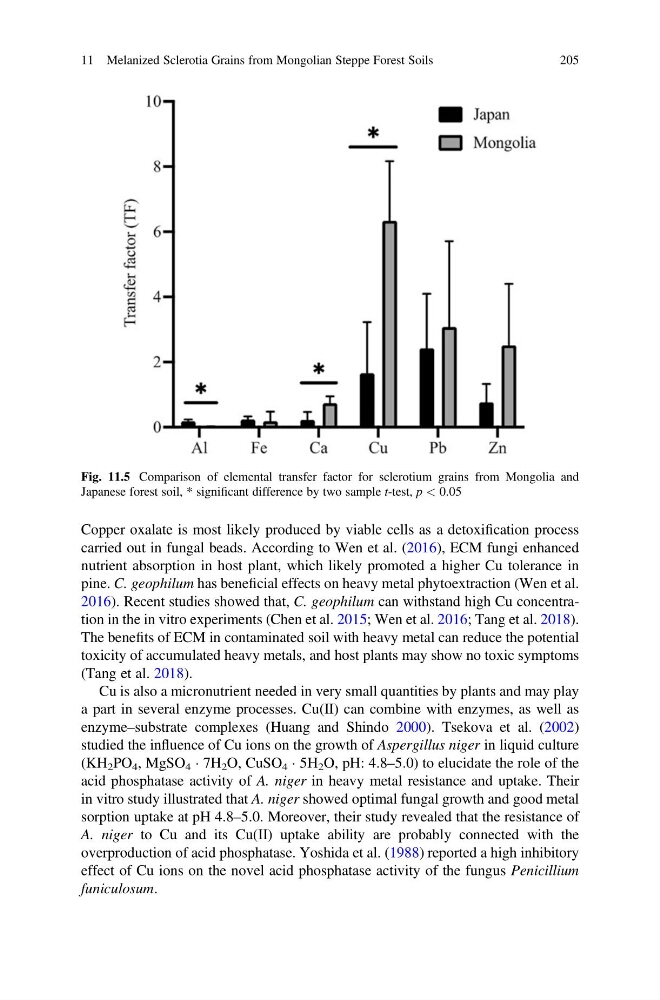
Fig. 11.5 Comparison of elemental transfer factor for sclerotium grains from Mongolia and
Japanese forest soil, * significant difference by two sample t-test, p < 0.05
11 Melanized Sclerotia Grains from Mongolian Steppe Forest Soils
205
carried out in fungal beads. According to Wen et al. (2016), ECM fungi enhanced
nutrient absorption in host plant, which likely promoted a higher Cu tolerance in
pine. C. geophilum has beneficial effects on heavy metal phytoextraction (Wen et al.
2016). Recent studies showed that, C. geophilum can withstand high Cu concentration in the in vitro experiments (Chen et al. 2015; Wen et al. 2016; Tang et al. 2018).
The benefits of ECM in contaminated soil with heavy metal can reduce the potential
toxicity of accumulated heavy metals, and host plants may show no toxic symptoms
(Tang et al. 2018).
Cu is also a micronutrient needed in very small quantities by plants and may play
a part in several enzyme processes. Cu(II) can combine with enzymes, as well as
enzyme–substrate complexes (Huang and Shindo 2000). Tsekova et al. (2002)
studied the influence of Cu ions on the growth of Aspergillus niger in liquid culture
(KH 2 PO 4 , MgSO 4 Á 7H 2 O, CuSO 4 Á 5H 2 O, pH: 4.8–5.0) to elucidate the role of the
acid phosphatase activity of A. niger in heavy metal resistance and uptake. Their
in vitro study illustrated that A. niger showed optimal fungal growth and good metal
sorption uptake at pH 4.8–5.0. Moreover, their study revealed that the resistance of
A. niger to Cu and its Cu(II) uptake ability are probably connected with the
overproduction of acid phosphatase. Yoshida et al. (1988) reported a high inhibitory
effect of Cu ions on the novel acid phosphatase activity of the fungus Penicillium
funiculosum.
Fig. 11.5 Comparison of elemental transfer factor for sclerotium grains from Mongolia and
Japanese forest soil, * significant difference by two sample t-test, p < 0.05
11 Melanized Sclerotia Grains from Mongolian Steppe Forest Soils
205