

mechanism to stop CH 4 while its interaction with CO 2 gives
better surface diffusion across the membrane (Thompson
et al. 2014).
Increase in membrane tensile strength indicates good
dispersion of particles in the polymer matrix and good
interaction between polymer and filler (Basu et al. 2011).
Increase in membrane thermal stability results from an
increase in rigidity of polymer chains and thus restricts
motion of polymer chain due to particle disruption (Zornoza
et al. 2011a, b; Basu et al. 2011). The key factors in
developing ideal MMM are high intrinsic properties of
MMM materials and good interaction between polymer and
filler. For continuous phase, glassy polymers are the
preferable choice since it is highly selective with moderate
gas permeability, while rubbery polymers have low intrinsic
selectivity (Aroon et al. 2010). As for the dispersed phase,
the selection of filler is dependent on the specific properties
to be improved, either permeability or selectivity. Table 5
compares the properties of polymeric, inorganic, and MMM
membranes. MMMs have the properties of both polymeric
and inorganic membranes with better performance and
stability.
3.3.1 Progress in MMM Development
To date, various potential MMMs have been explored and
well-documented in the literature highlighting the advantages and limitations suffered by the resulted membranes.
Zeolites as inorganic filler have been in the highlights due to
high intrinsic separation properties, high thermal, and
mechanical strength, as well as high chemical stability.
There are 218 different types of zeolite, only a few have
shown promising fillers in MMM for CO 2 /CH 4 separation
(Chen et al. 2015). Among them, zeolite 4A,
silicoaluminophosphate-34 (SAPO-34), faujasite (FAU),
and zeolite socony mobil-5 (ZSM-5) have been widely
reported to improve the gas separation properties (Zhang
et al. 2008). For example, boost CO 2 in permeability up to
140%, while providing 60% in CO 2 /CH 4 selectivity when
utilizing FAU/EMT zeolite into a polyimide matrix (Chen
et al. 2012). Similarly, Junaidi et al. (2014) reported that
CO 2 permeance increased from 105 to 706 GPU, while
CO 2 /CH 4 selectivity from 15 to 30.7 for asymmetric
PSF/SAPO-34 membrane. It is expected since slower diffusion of large gases (e.g., CH 4 , N 2 ) in zeolite channels
hindered its permeation, whereas smaller gas (e.g., CO 2 ) is
unaffected thus increasing both the CO 2 permeance and
CO 2 /CH 4 selectivity. Zeolite preference toward quadrupole
moment of CO 2 has hindered CH 4 permeation and increase
the gas pair selectivity. Combinations of preferential
adsorption and molecular sieving have emerged
MMM/zeolite as a potential pair for CO 2 /CH 4 separation.
Incorporation of carbon molecular sieve (CMS) into
polymer matrices has also been reported in past years. It is
expected that CMS to have good affinity with glassy polymers compared to other class of fillers due to carbon-rich
materials, thus allowing good adhesion at the interface
without leading to interfacial defects (Vu et al. 2003a). In a
series of their works, CMS was prepared using dense
Matrimid
® 5218 as a precursor before undergoing pyrolysis
at a final temperature of 800 °C for 2 h under vacuum. The
resulted MMM with CMS showed promising separation
properties with the CO 2 permeability of 43.5 barrer and
CO 2 /CH 4 selectivity of 200. The increase in separation
properties was attributed to the highly selective and permeable of the incorporated CMS (Vu et al. 2003b).
Despite having poor intrinsic CO 2 /CH 4 separation properties compared to zeolites and CMS, utilizing silica as fillers
MMM have also been investigated for CO 2 removal membrane. The embodiment of silica into polymer matrices
influence membrane performance distinctly compared to
Table 4 Advantages and
limitations of inorganic
membranes (Javaid 2005)
Advantages for inorganic
membranes
Limitation for inorganic membranes
High stability at high
temperatures and pressure
High capital costs
High resistance to harsh
environments
Brittleness (membrane cracking due to the brittleness and high
sensitivity to the temperature gradient
High resistance to
microbiological degradation
Low membrane surface area per module volume
Ease of cleanability after fouling
Difficult to achieve high selectivities at large scale
Ease of catalytic activation
Challenging for sealing of membrane into the module at high
temperatures
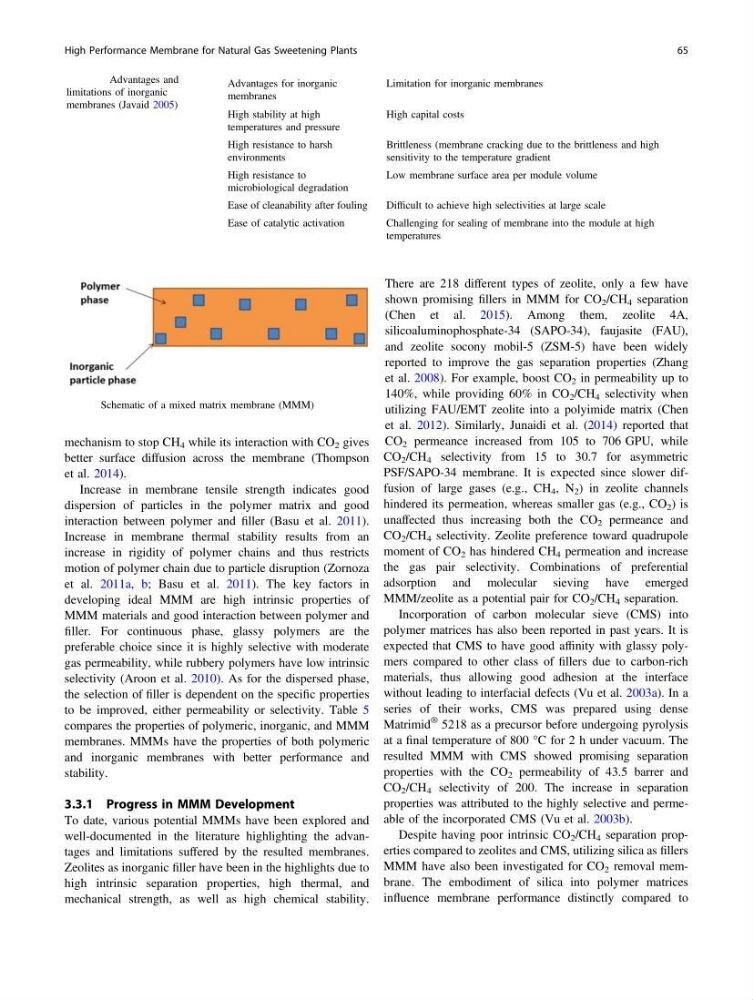
Fig. 4 Schematic of a mixed matrix membrane (MMM)
High Performance Membrane for Natural Gas Sweetening Plants
65
better surface diffusion across the membrane (Thompson
et al. 2014).
Increase in membrane tensile strength indicates good
dispersion of particles in the polymer matrix and good
interaction between polymer and filler (Basu et al. 2011).
Increase in membrane thermal stability results from an
increase in rigidity of polymer chains and thus restricts
motion of polymer chain due to particle disruption (Zornoza
et al. 2011a, b; Basu et al. 2011). The key factors in
developing ideal MMM are high intrinsic properties of
MMM materials and good interaction between polymer and
filler. For continuous phase, glassy polymers are the
preferable choice since it is highly selective with moderate
gas permeability, while rubbery polymers have low intrinsic
selectivity (Aroon et al. 2010). As for the dispersed phase,
the selection of filler is dependent on the specific properties
to be improved, either permeability or selectivity. Table 5
compares the properties of polymeric, inorganic, and MMM
membranes. MMMs have the properties of both polymeric
and inorganic membranes with better performance and
stability.
3.3.1 Progress in MMM Development
To date, various potential MMMs have been explored and
well-documented in the literature highlighting the advantages and limitations suffered by the resulted membranes.
Zeolites as inorganic filler have been in the highlights due to
high intrinsic separation properties, high thermal, and
mechanical strength, as well as high chemical stability.
There are 218 different types of zeolite, only a few have
shown promising fillers in MMM for CO 2 /CH 4 separation
(Chen et al. 2015). Among them, zeolite 4A,
silicoaluminophosphate-34 (SAPO-34), faujasite (FAU),
and zeolite socony mobil-5 (ZSM-5) have been widely
reported to improve the gas separation properties (Zhang
et al. 2008). For example, boost CO 2 in permeability up to
140%, while providing 60% in CO 2 /CH 4 selectivity when
utilizing FAU/EMT zeolite into a polyimide matrix (Chen
et al. 2012). Similarly, Junaidi et al. (2014) reported that
CO 2 permeance increased from 105 to 706 GPU, while
CO 2 /CH 4 selectivity from 15 to 30.7 for asymmetric
PSF/SAPO-34 membrane. It is expected since slower diffusion of large gases (e.g., CH 4 , N 2 ) in zeolite channels
hindered its permeation, whereas smaller gas (e.g., CO 2 ) is
unaffected thus increasing both the CO 2 permeance and
CO 2 /CH 4 selectivity. Zeolite preference toward quadrupole
moment of CO 2 has hindered CH 4 permeation and increase
the gas pair selectivity. Combinations of preferential
adsorption and molecular sieving have emerged
MMM/zeolite as a potential pair for CO 2 /CH 4 separation.
Incorporation of carbon molecular sieve (CMS) into
polymer matrices has also been reported in past years. It is
expected that CMS to have good affinity with glassy polymers compared to other class of fillers due to carbon-rich
materials, thus allowing good adhesion at the interface
without leading to interfacial defects (Vu et al. 2003a). In a
series of their works, CMS was prepared using dense
Matrimid
® 5218 as a precursor before undergoing pyrolysis
at a final temperature of 800 °C for 2 h under vacuum. The
resulted MMM with CMS showed promising separation
properties with the CO 2 permeability of 43.5 barrer and
CO 2 /CH 4 selectivity of 200. The increase in separation
properties was attributed to the highly selective and permeable of the incorporated CMS (Vu et al. 2003b).
Despite having poor intrinsic CO 2 /CH 4 separation properties compared to zeolites and CMS, utilizing silica as fillers
MMM have also been investigated for CO 2 removal membrane. The embodiment of silica into polymer matrices
influence membrane performance distinctly compared to
Table 4 Advantages and
limitations of inorganic
membranes (Javaid 2005)
Advantages for inorganic
membranes
Limitation for inorganic membranes
High stability at high
temperatures and pressure
High capital costs
High resistance to harsh
environments
Brittleness (membrane cracking due to the brittleness and high
sensitivity to the temperature gradient
High resistance to
microbiological degradation
Low membrane surface area per module volume
Ease of cleanability after fouling
Difficult to achieve high selectivities at large scale
Ease of catalytic activation
Challenging for sealing of membrane into the module at high
temperatures
Fig. 4 Schematic of a mixed matrix membrane (MMM)
High Performance Membrane for Natural Gas Sweetening Plants
65