

crucially important to improve desalination performance,
process efficiency, technical progress, and overall economics
of BWRO desalination plants (Kang and Cao 2012).
Essential features of atypical membrane include high permeate water flux, high salt rejection, improved mechanical
strength, high thermal stability, extended membrane life, low
cost, low fouling tendency, and high resistance to biological
and chemical degradation (Misdan et al. 2012; Li and Wang
2010).
A variety of BWRO membranes have been prepared from
various polymeric and inorganic materials via different
preparation techniques. BWRO membranes can systematically be classified into cellulosic membranes, non-cellulosic
polymer membranes, interfacial composite membranes, and
cross-linked membranes (Baker 2012). Commercially
dominating BWRO desalination membranes include conventional cellulose acetate (CA) and non-cellulosic aliphatic
and aromatic polyamide (PA) membranes (Lee et al. 2011;
Asadollahi et al. 2017; Curcio and Drioli 2009; Ghosh et al.
2011). Majority of polymer membranes consist of anisotropic (asymmetric) layered structures with varying permeation properties, porosity level, pore diameter, chemical
composition, and sometimes different polymer materials
throughout the matrix. Typical anisotropic membrane
structure comprises a thin, dense, less permeable, and
selective skin layer detained on a thicker, microporous,
highly permeable, and less selective substrate layer (Pinnau
and Freeman 1999). Top selective layer controls membrane
permeation properties while porous sublayer renders
mechanical strength needed to safely handle the membrane
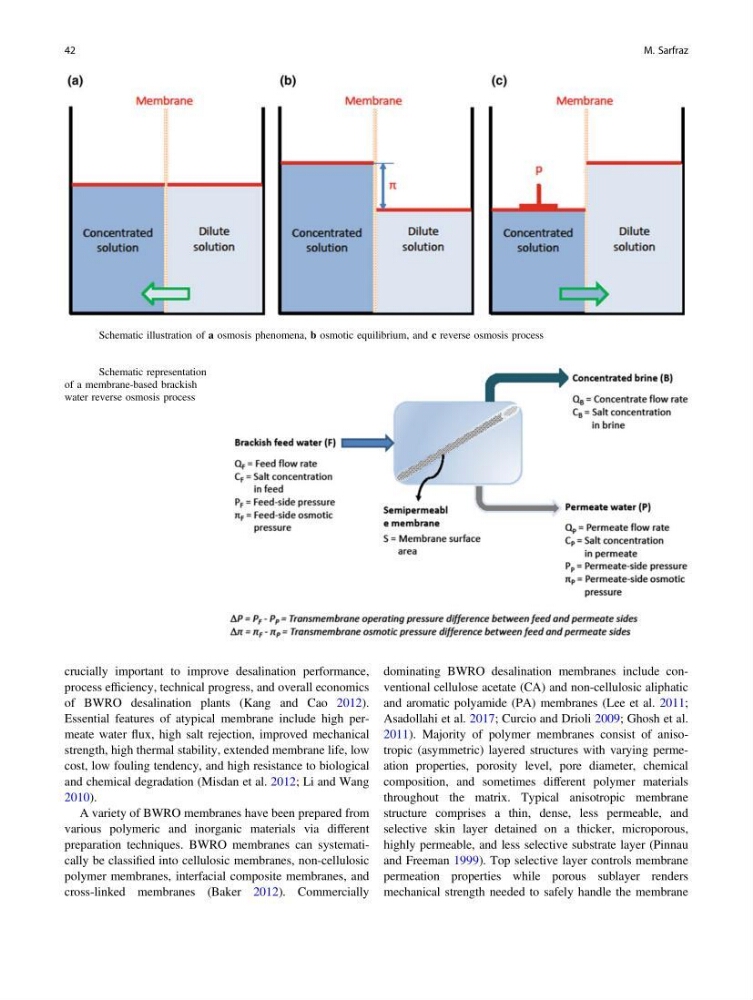
Fig. 1 Schematic illustration of a osmosis phenomena, b osmotic equilibrium, and c reverse osmosis process
Fig. 2 Schematic representation
of a membrane-based brackish
water reverse osmosis process
42
M. Sarfraz
process efficiency, technical progress, and overall economics
of BWRO desalination plants (Kang and Cao 2012).
Essential features of atypical membrane include high permeate water flux, high salt rejection, improved mechanical
strength, high thermal stability, extended membrane life, low
cost, low fouling tendency, and high resistance to biological
and chemical degradation (Misdan et al. 2012; Li and Wang
2010).
A variety of BWRO membranes have been prepared from
various polymeric and inorganic materials via different
preparation techniques. BWRO membranes can systematically be classified into cellulosic membranes, non-cellulosic
polymer membranes, interfacial composite membranes, and
cross-linked membranes (Baker 2012). Commercially
dominating BWRO desalination membranes include conventional cellulose acetate (CA) and non-cellulosic aliphatic
and aromatic polyamide (PA) membranes (Lee et al. 2011;
Asadollahi et al. 2017; Curcio and Drioli 2009; Ghosh et al.
2011). Majority of polymer membranes consist of anisotropic (asymmetric) layered structures with varying permeation properties, porosity level, pore diameter, chemical
composition, and sometimes different polymer materials
throughout the matrix. Typical anisotropic membrane
structure comprises a thin, dense, less permeable, and
selective skin layer detained on a thicker, microporous,
highly permeable, and less selective substrate layer (Pinnau
and Freeman 1999). Top selective layer controls membrane
permeation properties while porous sublayer renders
mechanical strength needed to safely handle the membrane
Fig. 1 Schematic illustration of a osmosis phenomena, b osmotic equilibrium, and c reverse osmosis process
Fig. 2 Schematic representation
of a membrane-based brackish
water reverse osmosis process
42
M. Sarfraz