

Concentrating protein solution in a more energy-efficient
way is an interesting path in which forward osmosis can take
place. Wang et al. (2011) proposed for the first time an
integrated forward osmosis–membrane distillation combination to concentrate protein solutions, specifically a bovine
serum albumin (BSA) solution. A hydrophilic polybenzimidazole (PBI) nanofiltration hollow fiber membrane and a
hydrophobic polyvinylidene fluoride–polytetrafluoroethylene
hollow fiber membrane were fabricated and employed in the
FO and MD processes, respectively. As draw solution, NaCl
was chosen to dehydrate proteins in FO, while distillate water
is a by-product during the re-concentration of diluted NaCl
draw solution in MD. To determine suitable operating conditions for the hybrid system, independent characterizations
were carried out for both FO and MD processes using different NaCl concentrations as draw solutes in FO and different
feed temperatures in MD. They found that the integrated
system is stable in continuous operation when the dehydration
rate across the FO membrane is the same as the water vapor
rate across the MD membrane.
Another point to highlight is the importance of membranes
in pharmaceutical industry is the capability to reject pharmaceuticals and to obtain high-quality water. Jin et al. (2012)
proposed a study in which the rejection of four pharmaceutical
compounds, carbamazepine, diclofenac, ibuprofen and
naproxen, by FO was investigated. For the first time, the
rejection efficiency of the pharmaceutical compounds was
compared between commercial CTA-based membranes and
TFC polyamide-based membranes. The rejection behavior
was related to membrane interfacial properties, physicochemical characteristics of the pharmaceutical molecules and
feed solution pH. TFC polyamide membranes exhibited
excellent overall performance, with high water flux, excellent
pH stability and great rejection of all pharmaceuticals investigated (>94%). For commercial CTA-based FO membranes,
hydrophobic interaction between the compounds and membranes exhibited strong influence on their rejection under
acidic conditions. The pharmaceutical rejection was well
correlated to their hydrophobicity. Under alkaline conditions,
both electrostatic repulsion and size exclusion contributed to
the removal of deprotonated molecules. The pharmaceutical
rejection by CTA-HW membrane at pH = 8 followed the
order: diclofenac (99%) > carbamazepine (95%) > ibuprofen
(93%) % naproxen (93%). The main conclusion of their paper
was the meaning of the results for FO membrane synthesis,
modification and their application in water purification.
Further efforts in rejection of pharmaceuticals were done
by Xie et al. (2012). They study the effects of feed solution
pH and membrane orientation on water flux, and the rejection of carbamazepine and sulfamethoxazole was investigated using a bench-scale FO system. They found that water
flux was pH-dependent in both membrane orientations. In
addition, water flux increased while the specific reverse salt
flux and hydrogen ion flux decreased with increasing feed
solution pH. The rejection of neutral carbamazepine was
generally pH-independent in both membrane orientations.
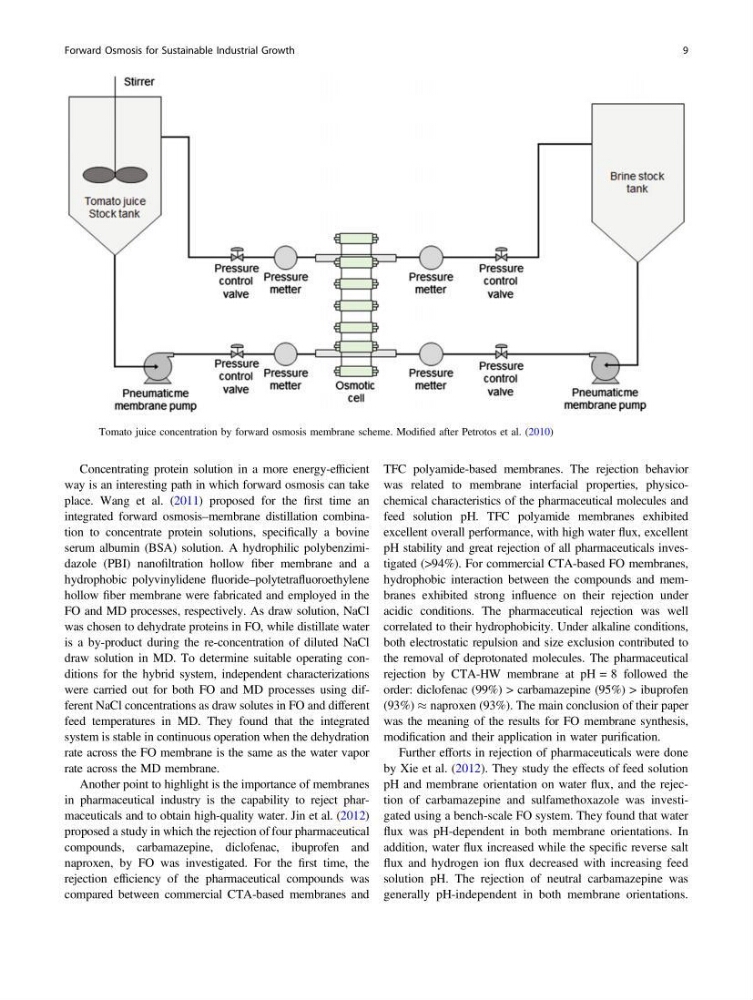
Fig. 8 Tomato juice concentration by forward osmosis membrane scheme. Modified after Petrotos et al. (2010)
Forward Osmosis for Sustainable Industrial Growth
9
way is an interesting path in which forward osmosis can take
place. Wang et al. (2011) proposed for the first time an
integrated forward osmosis–membrane distillation combination to concentrate protein solutions, specifically a bovine
serum albumin (BSA) solution. A hydrophilic polybenzimidazole (PBI) nanofiltration hollow fiber membrane and a
hydrophobic polyvinylidene fluoride–polytetrafluoroethylene
hollow fiber membrane were fabricated and employed in the
FO and MD processes, respectively. As draw solution, NaCl
was chosen to dehydrate proteins in FO, while distillate water
is a by-product during the re-concentration of diluted NaCl
draw solution in MD. To determine suitable operating conditions for the hybrid system, independent characterizations
were carried out for both FO and MD processes using different NaCl concentrations as draw solutes in FO and different
feed temperatures in MD. They found that the integrated
system is stable in continuous operation when the dehydration
rate across the FO membrane is the same as the water vapor
rate across the MD membrane.
Another point to highlight is the importance of membranes
in pharmaceutical industry is the capability to reject pharmaceuticals and to obtain high-quality water. Jin et al. (2012)
proposed a study in which the rejection of four pharmaceutical
compounds, carbamazepine, diclofenac, ibuprofen and
naproxen, by FO was investigated. For the first time, the
rejection efficiency of the pharmaceutical compounds was
compared between commercial CTA-based membranes and
TFC polyamide-based membranes. The rejection behavior
was related to membrane interfacial properties, physicochemical characteristics of the pharmaceutical molecules and
feed solution pH. TFC polyamide membranes exhibited
excellent overall performance, with high water flux, excellent
pH stability and great rejection of all pharmaceuticals investigated (>94%). For commercial CTA-based FO membranes,
hydrophobic interaction between the compounds and membranes exhibited strong influence on their rejection under
acidic conditions. The pharmaceutical rejection was well
correlated to their hydrophobicity. Under alkaline conditions,
both electrostatic repulsion and size exclusion contributed to
the removal of deprotonated molecules. The pharmaceutical
rejection by CTA-HW membrane at pH = 8 followed the
order: diclofenac (99%) > carbamazepine (95%) > ibuprofen
(93%) % naproxen (93%). The main conclusion of their paper
was the meaning of the results for FO membrane synthesis,
modification and their application in water purification.
Further efforts in rejection of pharmaceuticals were done
by Xie et al. (2012). They study the effects of feed solution
pH and membrane orientation on water flux, and the rejection of carbamazepine and sulfamethoxazole was investigated using a bench-scale FO system. They found that water
flux was pH-dependent in both membrane orientations. In
addition, water flux increased while the specific reverse salt
flux and hydrogen ion flux decreased with increasing feed
solution pH. The rejection of neutral carbamazepine was
generally pH-independent in both membrane orientations.
Fig. 8 Tomato juice concentration by forward osmosis membrane scheme. Modified after Petrotos et al. (2010)
Forward Osmosis for Sustainable Industrial Growth
9