

system has to overcome the technical limitation such as low
FO permeation flux to become economically attractive. They
found as recent developments (i.e., high-performance FO
membranes and pressure-assisted osmosis) improve water
flux. However, water flux improvement is associated with
drawbacks, such as increased fouling behavior, lower
rejection of trace organic compounds and limitation in FO
membrane mechanical resistance, which need to be better
considered. They concluded that further work is required
regarding upscaling to apprehend full-scale challenges in
terms of mass transfer limitation, pressure drop, fouling and
cleaning strategies on a module scale.
To point out the importance of the economic analyses of
forward osmosis such as cheap product like water, Valladares Linares et al. (2016) presented a detailed economic
analysis on capital and operational expenses (CAPEX and
OPEX) for many systems: (i) a hybrid forward osmosis–
low-pressure reverse osmosis (FO-LPRO) process, (ii) a
conventional seawater reverse osmosis (SWRO) desalination
process and (iii) a membrane bioreactor–reverse osmosis–
advanced oxidation process (MBR-RO-AOP) for wastewater
treatment and reuse. They took as the main parameters for
the life cycle costs the water quality, production capacity,
energy consumption, materials, maintenance, operation, RO
and FO module costs and chemicals. As main results, they
obtained that compared to SWRO, the FO-LPRO systems
have a 21% higher CAPEX and a 56% lower OPEX due to
savings in energy consumption and fouling control. In terms
of the total water cost per cubic meter of water produced, the
hybrid FO-LPRO desalination system has a 16% cost
reduction compared to the benchmark for desalination,
mainly SWRO. Compared to the MBR-RO-AOP, the
FO-LPRO systems have a 7% lower CAPEX and 9% higher
OPEX, resulting in no significant cost reduction per m
3
produced by FO-LPRO.
Fan et al. (2016) develop a novel simple method to prepare thermosensitive poly(ionic liquid) (PIL) hydrogels as
smart draw agents for FO desalination. In their study, they
ensure that these polyelectrolyte hydrogels produce a high
osmotic pressure that can draw a large amount of desalinated
water from brackish water into the hydrogel through a
semipermeable membrane. Due to the thermosensitive nature of the PIL hydrogels, the liquid water can be easily
recovered and the hydrogel can be reused by temperature
cycling. More advantages were described such as the nontoxicity, and negligible leakage of the draw agents makes
recovered liquid water suitable for drinking.
More draw solutes applicable to seawater desalination in
FO processes with high level of success were reviewed by
Zhao et al. (2016). In their work, they identified the main
characteristics for draw solutions such as high osmotic
pressure, low reverse flux and easy regeneration mechanism,
as explained before in this manuscript. They reviewed a
special kind of draw solutes which were created to satisfy the
characteristics pointed out. The draw solutes were developed
by them and known as “multi-functional FO draw solutes.”
Mainly, these solutions include Na
+
-functionalized carbon
quantum dots, thermoresponsive copolymers, hydrophilic
magnetic nanoparticles and thermoresponsive magnetic
nanoparticles.
4.3 Food Industry
Food industry is subjected to changes which makes the
process more viable economically but with the drawback of
having high-quality specifications regarding human health.
In this sense, the use of FO as clean technology has been
demonstrated. In this point, some novel papers can be found
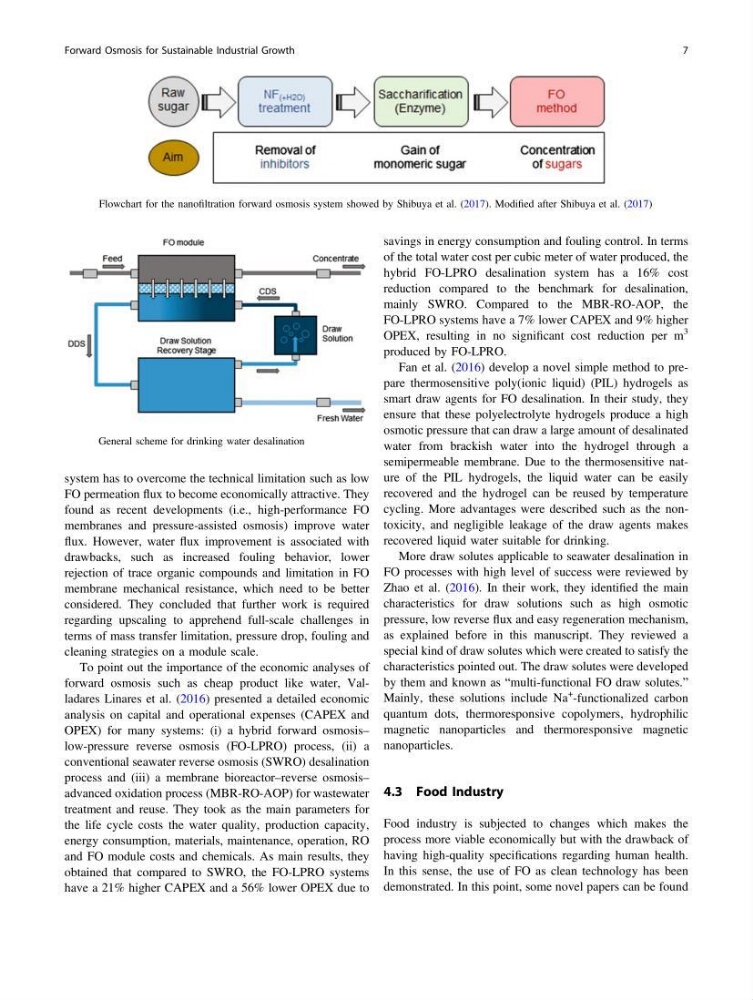
Fig. 6 Flowchart for the nanofiltration forward osmosis system showed by Shibuya et al. (2017). Modified after Shibuya et al. (2017)
Fig. 7 General scheme for drinking water desalination
Forward Osmosis for Sustainable Industrial Growth
7
FO permeation flux to become economically attractive. They
found as recent developments (i.e., high-performance FO
membranes and pressure-assisted osmosis) improve water
flux. However, water flux improvement is associated with
drawbacks, such as increased fouling behavior, lower
rejection of trace organic compounds and limitation in FO
membrane mechanical resistance, which need to be better
considered. They concluded that further work is required
regarding upscaling to apprehend full-scale challenges in
terms of mass transfer limitation, pressure drop, fouling and
cleaning strategies on a module scale.
To point out the importance of the economic analyses of
forward osmosis such as cheap product like water, Valladares Linares et al. (2016) presented a detailed economic
analysis on capital and operational expenses (CAPEX and
OPEX) for many systems: (i) a hybrid forward osmosis–
low-pressure reverse osmosis (FO-LPRO) process, (ii) a
conventional seawater reverse osmosis (SWRO) desalination
process and (iii) a membrane bioreactor–reverse osmosis–
advanced oxidation process (MBR-RO-AOP) for wastewater
treatment and reuse. They took as the main parameters for
the life cycle costs the water quality, production capacity,
energy consumption, materials, maintenance, operation, RO
and FO module costs and chemicals. As main results, they
obtained that compared to SWRO, the FO-LPRO systems
have a 21% higher CAPEX and a 56% lower OPEX due to
savings in energy consumption and fouling control. In terms
of the total water cost per cubic meter of water produced, the
hybrid FO-LPRO desalination system has a 16% cost
reduction compared to the benchmark for desalination,
mainly SWRO. Compared to the MBR-RO-AOP, the
FO-LPRO systems have a 7% lower CAPEX and 9% higher
OPEX, resulting in no significant cost reduction per m
3
produced by FO-LPRO.
Fan et al. (2016) develop a novel simple method to prepare thermosensitive poly(ionic liquid) (PIL) hydrogels as
smart draw agents for FO desalination. In their study, they
ensure that these polyelectrolyte hydrogels produce a high
osmotic pressure that can draw a large amount of desalinated
water from brackish water into the hydrogel through a
semipermeable membrane. Due to the thermosensitive nature of the PIL hydrogels, the liquid water can be easily
recovered and the hydrogel can be reused by temperature
cycling. More advantages were described such as the nontoxicity, and negligible leakage of the draw agents makes
recovered liquid water suitable for drinking.
More draw solutes applicable to seawater desalination in
FO processes with high level of success were reviewed by
Zhao et al. (2016). In their work, they identified the main
characteristics for draw solutions such as high osmotic
pressure, low reverse flux and easy regeneration mechanism,
as explained before in this manuscript. They reviewed a
special kind of draw solutes which were created to satisfy the
characteristics pointed out. The draw solutes were developed
by them and known as “multi-functional FO draw solutes.”
Mainly, these solutions include Na
+
-functionalized carbon
quantum dots, thermoresponsive copolymers, hydrophilic
magnetic nanoparticles and thermoresponsive magnetic
nanoparticles.
4.3 Food Industry
Food industry is subjected to changes which makes the
process more viable economically but with the drawback of
having high-quality specifications regarding human health.
In this sense, the use of FO as clean technology has been
demonstrated. In this point, some novel papers can be found
Fig. 6 Flowchart for the nanofiltration forward osmosis system showed by Shibuya et al. (2017). Modified after Shibuya et al. (2017)
Fig. 7 General scheme for drinking water desalination
Forward Osmosis for Sustainable Industrial Growth
7