

Fallout Memory Trajectories at Semipalatinsk 197
nuclear testing at the Semipalatinsk test site was an important moment for
post-Soviet state building which President Nazarbayev seized in a strategic effort and proudly presented as host of the OSCE meeting in Astana in
December 2010. 2 To leave behind the Cold War logic of “mutually asserted
destruction,” the new independent Republic of Kazakhstan initiated a
“Central Asian Nuclear-Weapon-Free Zone.” 3 This was part of crafting a
break with the Soviet past and nation building along with infrastructural
changes, such as moving the capital from Almaty to then Tselinograd,
renamed first Akmola and then Astana (capital in Kazakh) – today’s NurSultan – and the promotion of Kazakh as official language in all domains,
while keeping Russian as a language of communication between different
national groups within Kazakhstan. The government promoted the Kazakh
language while labeling Kazakhstan’s society as multiethnic and multireligious in the statutes of the new republic.
Most post-Soviet countries offered citizenship to all residents after the
dissolution of the USSR independent of the entry of category “nationality”
(“natsional’nost’”) in their Soviet passports. Unlike other post-Soviet countries
of central Asia, Kazakhstan kept distinguishing between “Kazakh” as a category for language and “natsional’nost’” – and “Kazakhstani” for citizenship. 4
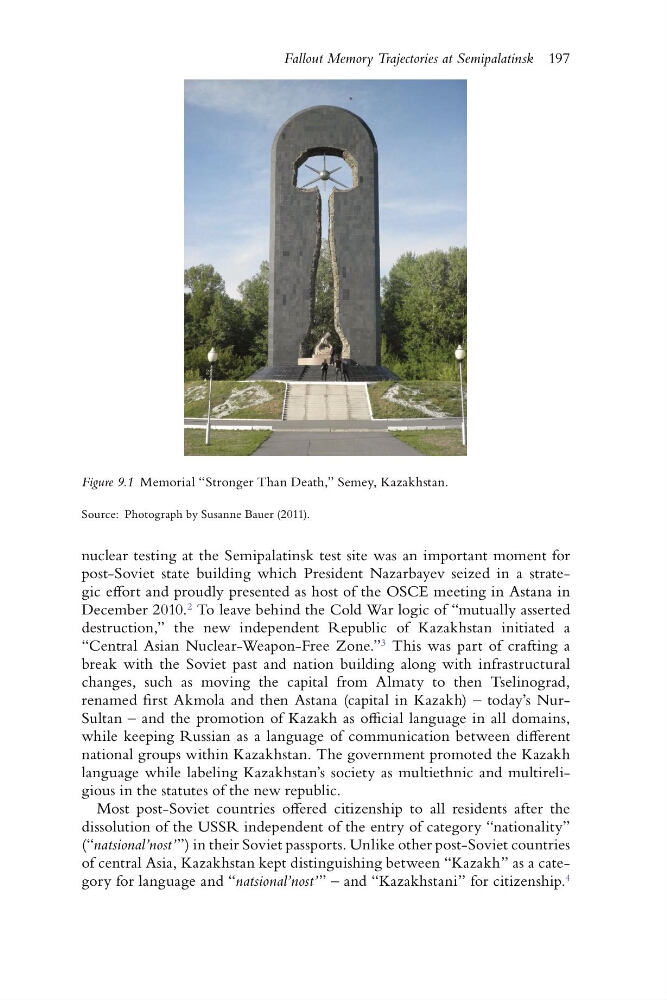
Figure 9.1 Memorial “Stronger Than Death,” Semey, Kazakhstan.
Source: Photograph by Susanne Bauer (2011).
nuclear testing at the Semipalatinsk test site was an important moment for
post-Soviet state building which President Nazarbayev seized in a strategic effort and proudly presented as host of the OSCE meeting in Astana in
December 2010. 2 To leave behind the Cold War logic of “mutually asserted
destruction,” the new independent Republic of Kazakhstan initiated a
“Central Asian Nuclear-Weapon-Free Zone.” 3 This was part of crafting a
break with the Soviet past and nation building along with infrastructural
changes, such as moving the capital from Almaty to then Tselinograd,
renamed first Akmola and then Astana (capital in Kazakh) – today’s NurSultan – and the promotion of Kazakh as official language in all domains,
while keeping Russian as a language of communication between different
national groups within Kazakhstan. The government promoted the Kazakh
language while labeling Kazakhstan’s society as multiethnic and multireligious in the statutes of the new republic.
Most post-Soviet countries offered citizenship to all residents after the
dissolution of the USSR independent of the entry of category “nationality”
(“natsional’nost’”) in their Soviet passports. Unlike other post-Soviet countries
of central Asia, Kazakhstan kept distinguishing between “Kazakh” as a category for language and “natsional’nost’” – and “Kazakhstani” for citizenship. 4
Figure 9.1 Memorial “Stronger Than Death,” Semey, Kazakhstan.
Source: Photograph by Susanne Bauer (2011).