

making in human test subjects who were not
exposed to pollutants other than CO 2 [1].
Air Conditioners/COP
One of the functions of HVAC systems is to ensure
thermal comfort, which in turn increases the wellbeing of occupants including associated properties
like productivity [74]. Air conditioning systems
use large amounts of energy, and it has been calculated that HVAC can increase energy consumption
and related carbon emissions up to 100%
[75]. Accordingly, HVAC can account for up to
50% of the power used in commercial buildings
(i.e., malls, offices, hospitals, hotels, etc.) [76]. It is
estimated that, in total, HVAC systems are responsible for approximately 40% of energy demand in
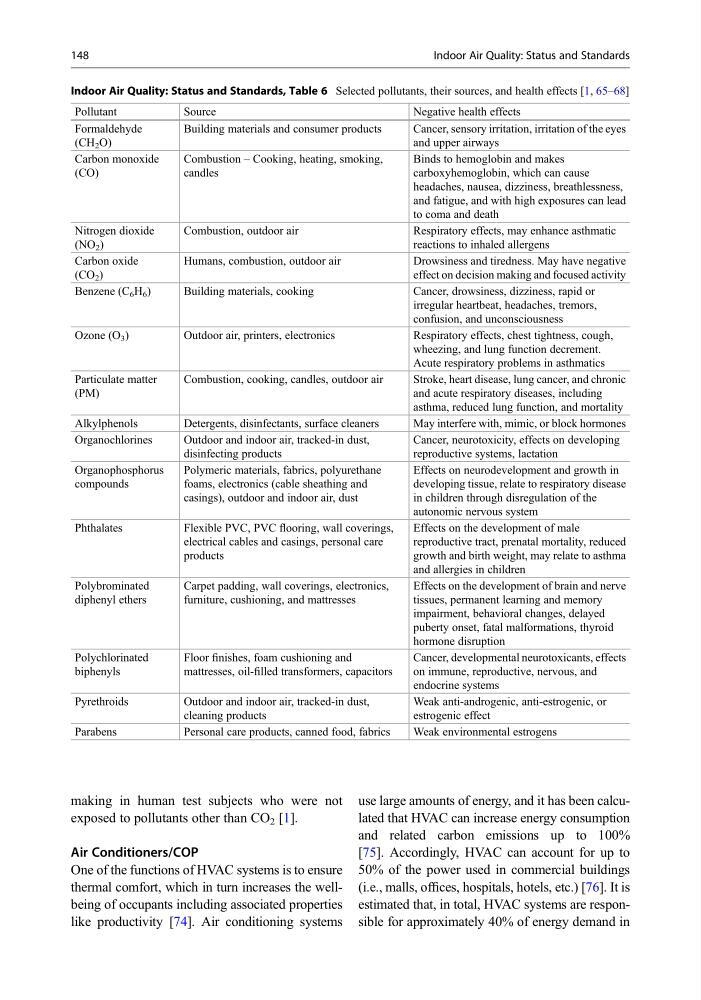
Indoor Air Quality: Status and Standards, Table 6 Selected pollutants, their sources, and health effects [1, 65–68]
Pollutant
Source
Negative health effects
Formaldehyde
(CH 2 O)
Building materials and consumer products
Cancer, sensory irritation, irritation of the eyes
and upper airways
Carbon monoxide
(CO)
Combustion – Cooking, heating, smoking,
candles
Binds to hemoglobin and makes
carboxyhemoglobin, which can cause
headaches, nausea, dizziness, breathlessness,
and fatigue, and with high exposures can lead
to coma and death
Nitrogen dioxide
(NO 2 )
Combustion, outdoor air
Respiratory effects, may enhance asthmatic
reactions to inhaled allergens
Carbon oxide
(CO 2 )
Humans, combustion, outdoor air
Drowsiness and tiredness. May have negative
effect on decision making and focused activity
Benzene (C 6 H 6 )
Building materials, cooking
Cancer, drowsiness, dizziness, rapid or
irregular heartbeat, headaches, tremors,
confusion, and unconsciousness
Ozone (O 3 )
Outdoor air, printers, electronics
Respiratory effects, chest tightness, cough,
wheezing, and lung function decrement.
Acute respiratory problems in asthmatics
Particulate matter
(PM)
Combustion, cooking, candles, outdoor air
Stroke, heart disease, lung cancer, and chronic
and acute respiratory diseases, including
asthma, reduced lung function, and mortality
Alkylphenols
Detergents, disinfectants, surface cleaners
May interfere with, mimic, or block hormones
Organochlorines
Outdoor and indoor air, tracked-in dust,
disinfecting products
Cancer, neurotoxicity, effects on developing
reproductive systems, lactation
Organophosphorus
compounds
Polymeric materials, fabrics, polyurethane
foams, electronics (cable sheathing and
casings), outdoor and indoor air, dust
Effects on neurodevelopment and growth in
developing tissue, relate to respiratory disease
in children through disregulation of the
autonomic nervous system
Phthalates
Flexible PVC, PVC flooring, wall coverings,
electrical cables and casings, personal care
products
Effects on the development of male
reproductive tract, prenatal mortality, reduced
growth and birth weight, may relate to asthma
and allergies in children
Polybrominated
diphenyl ethers
Carpet padding, wall coverings, electronics,
furniture, cushioning, and mattresses
Effects on the development of brain and nerve
tissues, permanent learning and memory
impairment, behavioral changes, delayed
puberty onset, fatal malformations, thyroid
hormone disruption
Polychlorinated
biphenyls
Floor finishes, foam cushioning and
mattresses, oil-filled transformers, capacitors
Cancer, developmental neurotoxicants, effects
on immune, reproductive, nervous, and
endocrine systems
Pyrethroids
Outdoor and indoor air, tracked-in dust,
cleaning products
Weak anti-androgenic, anti-estrogenic, or
estrogenic effect
Parabens
Personal care products, canned food, fabrics
Weak environmental estrogens
148
Indoor Air Quality: Status and Standards
exposed to pollutants other than CO 2 [1].
Air Conditioners/COP
One of the functions of HVAC systems is to ensure
thermal comfort, which in turn increases the wellbeing of occupants including associated properties
like productivity [74]. Air conditioning systems
use large amounts of energy, and it has been calculated that HVAC can increase energy consumption
and related carbon emissions up to 100%
[75]. Accordingly, HVAC can account for up to
50% of the power used in commercial buildings
(i.e., malls, offices, hospitals, hotels, etc.) [76]. It is
estimated that, in total, HVAC systems are responsible for approximately 40% of energy demand in
Indoor Air Quality: Status and Standards, Table 6 Selected pollutants, their sources, and health effects [1, 65–68]
Pollutant
Source
Negative health effects
Formaldehyde
(CH 2 O)
Building materials and consumer products
Cancer, sensory irritation, irritation of the eyes
and upper airways
Carbon monoxide
(CO)
Combustion – Cooking, heating, smoking,
candles
Binds to hemoglobin and makes
carboxyhemoglobin, which can cause
headaches, nausea, dizziness, breathlessness,
and fatigue, and with high exposures can lead
to coma and death
Nitrogen dioxide
(NO 2 )
Combustion, outdoor air
Respiratory effects, may enhance asthmatic
reactions to inhaled allergens
Carbon oxide
(CO 2 )
Humans, combustion, outdoor air
Drowsiness and tiredness. May have negative
effect on decision making and focused activity
Benzene (C 6 H 6 )
Building materials, cooking
Cancer, drowsiness, dizziness, rapid or
irregular heartbeat, headaches, tremors,
confusion, and unconsciousness
Ozone (O 3 )
Outdoor air, printers, electronics
Respiratory effects, chest tightness, cough,
wheezing, and lung function decrement.
Acute respiratory problems in asthmatics
Particulate matter
(PM)
Combustion, cooking, candles, outdoor air
Stroke, heart disease, lung cancer, and chronic
and acute respiratory diseases, including
asthma, reduced lung function, and mortality
Alkylphenols
Detergents, disinfectants, surface cleaners
May interfere with, mimic, or block hormones
Organochlorines
Outdoor and indoor air, tracked-in dust,
disinfecting products
Cancer, neurotoxicity, effects on developing
reproductive systems, lactation
Organophosphorus
compounds
Polymeric materials, fabrics, polyurethane
foams, electronics (cable sheathing and
casings), outdoor and indoor air, dust
Effects on neurodevelopment and growth in
developing tissue, relate to respiratory disease
in children through disregulation of the
autonomic nervous system
Phthalates
Flexible PVC, PVC flooring, wall coverings,
electrical cables and casings, personal care
products
Effects on the development of male
reproductive tract, prenatal mortality, reduced
growth and birth weight, may relate to asthma
and allergies in children
Polybrominated
diphenyl ethers
Carpet padding, wall coverings, electronics,
furniture, cushioning, and mattresses
Effects on the development of brain and nerve
tissues, permanent learning and memory
impairment, behavioral changes, delayed
puberty onset, fatal malformations, thyroid
hormone disruption
Polychlorinated
biphenyls
Floor finishes, foam cushioning and
mattresses, oil-filled transformers, capacitors
Cancer, developmental neurotoxicants, effects
on immune, reproductive, nervous, and
endocrine systems
Pyrethroids
Outdoor and indoor air, tracked-in dust,
cleaning products
Weak anti-androgenic, anti-estrogenic, or
estrogenic effect
Parabens
Personal care products, canned food, fabrics
Weak environmental estrogens
148
Indoor Air Quality: Status and Standards