

72 Damage to concrete structures
Autogenous swelling peaks can also be noticed at very early age
(Baroghel-Bouny et al. 2006). Different explanations can be given for the
occurrence of swelling peaks, including the effect of mineral additions
such as limestone filler on the disjoining pressure (Esping 2008, Craeye
et al. 2010). The fineness of the filler is an important factor for this swelling behaviour, although the nature of the filler also seems to have an
influence. Super plasticizers also interact with the fillers, influencing the
swelling behaviour.
When the concrete element can freely deform without any restraint,
autogenous shrinkage (and shrinkage in general) will not cause any stresses
and thus no cracking or any other damage. However, as concrete elements
are almost always connected to other structural elements or foundations
leading to so-called external restraint, autogenous shrinkage will give rise
to early-age stresses and possibly cracking.
Even when the hardening concrete element is not connected to any
other restraining structural element, internal restraint could also occur
due to differences in hydration rate. Due to a higher temperature caused
by the heat of hydration, the core of a concrete element can hydrate faster
than the surface zone, leading to a differential development of the autogenous shrinkage. As the core hydrates faster, autogenous shrinkage is
also developing faster. The shrinkage of the core, however, is retrained
by the surface zone, which is shrinking slower. In this case, the resultant
effect on stress formation and cracking has to be studied in combination with the effect of the heat of hydration (see Section 4.4 on thermal
shrinkage). In the case of massive structures, however, it can be said that
Volume Reduction
Initial
setting
Voids
Time
Autogenous shrinkage
Chemical shrinkage
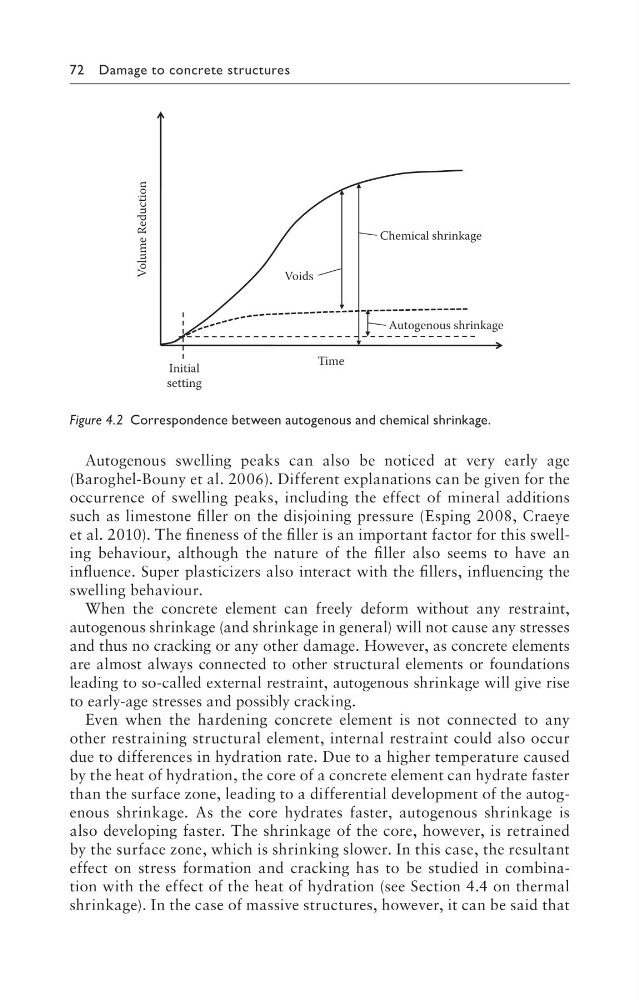
Figure 4.2 Correspondence between autogenous and chemical shrinkage.
Autogenous swelling peaks can also be noticed at very early age
(Baroghel-Bouny et al. 2006). Different explanations can be given for the
occurrence of swelling peaks, including the effect of mineral additions
such as limestone filler on the disjoining pressure (Esping 2008, Craeye
et al. 2010). The fineness of the filler is an important factor for this swelling behaviour, although the nature of the filler also seems to have an
influence. Super plasticizers also interact with the fillers, influencing the
swelling behaviour.
When the concrete element can freely deform without any restraint,
autogenous shrinkage (and shrinkage in general) will not cause any stresses
and thus no cracking or any other damage. However, as concrete elements
are almost always connected to other structural elements or foundations
leading to so-called external restraint, autogenous shrinkage will give rise
to early-age stresses and possibly cracking.
Even when the hardening concrete element is not connected to any
other restraining structural element, internal restraint could also occur
due to differences in hydration rate. Due to a higher temperature caused
by the heat of hydration, the core of a concrete element can hydrate faster
than the surface zone, leading to a differential development of the autogenous shrinkage. As the core hydrates faster, autogenous shrinkage is
also developing faster. The shrinkage of the core, however, is retrained
by the surface zone, which is shrinking slower. In this case, the resultant
effect on stress formation and cracking has to be studied in combination with the effect of the heat of hydration (see Section 4.4 on thermal
shrinkage). In the case of massive structures, however, it can be said that
Volume Reduction
Initial
setting
Voids
Time
Autogenous shrinkage
Chemical shrinkage
Figure 4.2 Correspondence between autogenous and chemical shrinkage.