

Errors during casting 63
sure that the concrete will not stick to the formwork, making demoulding
difficult and leading to possible damage of the concrete surface. Demoulding
oils should be applied in appropriate quantities. Not enough demoulding oil
will lead to a too high adherence between concrete and formwork material.
Too much demoulding oil can lead to surface defects like air voids and
discolouring.
3.8 DaMage In PlastIc stage
During the plastic stage, the first hours after casting, damage could be caused
to the finished concrete surface by early loading, e.g. bikes driving too early
on a very recently finished pathway, or even animals walking in the fresh
concrete (see Figure 3.15). However, more frequently occurring problems in
the plastic stage are plastic shrinkage, plastic settlement, and bleeding.
3.8.1 Plastic shrinkage
As explained in Section 1.4.6, freshly cast concrete has to be cured for a
sufficiently long time period in order to maintain good conditions for the
cement hydration (enough water), and in order to avoid early cracking due
to premature water exchange with the environment. When the fresh concrete surface dries too fast due to insufficient curing, shrinkage can occur
at this very early stage, possibly leading to cracking. At this stage, this phenomenon is referred to as plastic shrinkage and plastic-shrinkage cracking.
Although it occurs most often in the dry summer, plastic shrinkage cracking can also happen in colder environments. While the risk is higher for
concrete surfaces in outside environments, concrete floors inside a building
or structure can also be exposed to plastic shrinkage, especially in environments with stronger wind or air movements.
Too early formwork removal
Cracking
Deflection
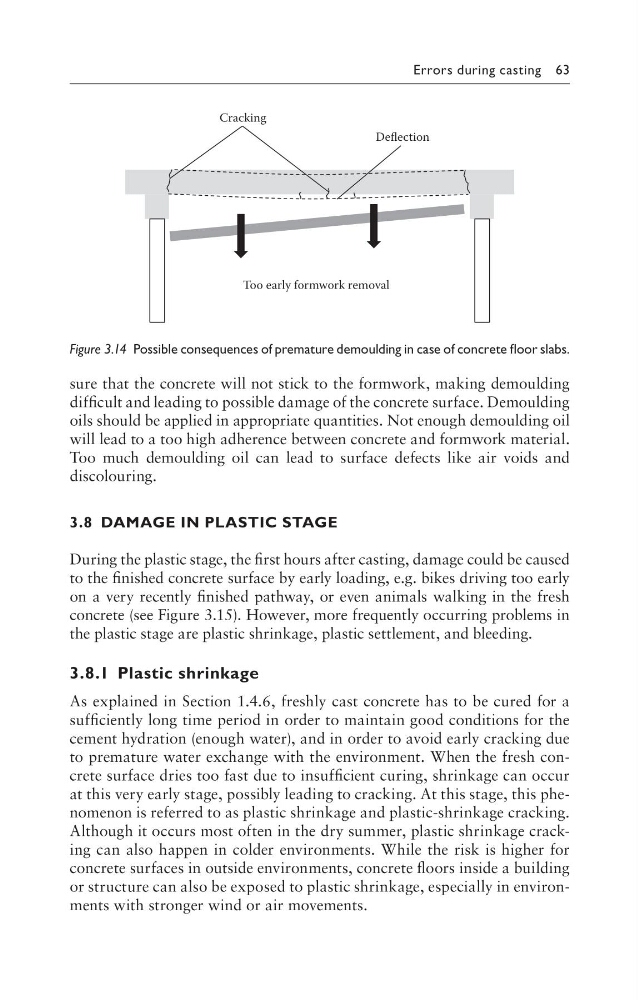
Figure 3.14 Possible consequences of premature demoulding in case of concrete floor slabs.
sure that the concrete will not stick to the formwork, making demoulding
difficult and leading to possible damage of the concrete surface. Demoulding
oils should be applied in appropriate quantities. Not enough demoulding oil
will lead to a too high adherence between concrete and formwork material.
Too much demoulding oil can lead to surface defects like air voids and
discolouring.
3.8 DaMage In PlastIc stage
During the plastic stage, the first hours after casting, damage could be caused
to the finished concrete surface by early loading, e.g. bikes driving too early
on a very recently finished pathway, or even animals walking in the fresh
concrete (see Figure 3.15). However, more frequently occurring problems in
the plastic stage are plastic shrinkage, plastic settlement, and bleeding.
3.8.1 Plastic shrinkage
As explained in Section 1.4.6, freshly cast concrete has to be cured for a
sufficiently long time period in order to maintain good conditions for the
cement hydration (enough water), and in order to avoid early cracking due
to premature water exchange with the environment. When the fresh concrete surface dries too fast due to insufficient curing, shrinkage can occur
at this very early stage, possibly leading to cracking. At this stage, this phenomenon is referred to as plastic shrinkage and plastic-shrinkage cracking.
Although it occurs most often in the dry summer, plastic shrinkage cracking can also happen in colder environments. While the risk is higher for
concrete surfaces in outside environments, concrete floors inside a building
or structure can also be exposed to plastic shrinkage, especially in environments with stronger wind or air movements.
Too early formwork removal
Cracking
Deflection
Figure 3.14 Possible consequences of premature demoulding in case of concrete floor slabs.