

10 Damage to concrete structures
properties of potentially aggressive liquids and gasses in the pore system.
A detailed treatment of this fundamental information is beyond the scope
of this textbook. Here, the fundamental background will be translated to
practical measures which can improve the concrete durability. Nevertheless,
in order to fully understand the durability behaviour of concrete, it should be
realized that macroscopic or so-called engineering properties of concrete are
to a large extent determined by the microstructure of the material.
The microstructure of cementitious materials is generally the result of the
chemical reaction between cement and water, called the hydration reaction.
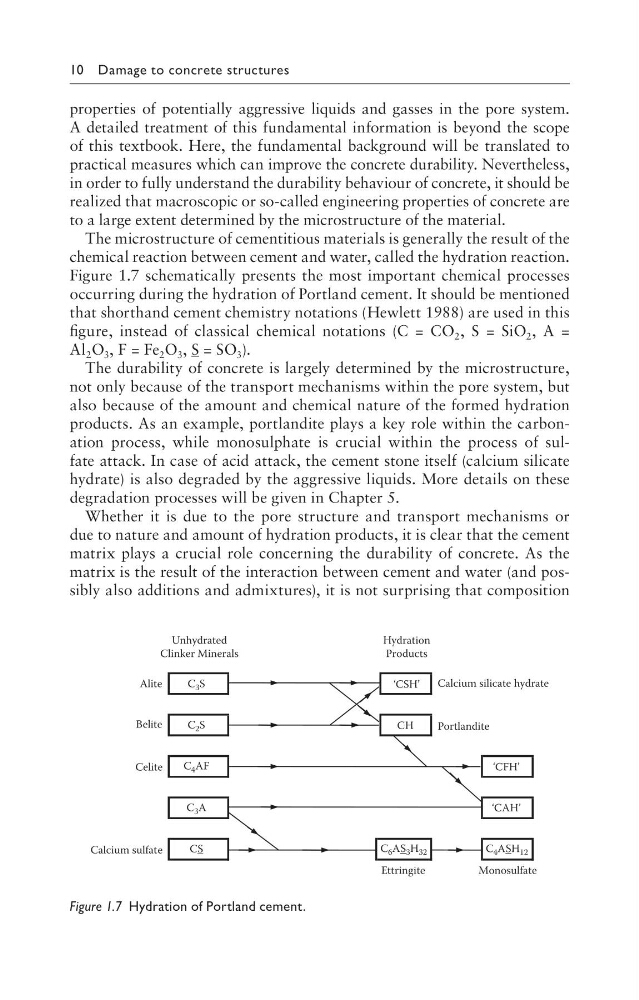
Figure 1.7 schematically presents the most important chemical processes
occurring during the hydration of Portland cement. It should be mentioned
that shorthand cement chemistry notations (Hewlett 1988) are used in this
figure, instead of classical chemical notations (C = CO 2 , S = SiO 2 , A =
Al 2 O 3 , F = Fe 2 O 3 , S = SO 3 ).
The durability of concrete is largely determined by the microstructure,
not only because of the transport mechanisms within the pore system, but
also because of the amount and chemical nature of the formed hydration
products. As an example, portlandite plays a key role within the carbonation process, while monosulphate is crucial within the process of sulfate attack. In case of acid attack, the cement stone itself (calcium silicate
hydrate) is also degraded by the aggressive liquids. More details on these
degradation processes will be given in Chapter 5.
Whether it is due to the pore structure and transport mechanisms or
due to nature and amount of hydration products, it is clear that the cement
matrix plays a crucial role concerning the durability of concrete. As the
matrix is the result of the interaction between cement and water (and possibly also additions and admixtures), it is not surprising that composition
Calcium silicate hydrate
‘CSH’
CH
‘CFH’
‘CAH’
Monosulfate
Ettringite
C 4 ASH 12
C 6 AS 3 H 32
CS
C 3 A
C 4 AF
C 2 S
Alite
Unhydrated
Clinker Minerals
Belite
Celite
Calcium sulfate
C 3 S
Hydration
Products
Portlandite
Figure 1.7 Hydration of Portland cement.
properties of potentially aggressive liquids and gasses in the pore system.
A detailed treatment of this fundamental information is beyond the scope
of this textbook. Here, the fundamental background will be translated to
practical measures which can improve the concrete durability. Nevertheless,
in order to fully understand the durability behaviour of concrete, it should be
realized that macroscopic or so-called engineering properties of concrete are
to a large extent determined by the microstructure of the material.
The microstructure of cementitious materials is generally the result of the
chemical reaction between cement and water, called the hydration reaction.
Figure 1.7 schematically presents the most important chemical processes
occurring during the hydration of Portland cement. It should be mentioned
that shorthand cement chemistry notations (Hewlett 1988) are used in this
figure, instead of classical chemical notations (C = CO 2 , S = SiO 2 , A =
Al 2 O 3 , F = Fe 2 O 3 , S = SO 3 ).
The durability of concrete is largely determined by the microstructure,
not only because of the transport mechanisms within the pore system, but
also because of the amount and chemical nature of the formed hydration
products. As an example, portlandite plays a key role within the carbonation process, while monosulphate is crucial within the process of sulfate attack. In case of acid attack, the cement stone itself (calcium silicate
hydrate) is also degraded by the aggressive liquids. More details on these
degradation processes will be given in Chapter 5.
Whether it is due to the pore structure and transport mechanisms or
due to nature and amount of hydration products, it is clear that the cement
matrix plays a crucial role concerning the durability of concrete. As the
matrix is the result of the interaction between cement and water (and possibly also additions and admixtures), it is not surprising that composition
Calcium silicate hydrate
‘CSH’
CH
‘CFH’
‘CAH’
Monosulfate
Ettringite
C 4 ASH 12
C 6 AS 3 H 32
CS
C 3 A
C 4 AF
C 2 S
Alite
Unhydrated
Clinker Minerals
Belite
Celite
Calcium sulfate
C 3 S
Hydration
Products
Portlandite
Figure 1.7 Hydration of Portland cement.