

Durability and service life 3
• Reinforced concrete is a relatively recent construction material.
Although first patents date from the middle of the nineteenth century
(patent of J. Lambot in 1855 and of J. Monier in 1867), the application
in buildings and structures started to grow only after 1900. It became
a mainstream construction material only after World War II.
• After World War II, the construction industry in Europe showed an
exponential growth in the 1960s and 1970s. The reconstruction of
Europe was of major importance, and the main focus was on a timely
completion of buildings and structures rather than on quality and
durability, making them more vulnerable to degradation. Most of
these structures have now reached a service life of fifty years.
• Many degradation mechanisms require a time period of about twenty
years before damage becomes visible. It is not a coincidence that some
physical or chemical degradation mechanisms have only been recognized twenty years after a strong growth of the construction activity.
One example is alkali silica reaction (ASR). In Belgium, as in many
industrialized countries, ASR was first diagnosed in the 1980s. Only
twenty years after the construction boom of the 1960s it became clear
that many concrete structures suffered from ASR. As we now better
understand the mechanisms leading to ASR damage, measures have
been defined to avoid ASR damage as much as possible in new concrete structures.
• Due to increased industrial activity, the aggressiveness of the environment has increased. Waterways and atmosphere have become more
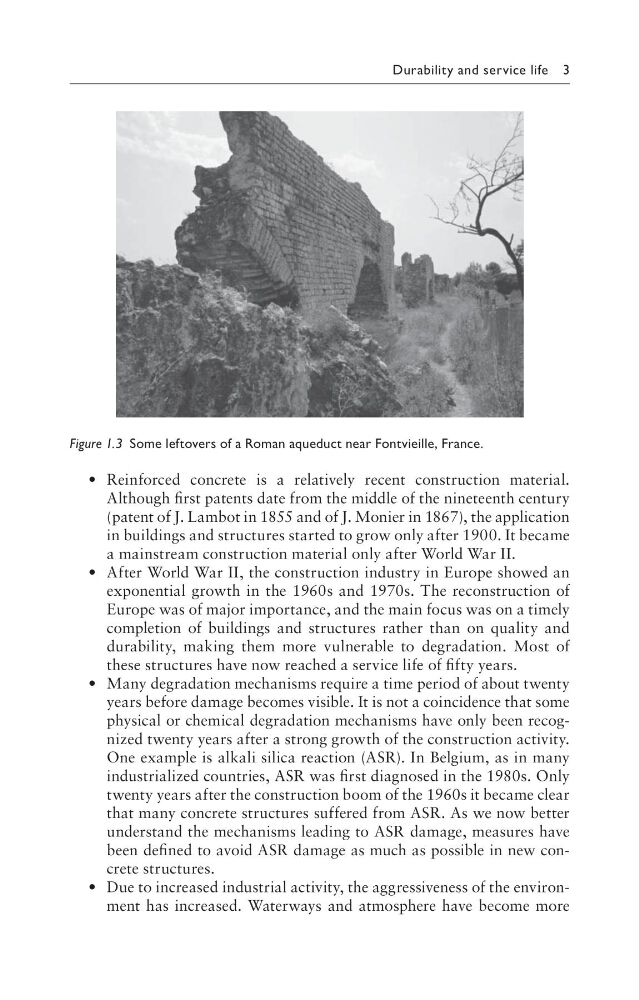
Figure 1.3 Some leftovers of a Roman aqueduct near Fontvieille, France.
• Reinforced concrete is a relatively recent construction material.
Although first patents date from the middle of the nineteenth century
(patent of J. Lambot in 1855 and of J. Monier in 1867), the application
in buildings and structures started to grow only after 1900. It became
a mainstream construction material only after World War II.
• After World War II, the construction industry in Europe showed an
exponential growth in the 1960s and 1970s. The reconstruction of
Europe was of major importance, and the main focus was on a timely
completion of buildings and structures rather than on quality and
durability, making them more vulnerable to degradation. Most of
these structures have now reached a service life of fifty years.
• Many degradation mechanisms require a time period of about twenty
years before damage becomes visible. It is not a coincidence that some
physical or chemical degradation mechanisms have only been recognized twenty years after a strong growth of the construction activity.
One example is alkali silica reaction (ASR). In Belgium, as in many
industrialized countries, ASR was first diagnosed in the 1980s. Only
twenty years after the construction boom of the 1960s it became clear
that many concrete structures suffered from ASR. As we now better
understand the mechanisms leading to ASR damage, measures have
been defined to avoid ASR damage as much as possible in new concrete structures.
• Due to increased industrial activity, the aggressiveness of the environment has increased. Waterways and atmosphere have become more
Figure 1.3 Some leftovers of a Roman aqueduct near Fontvieille, France.