

Actions during service 151
gel formation, this is also different for a sulfate attack, where a white discolouration can become visible due to the formation of gypsum. When sulfate
attack leads to the decomposition of C-S-H, the concrete becomes soft and
surface layers can be eroded.
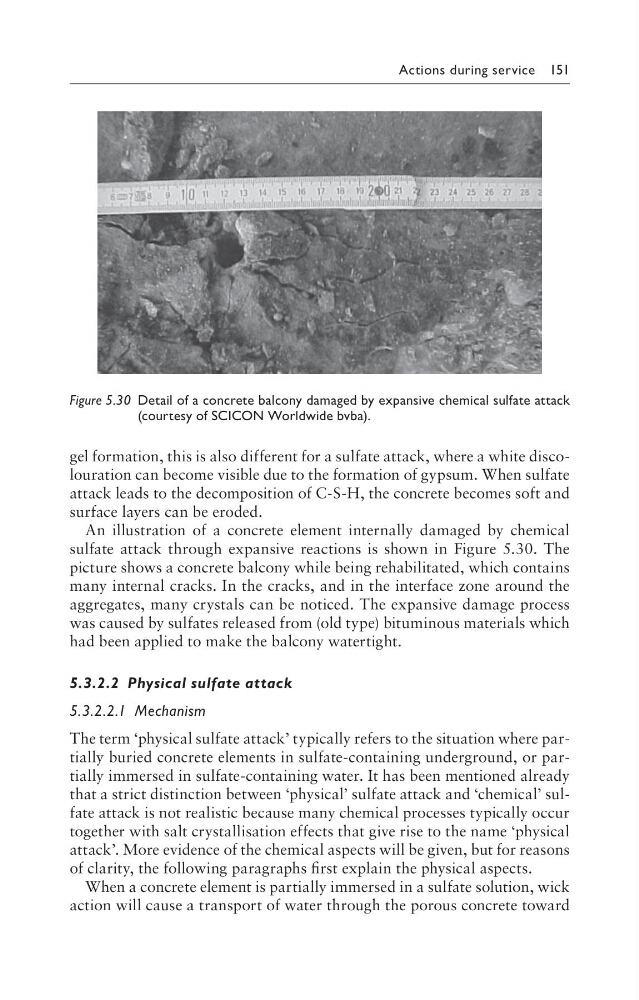
An illustration of a concrete element internally damaged by chemical
sulfate attack through expansive reactions is shown in Figure 5.30. The
picture shows a concrete balcony while being rehabilitated, which contains
many internal cracks. In the cracks, and in the interface zone around the
aggregates, many crystals can be noticed. The expansive damage process
was caused by sulfates released from (old type) bituminous materials which
had been applied to make the balcony watertight.
5.3.2.2 Physical sulfate attack
5.3.2.2.1 Mechanism
The term ‘physical sulfate attack’ typically refers to the situation where partially buried concrete elements in sulfate-containing underground, or partially immersed in sulfate-containing water. It has been mentioned already
that a strict distinction between ‘physical’ sulfate attack and ‘chemical’ sulfate attack is not realistic because many chemical processes typically occur
together with salt crystallisation effects that give rise to the name ‘physical
attack’. More evidence of the chemical aspects will be given, but for reasons
of clarity, the following paragraphs first explain the physical aspects.
When a concrete element is partially immersed in a sulfate solution, wick
action will cause a transport of water through the porous concrete toward
Figure 5.30 Detail of a concrete balcony damaged by expansive chemical sulfate attack
(courtesy of SCICON Worldwide bvba).
gel formation, this is also different for a sulfate attack, where a white discolouration can become visible due to the formation of gypsum. When sulfate
attack leads to the decomposition of C-S-H, the concrete becomes soft and
surface layers can be eroded.
An illustration of a concrete element internally damaged by chemical
sulfate attack through expansive reactions is shown in Figure 5.30. The
picture shows a concrete balcony while being rehabilitated, which contains
many internal cracks. In the cracks, and in the interface zone around the
aggregates, many crystals can be noticed. The expansive damage process
was caused by sulfates released from (old type) bituminous materials which
had been applied to make the balcony watertight.
5.3.2.2 Physical sulfate attack
5.3.2.2.1 Mechanism
The term ‘physical sulfate attack’ typically refers to the situation where partially buried concrete elements in sulfate-containing underground, or partially immersed in sulfate-containing water. It has been mentioned already
that a strict distinction between ‘physical’ sulfate attack and ‘chemical’ sulfate attack is not realistic because many chemical processes typically occur
together with salt crystallisation effects that give rise to the name ‘physical
attack’. More evidence of the chemical aspects will be given, but for reasons
of clarity, the following paragraphs first explain the physical aspects.
When a concrete element is partially immersed in a sulfate solution, wick
action will cause a transport of water through the porous concrete toward
Figure 5.30 Detail of a concrete balcony damaged by expansive chemical sulfate attack
(courtesy of SCICON Worldwide bvba).