

Actions during service 137
The effect of tiny aggregate particles on ASR expansion has also been
experimentally confirmed by Multon et al. (2010), although they do not
refer to the concept of rigid rim as conjectured by Ichikawa and Miura
(2007). Multon et al. (2010) report some experimental results showing
that no expansion was measured on mortars containing small reactive
particles (<80 µm), while the largest expansion was obtained with coarser
particles (with particle size ranging from 0.063 mm to 1.25 mm). They
explain this behaviour by means of a phenomenological model, assuming migration of the alkali silica gel into the pore structure of the matrix
surrounding the reactive aggregate along a distance equal to the aggregate size. Although the same conclusions concerning the effect of tiny
aggregate sizes are obtained as within the rigid rim concept, it illustrates
that a lot of debate still exists concerning the real mechanisms behind
the not yet fully understood swelling damage due to ASR. Concerning
the effect of particle size on ASR expansion, it is also important to mention that for particle sizes larger than 0.15 mm, Hobbs (1988) reports a
decreasing expansion with increasing particle size. It thus seems that the
behaviour at the micrometre level is different from the behaviour at the
millimetre level.
2
1
K
+
K
+
Na
+
Na
+
Ca
2+
Ca
2+
OH
–
OH
–
Aggregate
Hydrated alkali silicate
4
Crack
Paste
3
K +
OH
–
Na
+
OH
–
K
+
Na
+
Ca
2+
C-S-H
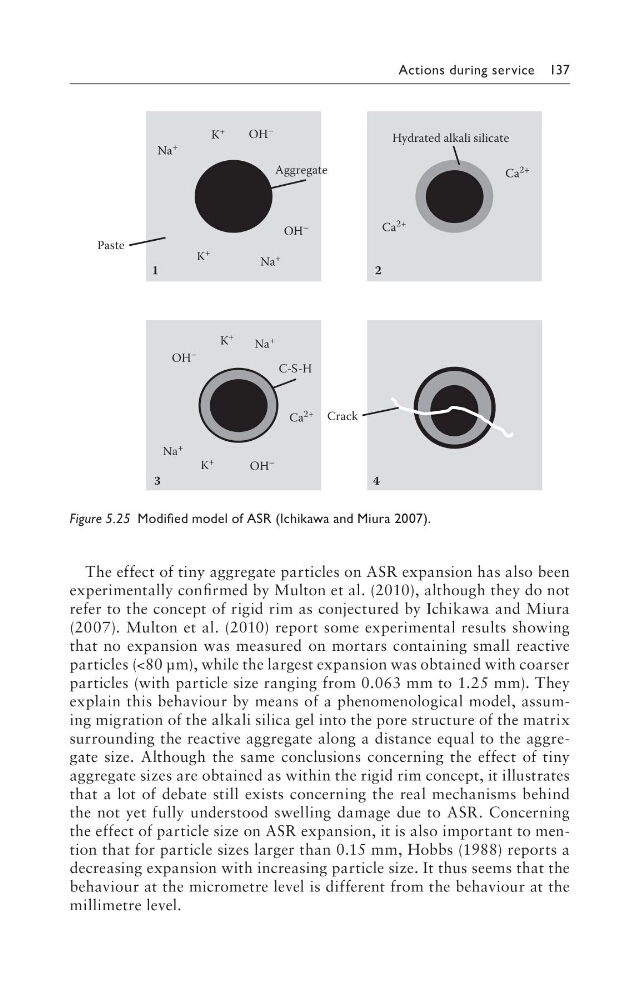
Figure 5.25 Modified model of ASR (Ichikawa and Miura 2007).
The effect of tiny aggregate particles on ASR expansion has also been
experimentally confirmed by Multon et al. (2010), although they do not
refer to the concept of rigid rim as conjectured by Ichikawa and Miura
(2007). Multon et al. (2010) report some experimental results showing
that no expansion was measured on mortars containing small reactive
particles (<80 µm), while the largest expansion was obtained with coarser
particles (with particle size ranging from 0.063 mm to 1.25 mm). They
explain this behaviour by means of a phenomenological model, assuming migration of the alkali silica gel into the pore structure of the matrix
surrounding the reactive aggregate along a distance equal to the aggregate size. Although the same conclusions concerning the effect of tiny
aggregate sizes are obtained as within the rigid rim concept, it illustrates
that a lot of debate still exists concerning the real mechanisms behind
the not yet fully understood swelling damage due to ASR. Concerning
the effect of particle size on ASR expansion, it is also important to mention that for particle sizes larger than 0.15 mm, Hobbs (1988) reports a
decreasing expansion with increasing particle size. It thus seems that the
behaviour at the micrometre level is different from the behaviour at the
millimetre level.
2
1
K
+
K
+
Na
+
Na
+
Ca
2+
Ca
2+
OH
–
OH
–
Aggregate
Hydrated alkali silicate
4
Crack
Paste
3
K +
OH
–
Na
+
OH
–
K
+
Na
+
Ca
2+
C-S-H
Figure 5.25 Modified model of ASR (Ichikawa and Miura 2007).