

118 Damage to concrete structures
conclude that the splitting tensile strength is a more effective predictive
parameter than the compressive and flexural strength in determining the
concrete abrasion erosion resistance to water-borne sand. Nevertheless,
Neville and Brooks (2010) summarize that the resistance to abrasion is proportional to the water/cement ratio and hence to the compressive strength.
They conclude that the primary basis for the selection of abrasion resistant
concrete is the compressive strength.
Although strength surely is expected to be a main governing parameter
concerning abrasion resistance, other aspects are also relevant. Mineral
admixtures such as fly ash can enhance the abrasion resistance due to mortar densification, bleeding void reduction, and interfacial bond strength
improvement. In the case of low-strength concrete, a coarser aggregate
can improve the abrasion resistance. However, in high-strength concrete,
the size of the coarse aggregate seems to be insignificant with respect to
abrasion resistance.
5.2.5 thermal effects
5.2.5.1 Temperature gradients
In massive concrete structures or in concrete elements made with highperformance concrete containing a high amount of cement, thermal gradients typically occur during the hardening phase. This phenomenon has
been explained in detail in Section 4.4 of Chapter 4.
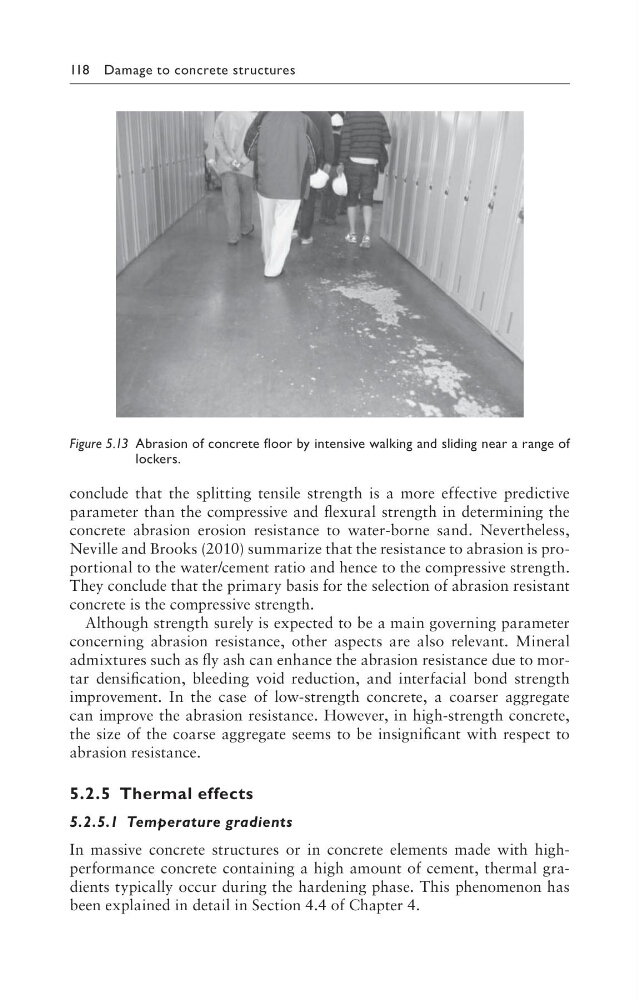
Figure 5.13 Abrasion of concrete floor by intensive walking and sliding near a range of
lockers.
conclude that the splitting tensile strength is a more effective predictive
parameter than the compressive and flexural strength in determining the
concrete abrasion erosion resistance to water-borne sand. Nevertheless,
Neville and Brooks (2010) summarize that the resistance to abrasion is proportional to the water/cement ratio and hence to the compressive strength.
They conclude that the primary basis for the selection of abrasion resistant
concrete is the compressive strength.
Although strength surely is expected to be a main governing parameter
concerning abrasion resistance, other aspects are also relevant. Mineral
admixtures such as fly ash can enhance the abrasion resistance due to mortar densification, bleeding void reduction, and interfacial bond strength
improvement. In the case of low-strength concrete, a coarser aggregate
can improve the abrasion resistance. However, in high-strength concrete,
the size of the coarse aggregate seems to be insignificant with respect to
abrasion resistance.
5.2.5 thermal effects
5.2.5.1 Temperature gradients
In massive concrete structures or in concrete elements made with highperformance concrete containing a high amount of cement, thermal gradients typically occur during the hardening phase. This phenomenon has
been explained in detail in Section 4.4 of Chapter 4.
Figure 5.13 Abrasion of concrete floor by intensive walking and sliding near a range of
lockers.