

100 Damage to concrete structures
Significant damage to concrete structures can also be caused by direct
loading due to earthquakes. In cases where no special provisions have been
taken against loading by earthquakes, structures can totally collapse, causing many casualties. Many countries situated in active earthquake zones
have special requirements concerning the design of concrete structures.
Even in these countries, earthquakes can still severely damage concrete
structures, as illustrated in Figure 5.2.
Another case of direct loading is impact. This can be due to explosions
(e.g. industrial accidents or terrorist attacks) or traffic accidents. A typical
example of this is shown in Figure 5.3, which shows damage to a concrete
girder after it was hit by a truck that failed to respect the height limits. In
these cases, the remaining structural capacity of the girders must be carefully examined, considering possible damage to the prestressing wires or
cables in the case of prestressed bridge girders.
In reinforced concrete slabs of road bridges with limited thickness compared to the span length, fatigue failure due to repeated loading can lead to
a two-directional crack pattern as shown in Figure 5.4. In the early stages
of this deterioration process, cracks occur perpendicular to the bridge axis.
This is linked to a lower reinforcement ratio in the transversal direction of
the bridge. With increased load repetition, the crack pattern becomes twodirectional. Cracks will grow, possibly causing a push-out of the concrete.
Concentrated
loading
Torsion
Bending
Tension
Shear
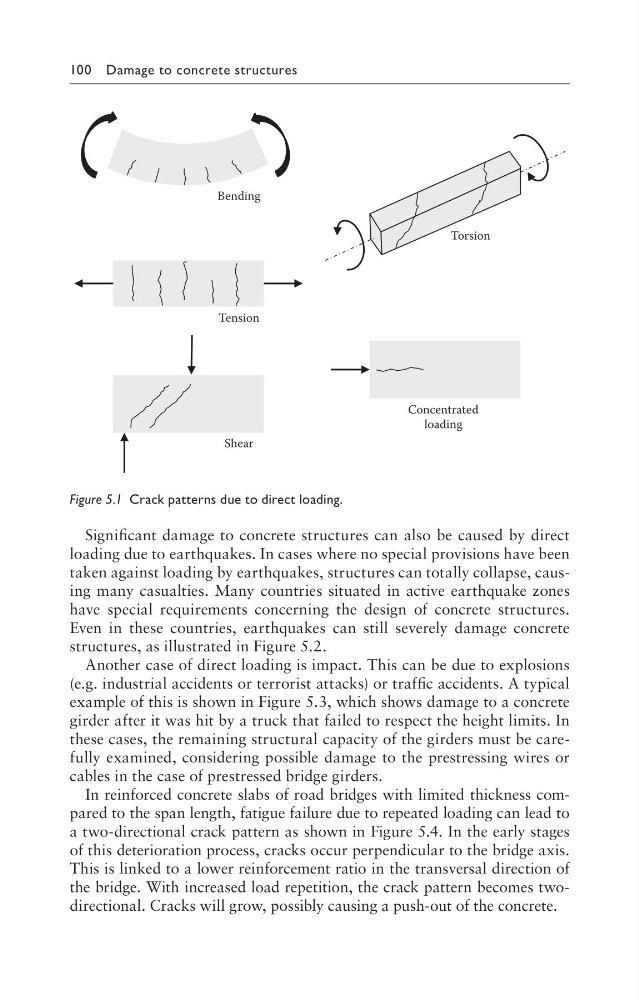
Figure 5.1 Crack patterns due to direct loading.
Significant damage to concrete structures can also be caused by direct
loading due to earthquakes. In cases where no special provisions have been
taken against loading by earthquakes, structures can totally collapse, causing many casualties. Many countries situated in active earthquake zones
have special requirements concerning the design of concrete structures.
Even in these countries, earthquakes can still severely damage concrete
structures, as illustrated in Figure 5.2.
Another case of direct loading is impact. This can be due to explosions
(e.g. industrial accidents or terrorist attacks) or traffic accidents. A typical
example of this is shown in Figure 5.3, which shows damage to a concrete
girder after it was hit by a truck that failed to respect the height limits. In
these cases, the remaining structural capacity of the girders must be carefully examined, considering possible damage to the prestressing wires or
cables in the case of prestressed bridge girders.
In reinforced concrete slabs of road bridges with limited thickness compared to the span length, fatigue failure due to repeated loading can lead to
a two-directional crack pattern as shown in Figure 5.4. In the early stages
of this deterioration process, cracks occur perpendicular to the bridge axis.
This is linked to a lower reinforcement ratio in the transversal direction of
the bridge. With increased load repetition, the crack pattern becomes twodirectional. Cracks will grow, possibly causing a push-out of the concrete.
Concentrated
loading
Torsion
Bending
Tension
Shear
Figure 5.1 Crack patterns due to direct loading.