

A Preliminary Investigation into the Environmental and Social …
429
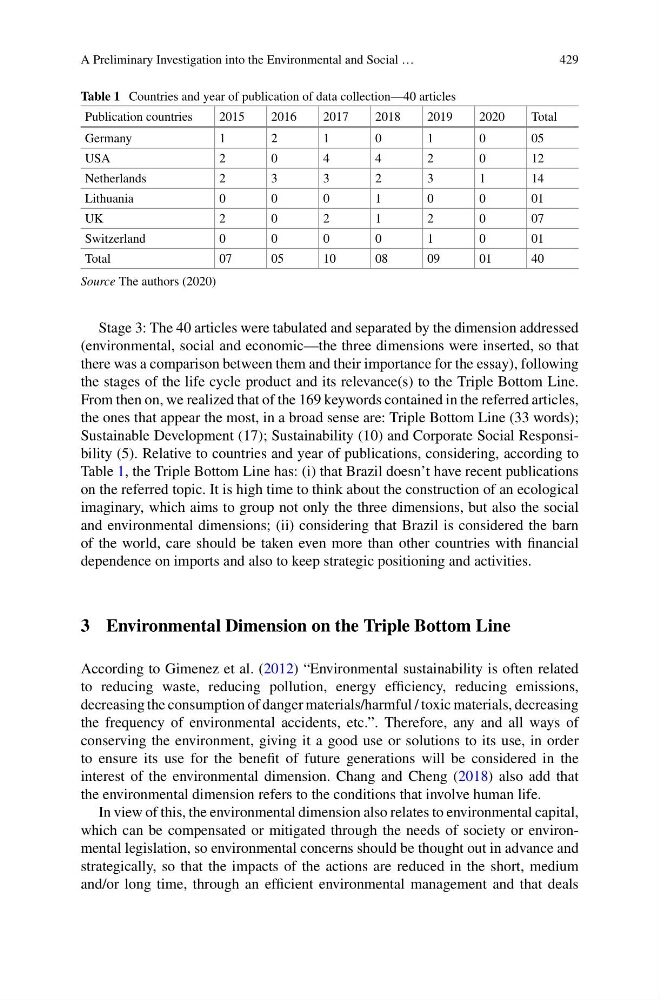
Table 1 Countries and year of publication of data collection—40 articles
Publication countries
2015
2016
2017
2018
2019
2020
Total
Germany
1
2
1
0
1
0
05
USA
2
0
4
4
2
0
12
Netherlands
2
3
3
2
3
1
14
Lithuania
0
0
0
1
0
0
01
UK
2
0
2
1
2
0
07
Switzerland
0
0
0
0
1
0
01
Total
07
05
10
08
09
01
40
Source The authors (2020)
Stage 3: The 40 articles were tabulated and separated by the dimension addressed
(environmental, social and economic—the three dimensions were inserted, so that
there was a comparison between them and their importance for the essay), following
the stages of the life cycle product and its relevance(s) to the Triple Bottom Line.
From then on, we realized that of the 169 keywords contained in the referred articles,
the ones that appear the most, in a broad sense are: Triple Bottom Line (33 words);
Sustainable Development (17); Sustainability (10) and Corporate Social Responsibility (5). Relative to countries and year of publications, considering, according to
Table 1, the Triple Bottom Line has: (i) that Brazil doesn’t have recent publications
on the referred topic. It is high time to think about the construction of an ecological
imaginary, which aims to group not only the three dimensions, but also the social
and environmental dimensions; (ii) considering that Brazil is considered the barn
of the world, care should be taken even more than other countries with financial
dependence on imports and also to keep strategic positioning and activities.
3 Environmental Dimension on the Triple Bottom Line
According to Gimenez et al. (2012) “Environmental sustainability is often related
to reducing waste, reducing pollution, energy efficiency, reducing emissions,
decreasing the consumption of danger materials/harmful / toxic materials, decreasing
the frequency of environmental accidents, etc.”. Therefore, any and all ways of
conserving the environment, giving it a good use or solutions to its use, in order
to ensure its use for the benefit of future generations will be considered in the
interest of the environmental dimension. Chang and Cheng (2018) also add that
the environmental dimension refers to the conditions that involve human life.
In view of this, the environmental dimension also relates to environmental capital,
which can be compensated or mitigated through the needs of society or environmental legislation, so environmental concerns should be thought out in advance and
strategically, so that the impacts of the actions are reduced in the short, medium
and/or long time, through an efficient environmental management and that deals
429
Table 1 Countries and year of publication of data collection—40 articles
Publication countries
2015
2016
2017
2018
2019
2020
Total
Germany
1
2
1
0
1
0
05
USA
2
0
4
4
2
0
12
Netherlands
2
3
3
2
3
1
14
Lithuania
0
0
0
1
0
0
01
UK
2
0
2
1
2
0
07
Switzerland
0
0
0
0
1
0
01
Total
07
05
10
08
09
01
40
Source The authors (2020)
Stage 3: The 40 articles were tabulated and separated by the dimension addressed
(environmental, social and economic—the three dimensions were inserted, so that
there was a comparison between them and their importance for the essay), following
the stages of the life cycle product and its relevance(s) to the Triple Bottom Line.
From then on, we realized that of the 169 keywords contained in the referred articles,
the ones that appear the most, in a broad sense are: Triple Bottom Line (33 words);
Sustainable Development (17); Sustainability (10) and Corporate Social Responsibility (5). Relative to countries and year of publications, considering, according to
Table 1, the Triple Bottom Line has: (i) that Brazil doesn’t have recent publications
on the referred topic. It is high time to think about the construction of an ecological
imaginary, which aims to group not only the three dimensions, but also the social
and environmental dimensions; (ii) considering that Brazil is considered the barn
of the world, care should be taken even more than other countries with financial
dependence on imports and also to keep strategic positioning and activities.
3 Environmental Dimension on the Triple Bottom Line
According to Gimenez et al. (2012) “Environmental sustainability is often related
to reducing waste, reducing pollution, energy efficiency, reducing emissions,
decreasing the consumption of danger materials/harmful / toxic materials, decreasing
the frequency of environmental accidents, etc.”. Therefore, any and all ways of
conserving the environment, giving it a good use or solutions to its use, in order
to ensure its use for the benefit of future generations will be considered in the
interest of the environmental dimension. Chang and Cheng (2018) also add that
the environmental dimension refers to the conditions that involve human life.
In view of this, the environmental dimension also relates to environmental capital,
which can be compensated or mitigated through the needs of society or environmental legislation, so environmental concerns should be thought out in advance and
strategically, so that the impacts of the actions are reduced in the short, medium
and/or long time, through an efficient environmental management and that deals