

412
T. L. Cruz
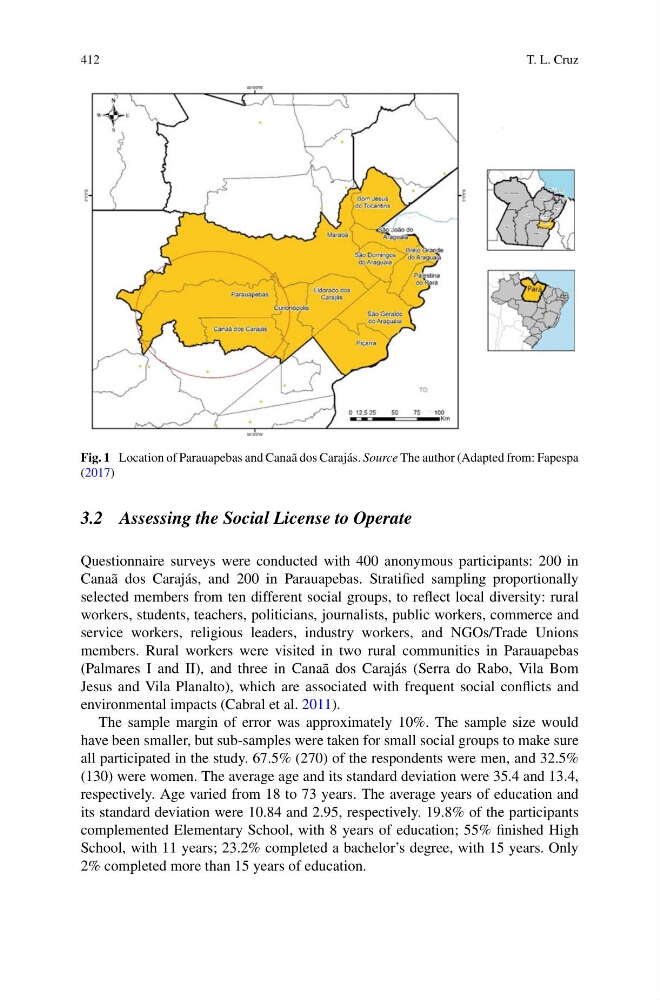
Fig. 1 Location of Parauapebas and Canaã dos Carajás. Source The author (Adapted from: Fapespa
(2017)
3.2 Assessing the Social License to Operate
Questionnaire surveys were conducted with 400 anonymous participants: 200 in
Canaã dos Carajás, and 200 in Parauapebas. Stratified sampling proportionally
selected members from ten different social groups, to reflect local diversity: rural
workers, students, teachers, politicians, journalists, public workers, commerce and
service workers, religious leaders, industry workers, and NGOs/Trade Unions
members. Rural workers were visited in two rural communities in Parauapebas
(Palmares I and II), and three in Canaã dos Carajás (Serra do Rabo, Vila Bom
Jesus and Vila Planalto), which are associated with frequent social conflicts and
environmental impacts (Cabral et al. 2011).
The sample margin of error was approximately 10%. The sample size would
have been smaller, but sub-samples were taken for small social groups to make sure
all participated in the study. 67.5% (270) of the respondents were men, and 32.5%
(130) were women. The average age and its standard deviation were 35.4 and 13.4,
respectively. Age varied from 18 to 73 years. The average years of education and
its standard deviation were 10.84 and 2.95, respectively. 19.8% of the participants
complemented Elementary School, with 8 years of education; 55% finished High
School, with 11 years; 23.2% completed a bachelor’s degree, with 15 years. Only
2% completed more than 15 years of education.
T. L. Cruz
Fig. 1 Location of Parauapebas and Canaã dos Carajás. Source The author (Adapted from: Fapespa
(2017)
3.2 Assessing the Social License to Operate
Questionnaire surveys were conducted with 400 anonymous participants: 200 in
Canaã dos Carajás, and 200 in Parauapebas. Stratified sampling proportionally
selected members from ten different social groups, to reflect local diversity: rural
workers, students, teachers, politicians, journalists, public workers, commerce and
service workers, religious leaders, industry workers, and NGOs/Trade Unions
members. Rural workers were visited in two rural communities in Parauapebas
(Palmares I and II), and three in Canaã dos Carajás (Serra do Rabo, Vila Bom
Jesus and Vila Planalto), which are associated with frequent social conflicts and
environmental impacts (Cabral et al. 2011).
The sample margin of error was approximately 10%. The sample size would
have been smaller, but sub-samples were taken for small social groups to make sure
all participated in the study. 67.5% (270) of the respondents were men, and 32.5%
(130) were women. The average age and its standard deviation were 35.4 and 13.4,
respectively. Age varied from 18 to 73 years. The average years of education and
its standard deviation were 10.84 and 2.95, respectively. 19.8% of the participants
complemented Elementary School, with 8 years of education; 55% finished High
School, with 11 years; 23.2% completed a bachelor’s degree, with 15 years. Only
2% completed more than 15 years of education.