

342
L. de S. Soares et al.
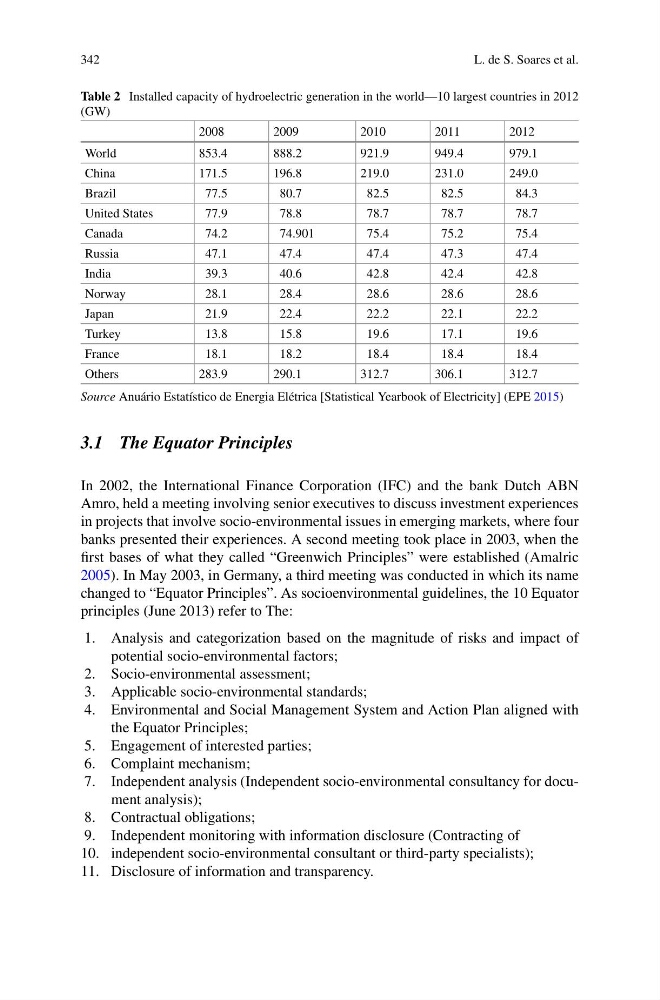
Table 2 Installed capacity of hydroelectric generation in the world—10 largest countries in 2012
(GW)
2008
2009
2010
2011
2012
World
853.4
888.2
921.9
949.4
979.1
China
171.5
196.8
219.0
231.0
249.0
Brazil
77.5
80.7
82.5
82.5
84.3
United States
77.9
78.8
78.7
78.7
78.7
Canada
74.2
74.901
75.4
75.2
75.4
Russia
47.1
47.4
47.4
47.3
47.4
India
39.3
40.6
42.8
42.4
42.8
Norway
28.1
28.4
28.6
28.6
28.6
Japan
21.9
22.4
22.2
22.1
22.2
Turkey
13.8
15.8
19.6
17.1
19.6
France
18.1
18.2
18.4
18.4
18.4
Others
283.9
290.1
312.7
306.1
312.7
Source Anuário Estatístico de Energia Elétrica [Statistical Yearbook of Electricity] (EPE 2015)
3.1 The Equator Principles
In 2002, the International Finance Corporation (IFC) and the bank Dutch ABN
Amro, held a meeting involving senior executives to discuss investment experiences
in projects that involve socio-environmental issues in emerging markets, where four
banks presented their experiences. A second meeting took place in 2003, when the
first bases of what they called “Greenwich Principles” were established (Amalric
2005). In May 2003, in Germany, a third meeting was conducted in which its name
changed to “Equator Principles”. As socioenvironmental guidelines, the 10 Equator
principles (June 2013) refer to The:
1. Analysis and categorization based on the magnitude of risks and impact of
potential socio-environmental factors;
2. Socio-environmental assessment;
3. Applicable socio-environmental standards;
4. Environmental and Social Management System and Action Plan aligned with
the Equator Principles;
5. Engagement of interested parties;
6. Complaint mechanism;
7. Independent analysis (Independent socio-environmental consultancy for document analysis);
8. Contractual obligations;
9. Independent monitoring with information disclosure (Contracting of
10. independent socio-environmental consultant or third-party specialists);
11. Disclosure of information and transparency.
L. de S. Soares et al.
Table 2 Installed capacity of hydroelectric generation in the world—10 largest countries in 2012
(GW)
2008
2009
2010
2011
2012
World
853.4
888.2
921.9
949.4
979.1
China
171.5
196.8
219.0
231.0
249.0
Brazil
77.5
80.7
82.5
82.5
84.3
United States
77.9
78.8
78.7
78.7
78.7
Canada
74.2
74.901
75.4
75.2
75.4
Russia
47.1
47.4
47.4
47.3
47.4
India
39.3
40.6
42.8
42.4
42.8
Norway
28.1
28.4
28.6
28.6
28.6
Japan
21.9
22.4
22.2
22.1
22.2
Turkey
13.8
15.8
19.6
17.1
19.6
France
18.1
18.2
18.4
18.4
18.4
Others
283.9
290.1
312.7
306.1
312.7
Source Anuário Estatístico de Energia Elétrica [Statistical Yearbook of Electricity] (EPE 2015)
3.1 The Equator Principles
In 2002, the International Finance Corporation (IFC) and the bank Dutch ABN
Amro, held a meeting involving senior executives to discuss investment experiences
in projects that involve socio-environmental issues in emerging markets, where four
banks presented their experiences. A second meeting took place in 2003, when the
first bases of what they called “Greenwich Principles” were established (Amalric
2005). In May 2003, in Germany, a third meeting was conducted in which its name
changed to “Equator Principles”. As socioenvironmental guidelines, the 10 Equator
principles (June 2013) refer to The:
1. Analysis and categorization based on the magnitude of risks and impact of
potential socio-environmental factors;
2. Socio-environmental assessment;
3. Applicable socio-environmental standards;
4. Environmental and Social Management System and Action Plan aligned with
the Equator Principles;
5. Engagement of interested parties;
6. Complaint mechanism;
7. Independent analysis (Independent socio-environmental consultancy for document analysis);
8. Contractual obligations;
9. Independent monitoring with information disclosure (Contracting of
10. independent socio-environmental consultant or third-party specialists);
11. Disclosure of information and transparency.