

Appropriation of Disaster Risk Reduction in Brazil …
9
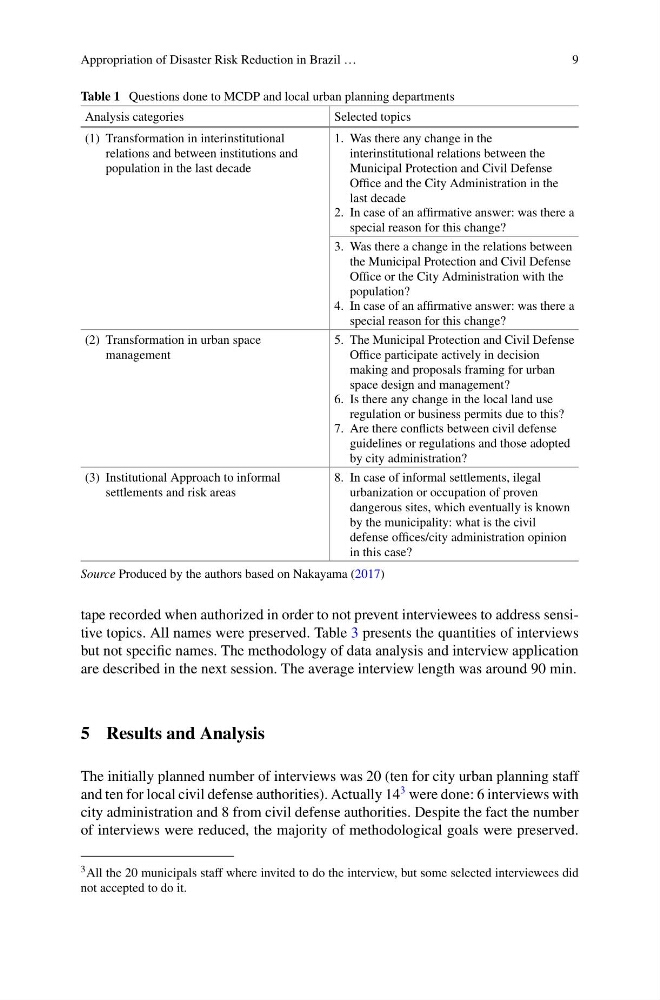
Table 1 Questions done to MCDP and local urban planning departments
Analysis categories
Selected topics
(1) Transformation in interinstitutional
relations and between institutions and
population in the last decade
1. Was there any change in the
interinstitutional relations between the
Municipal Protection and Civil Defense
Office and the City Administration in the
last decade
2. In case of an affirmative answer: was there a
special reason for this change?
3. Was there a change in the relations between
the Municipal Protection and Civil Defense
Office or the City Administration with the
population?
4. In case of an affirmative answer: was there a
special reason for this change?
(2) Transformation in urban space
management
5. The Municipal Protection and Civil Defense
Office participate actively in decision
making and proposals framing for urban
space design and management?
6. Is there any change in the local land use
regulation or business permits due to this?
7. Are there conflicts between civil defense
guidelines or regulations and those adopted
by city administration?
(3) Institutional Approach to informal
settlements and risk areas
8. In case of informal settlements, ilegal
urbanization or occupation of proven
dangerous sites, which eventually is known
by the municipality: what is the civil
defense offices/city administration opinion
in this case?
Source Produced by the authors based on Nakayama (2017)
tape recorded when authorized in order to not prevent interviewees to address sensitive topics. All names were preserved. Table 3 presents the quantities of interviews
but not specific names. The methodology of data analysis and interview application
are described in the next session. The average interview length was around 90 min.
5 Results and Analysis
The initially planned number of interviews was 20 (ten for city urban planning staff
and ten for local civil defense authorities). Actually 14
3 were done: 6 interviews with
city administration and 8 from civil defense authorities. Despite the fact the number
of interviews were reduced, the majority of methodological goals were preserved.
3 All the 20 municipals staff where invited to do the interview, but some selected interviewees did
not accepted to do it.
9
Table 1 Questions done to MCDP and local urban planning departments
Analysis categories
Selected topics
(1) Transformation in interinstitutional
relations and between institutions and
population in the last decade
1. Was there any change in the
interinstitutional relations between the
Municipal Protection and Civil Defense
Office and the City Administration in the
last decade
2. In case of an affirmative answer: was there a
special reason for this change?
3. Was there a change in the relations between
the Municipal Protection and Civil Defense
Office or the City Administration with the
population?
4. In case of an affirmative answer: was there a
special reason for this change?
(2) Transformation in urban space
management
5. The Municipal Protection and Civil Defense
Office participate actively in decision
making and proposals framing for urban
space design and management?
6. Is there any change in the local land use
regulation or business permits due to this?
7. Are there conflicts between civil defense
guidelines or regulations and those adopted
by city administration?
(3) Institutional Approach to informal
settlements and risk areas
8. In case of informal settlements, ilegal
urbanization or occupation of proven
dangerous sites, which eventually is known
by the municipality: what is the civil
defense offices/city administration opinion
in this case?
Source Produced by the authors based on Nakayama (2017)
tape recorded when authorized in order to not prevent interviewees to address sensitive topics. All names were preserved. Table 3 presents the quantities of interviews
but not specific names. The methodology of data analysis and interview application
are described in the next session. The average interview length was around 90 min.
5 Results and Analysis
The initially planned number of interviews was 20 (ten for city urban planning staff
and ten for local civil defense authorities). Actually 14
3 were done: 6 interviews with
city administration and 8 from civil defense authorities. Despite the fact the number
of interviews were reduced, the majority of methodological goals were preserved.
3 All the 20 municipals staff where invited to do the interview, but some selected interviewees did
not accepted to do it.