

190
A. Y. U. Reche et al.
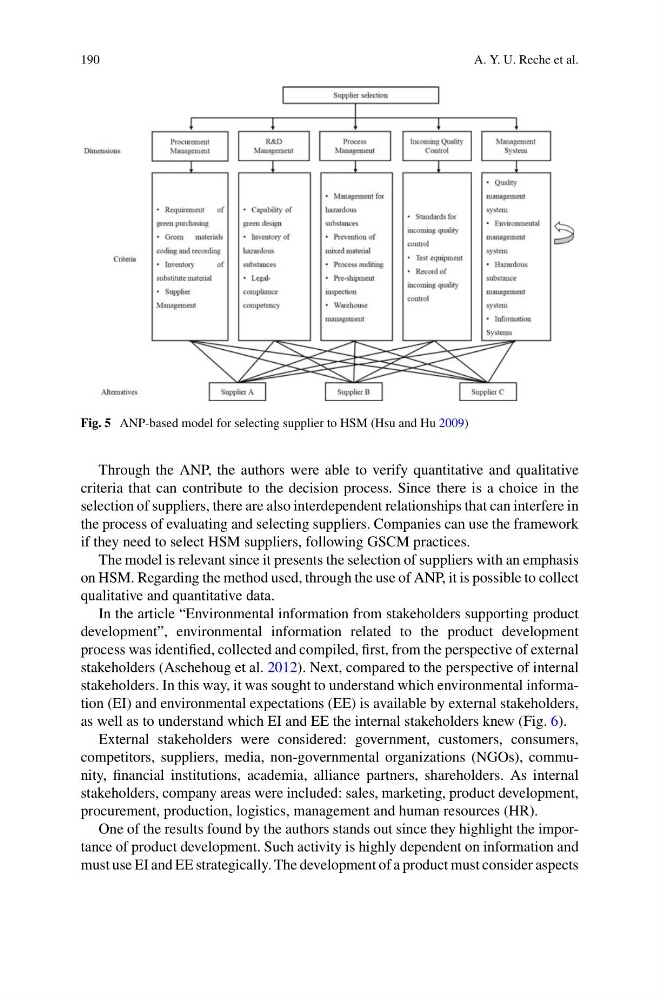
Fig. 5 ANP-based model for selecting supplier to HSM (Hsu and Hu 2009)
Through the ANP, the authors were able to verify quantitative and qualitative
criteria that can contribute to the decision process. Since there is a choice in the
selection of suppliers, there are also interdependent relationships that can interfere in
the process of evaluating and selecting suppliers. Companies can use the framework
if they need to select HSM suppliers, following GSCM practices.
The model is relevant since it presents the selection of suppliers with an emphasis
on HSM. Regarding the method used, through the use of ANP, it is possible to collect
qualitative and quantitative data.
In the article “Environmental information from stakeholders supporting product
development”, environmental information related to the product development
process was identified, collected and compiled, first, from the perspective of external
stakeholders (Aschehoug et al. 2012). Next, compared to the perspective of internal
stakeholders. In this way, it was sought to understand which environmental information (EI) and environmental expectations (EE) is available by external stakeholders,
as well as to understand which EI and EE the internal stakeholders knew (Fig. 6).
External stakeholders were considered: government, customers, consumers,
competitors, suppliers, media, non-governmental organizations (NGOs), community, financial institutions, academia, alliance partners, shareholders. As internal
stakeholders, company areas were included: sales, marketing, product development,
procurement, production, logistics, management and human resources (HR).
One of the results found by the authors stands out since they highlight the importance of product development. Such activity is highly dependent on information and
must use EI and EE strategically. The development of a product must consider aspects
A. Y. U. Reche et al.
Fig. 5 ANP-based model for selecting supplier to HSM (Hsu and Hu 2009)
Through the ANP, the authors were able to verify quantitative and qualitative
criteria that can contribute to the decision process. Since there is a choice in the
selection of suppliers, there are also interdependent relationships that can interfere in
the process of evaluating and selecting suppliers. Companies can use the framework
if they need to select HSM suppliers, following GSCM practices.
The model is relevant since it presents the selection of suppliers with an emphasis
on HSM. Regarding the method used, through the use of ANP, it is possible to collect
qualitative and quantitative data.
In the article “Environmental information from stakeholders supporting product
development”, environmental information related to the product development
process was identified, collected and compiled, first, from the perspective of external
stakeholders (Aschehoug et al. 2012). Next, compared to the perspective of internal
stakeholders. In this way, it was sought to understand which environmental information (EI) and environmental expectations (EE) is available by external stakeholders,
as well as to understand which EI and EE the internal stakeholders knew (Fig. 6).
External stakeholders were considered: government, customers, consumers,
competitors, suppliers, media, non-governmental organizations (NGOs), community, financial institutions, academia, alliance partners, shareholders. As internal
stakeholders, company areas were included: sales, marketing, product development,
procurement, production, logistics, management and human resources (HR).
One of the results found by the authors stands out since they highlight the importance of product development. Such activity is highly dependent on information and
must use EI and EE strategically. The development of a product must consider aspects