

130
M. M. C. Moura and U. Tortato
Table 2 (continued)
Cooperatives Social activities
Batavo
Counts with coat campaign; donates milk box to needy people; conducts
activities with school students promoting social, economic and environmental
awareness; provides access to the regional community to attend cultural activities
Source Authors (2019)
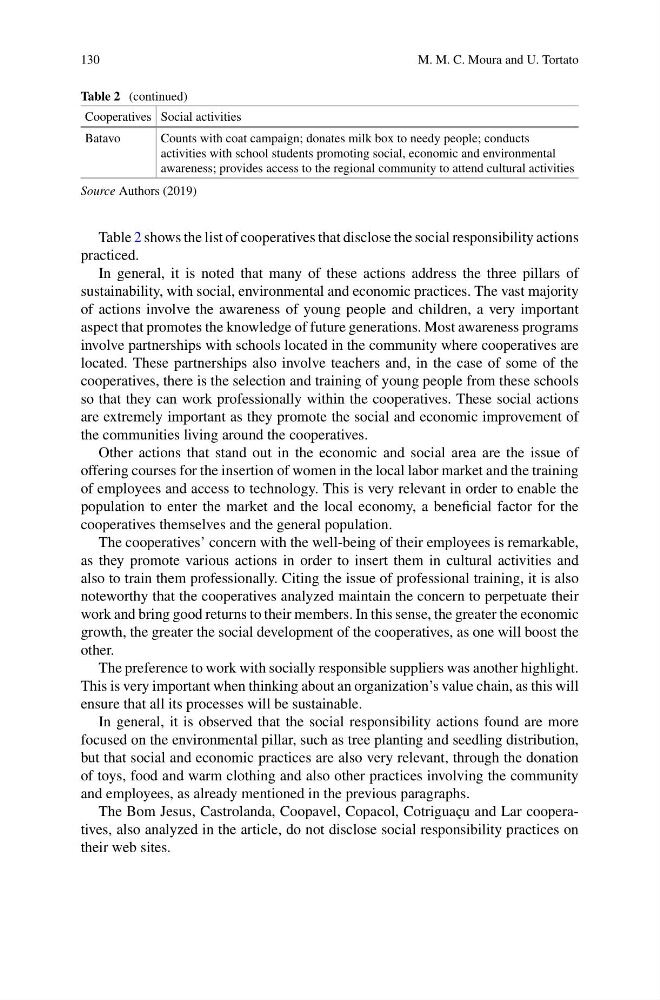
Table 2 shows the list of cooperatives that disclose the social responsibility actions
practiced.
In general, it is noted that many of these actions address the three pillars of
sustainability, with social, environmental and economic practices. The vast majority
of actions involve the awareness of young people and children, a very important
aspect that promotes the knowledge of future generations. Most awareness programs
involve partnerships with schools located in the community where cooperatives are
located. These partnerships also involve teachers and, in the case of some of the
cooperatives, there is the selection and training of young people from these schools
so that they can work professionally within the cooperatives. These social actions
are extremely important as they promote the social and economic improvement of
the communities living around the cooperatives.
Other actions that stand out in the economic and social area are the issue of
offering courses for the insertion of women in the local labor market and the training
of employees and access to technology. This is very relevant in order to enable the
population to enter the market and the local economy, a beneficial factor for the
cooperatives themselves and the general population.
The cooperatives’ concern with the well-being of their employees is remarkable,
as they promote various actions in order to insert them in cultural activities and
also to train them professionally. Citing the issue of professional training, it is also
noteworthy that the cooperatives analyzed maintain the concern to perpetuate their
work and bring good returns to their members. In this sense, the greater the economic
growth, the greater the social development of the cooperatives, as one will boost the
other.
The preference to work with socially responsible suppliers was another highlight.
This is very important when thinking about an organization’s value chain, as this will
ensure that all its processes will be sustainable.
In general, it is observed that the social responsibility actions found are more
focused on the environmental pillar, such as tree planting and seedling distribution,
but that social and economic practices are also very relevant, through the donation
of toys, food and warm clothing and also other practices involving the community
and employees, as already mentioned in the previous paragraphs.
The Bom Jesus, Castrolanda, Coopavel, Copacol, Cotriguaçu and Lar cooperatives, also analyzed in the article, do not disclose social responsibility practices on
their web sites.
M. M. C. Moura and U. Tortato
Table 2 (continued)
Cooperatives Social activities
Batavo
Counts with coat campaign; donates milk box to needy people; conducts
activities with school students promoting social, economic and environmental
awareness; provides access to the regional community to attend cultural activities
Source Authors (2019)
Table 2 shows the list of cooperatives that disclose the social responsibility actions
practiced.
In general, it is noted that many of these actions address the three pillars of
sustainability, with social, environmental and economic practices. The vast majority
of actions involve the awareness of young people and children, a very important
aspect that promotes the knowledge of future generations. Most awareness programs
involve partnerships with schools located in the community where cooperatives are
located. These partnerships also involve teachers and, in the case of some of the
cooperatives, there is the selection and training of young people from these schools
so that they can work professionally within the cooperatives. These social actions
are extremely important as they promote the social and economic improvement of
the communities living around the cooperatives.
Other actions that stand out in the economic and social area are the issue of
offering courses for the insertion of women in the local labor market and the training
of employees and access to technology. This is very relevant in order to enable the
population to enter the market and the local economy, a beneficial factor for the
cooperatives themselves and the general population.
The cooperatives’ concern with the well-being of their employees is remarkable,
as they promote various actions in order to insert them in cultural activities and
also to train them professionally. Citing the issue of professional training, it is also
noteworthy that the cooperatives analyzed maintain the concern to perpetuate their
work and bring good returns to their members. In this sense, the greater the economic
growth, the greater the social development of the cooperatives, as one will boost the
other.
The preference to work with socially responsible suppliers was another highlight.
This is very important when thinking about an organization’s value chain, as this will
ensure that all its processes will be sustainable.
In general, it is observed that the social responsibility actions found are more
focused on the environmental pillar, such as tree planting and seedling distribution,
but that social and economic practices are also very relevant, through the donation
of toys, food and warm clothing and also other practices involving the community
and employees, as already mentioned in the previous paragraphs.
The Bom Jesus, Castrolanda, Coopavel, Copacol, Cotriguaçu and Lar cooperatives, also analyzed in the article, do not disclose social responsibility practices on
their web sites.