

Temperature rise (°C)
1000
300
100
90
80
70
60
50
40
37
30
High-temperature damage
Middle-temperature damage
Low-temperature damage
Baseline body temperature
300
1000
100
Figure legend
90
80
70
60
DNA damage
50
Cellular survival + high CSR
40
37
30
Tissue ablation, carbonization,
and molecular dissociation
“Popcorn effect, ” liquids vaporize,
irreversible tissue damage
Tissue dessication
Extracellular structural proteins
Visible tissue damage (blister)
Tissue necrosis
ATP machinery
Cellular death
Cell membrane deformation
Cellular survival + moderate CSR
Cellular survival + mild CSR
Cellular survival + no CSR
Pain (no burn)
0.001
0.01
0.1
1
10
100
1000
Exposure duration (min)
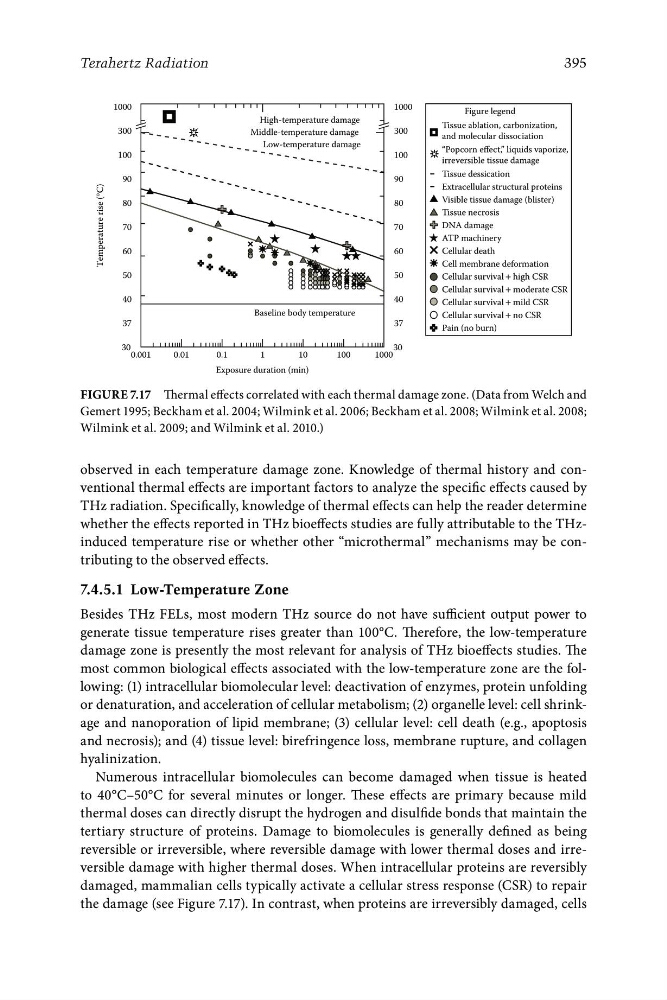
Figure 7.17 Thermal effects correlated with each thermal damage zone. (Data from Welch and
Gemert 1995; Beckham et al. 2004; Wilmink et al. 2006; Beckham et al. 2008; Wilmink et al. 2008;
Wilmink et al. 2009; and Wilmink et al. 2010.)
395
Terahertz Radiation
observed in each temperature damage zone. Knowledge of thermal history and conventional thermal effects are important factors to analyze the specific effects caused by
THz radiation. Specifically, knowledge of thermal effects can help the reader determine
whether the effects reported in THz bioeffects studies are fully attributable to the THzinduced temperature rise or whether other “microthermal” mechanisms may be contributing to the observed effects.
7.4.5.1 Low-Temperature Zone
Besides THz FELs, most modern THz source do not have sufficient output power to
generate tissue temperature rises greater than 100°C. Therefore, the low-temperature
damage zone is presently the most relevant for analysis of THz bioeffects studies. The
most common biological effects associated with the low-temperature zone are the following: (1) intracellular biomolecular level: deactivation of enzymes, protein unfolding
or denaturation, and acceleration of cellular metabolism; (2) organelle level: cell shrinkage and nanoporation of lipid membrane; (3) cellular level: cell death (e.g., apoptosis
and necrosis); and (4) tissue level: birefringence loss, membrane rupture, and collagen
hyalinization.
Numerous intracellular biomolecules can become damaged when tissue is heated
to 40°C–50°C for several minutes or longer. These effects are primary because mild
thermal doses can directly disrupt the hydrogen and disulfide bonds that maintain the
tertiary structure of proteins. Damage to biomolecules is generally defined as being
reversible or irreversible, where reversible damage with lower thermal doses and irreversible damage with higher thermal doses. When intracellular proteins are reversibly
damaged, mammalian cells typically activate a cellular stress response (CSR) to repair
the damage (see Figure 7.17). In contrast, when proteins are irreversibly damaged, cells
1000
300
100
90
80
70
60
50
40
37
30
High-temperature damage
Middle-temperature damage
Low-temperature damage
Baseline body temperature
300
1000
100
Figure legend
90
80
70
60
DNA damage
50
Cellular survival + high CSR
40
37
30
Tissue ablation, carbonization,
and molecular dissociation
“Popcorn effect, ” liquids vaporize,
irreversible tissue damage
Tissue dessication
Extracellular structural proteins
Visible tissue damage (blister)
Tissue necrosis
ATP machinery
Cellular death
Cell membrane deformation
Cellular survival + moderate CSR
Cellular survival + mild CSR
Cellular survival + no CSR
Pain (no burn)
0.001
0.01
0.1
1
10
100
1000
Exposure duration (min)
Figure 7.17 Thermal effects correlated with each thermal damage zone. (Data from Welch and
Gemert 1995; Beckham et al. 2004; Wilmink et al. 2006; Beckham et al. 2008; Wilmink et al. 2008;
Wilmink et al. 2009; and Wilmink et al. 2010.)
395
Terahertz Radiation
observed in each temperature damage zone. Knowledge of thermal history and conventional thermal effects are important factors to analyze the specific effects caused by
THz radiation. Specifically, knowledge of thermal effects can help the reader determine
whether the effects reported in THz bioeffects studies are fully attributable to the THzinduced temperature rise or whether other “microthermal” mechanisms may be contributing to the observed effects.
7.4.5.1 Low-Temperature Zone
Besides THz FELs, most modern THz source do not have sufficient output power to
generate tissue temperature rises greater than 100°C. Therefore, the low-temperature
damage zone is presently the most relevant for analysis of THz bioeffects studies. The
most common biological effects associated with the low-temperature zone are the following: (1) intracellular biomolecular level: deactivation of enzymes, protein unfolding
or denaturation, and acceleration of cellular metabolism; (2) organelle level: cell shrinkage and nanoporation of lipid membrane; (3) cellular level: cell death (e.g., apoptosis
and necrosis); and (4) tissue level: birefringence loss, membrane rupture, and collagen
hyalinization.
Numerous intracellular biomolecules can become damaged when tissue is heated
to 40°C–50°C for several minutes or longer. These effects are primary because mild
thermal doses can directly disrupt the hydrogen and disulfide bonds that maintain the
tertiary structure of proteins. Damage to biomolecules is generally defined as being
reversible or irreversible, where reversible damage with lower thermal doses and irreversible damage with higher thermal doses. When intracellular proteins are reversibly
damaged, mammalian cells typically activate a cellular stress response (CSR) to repair
the damage (see Figure 7.17). In contrast, when proteins are irreversibly damaged, cells