

350
Electromagnetic Fields in Biological Systems
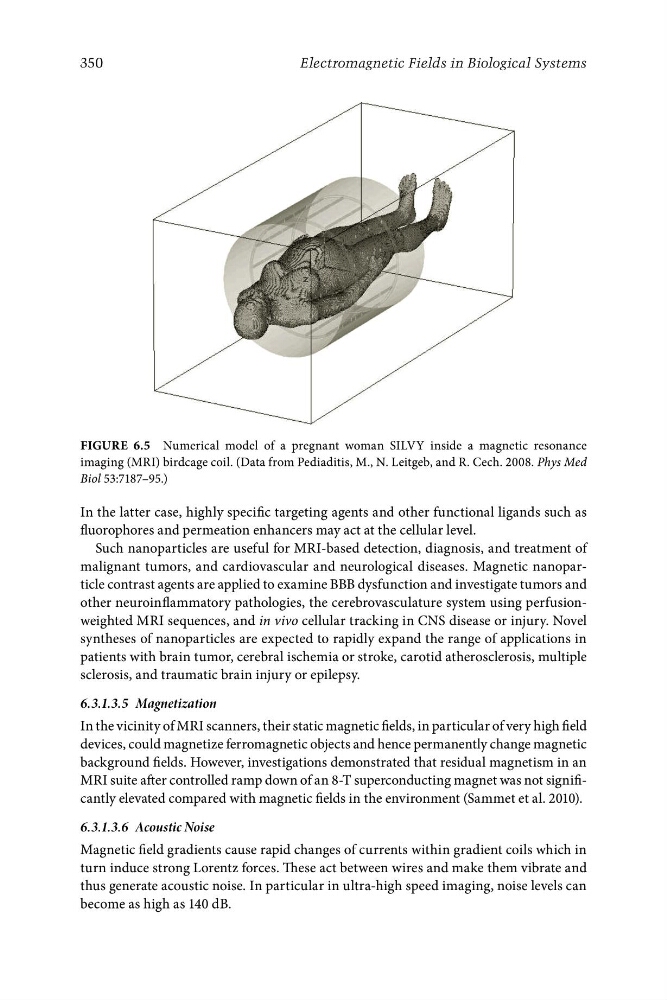
Figure 6.5 Numerical model of a pregnant woman SILVY inside a magnetic resonance
imaging (MRI) birdcage coil. (Data from Pediaditis, M., N. Leitgeb, and R. Cech. 2008. Phys Med
Biol 53:7187–95.)
In the latter case, highly specific targeting agents and other functional ligands such as
fluorophores and permeation enhancers may act at the cellular level.
Such nanoparticles are useful for MRI-based detection, diagnosis, and treatment of
malignant tumors, and cardiovascular and neurological diseases. Magnetic nanoparticle contrast agents are applied to examine BBB dysfunction and investigate tumors and
other neuroinflammatory pathologies, the cerebrovasculature system using perfusionweighted MRI sequences, and in vivo cellular tracking in CNS disease or injury. Novel
syntheses of nanoparticles are expected to rapidly expand the range of applications in
patients with brain tumor, cerebral ischemia or stroke, carotid atherosclerosis, multiple
sclerosis, and traumatic brain injury or epilepsy.
6.3.1.3.5 Magnetization
In the vicinity of MRI scanners, their static magnetic fields, in particular of very high field
devices, could magnetize ferromagnetic objects and hence permanently change magnetic
background fields. However, investigations demonstrated that residual magnetism in an
MRI suite after controlled ramp down of an 8-T superconducting magnet was not significantly elevated compared with magnetic fields in the environment (Sammet et al. 2010).
6.3.1.3.6 Acoustic Noise
Magnetic field gradients cause rapid changes of currents within gradient coils which in
turn induce strong Lorentz forces. These act between wires and make them vibrate and
thus generate acoustic noise. In particular in ultra-high speed imaging, noise levels can
become as high as 140 dB.
Electromagnetic Fields in Biological Systems
Figure 6.5 Numerical model of a pregnant woman SILVY inside a magnetic resonance
imaging (MRI) birdcage coil. (Data from Pediaditis, M., N. Leitgeb, and R. Cech. 2008. Phys Med
Biol 53:7187–95.)
In the latter case, highly specific targeting agents and other functional ligands such as
fluorophores and permeation enhancers may act at the cellular level.
Such nanoparticles are useful for MRI-based detection, diagnosis, and treatment of
malignant tumors, and cardiovascular and neurological diseases. Magnetic nanoparticle contrast agents are applied to examine BBB dysfunction and investigate tumors and
other neuroinflammatory pathologies, the cerebrovasculature system using perfusionweighted MRI sequences, and in vivo cellular tracking in CNS disease or injury. Novel
syntheses of nanoparticles are expected to rapidly expand the range of applications in
patients with brain tumor, cerebral ischemia or stroke, carotid atherosclerosis, multiple
sclerosis, and traumatic brain injury or epilepsy.
6.3.1.3.5 Magnetization
In the vicinity of MRI scanners, their static magnetic fields, in particular of very high field
devices, could magnetize ferromagnetic objects and hence permanently change magnetic
background fields. However, investigations demonstrated that residual magnetism in an
MRI suite after controlled ramp down of an 8-T superconducting magnet was not significantly elevated compared with magnetic fields in the environment (Sammet et al. 2010).
6.3.1.3.6 Acoustic Noise
Magnetic field gradients cause rapid changes of currents within gradient coils which in
turn induce strong Lorentz forces. These act between wires and make them vibrate and
thus generate acoustic noise. In particular in ultra-high speed imaging, noise levels can
become as high as 140 dB.