

313
Mobile Communication Fields in Biological Systems
Position - BL
Position - BC
Position - BR
Position - TL
Position - TC
Position - TR
1.04 m
Head
Chest
Horizontal
position
0.78 m
34 cm
(a)
(b)
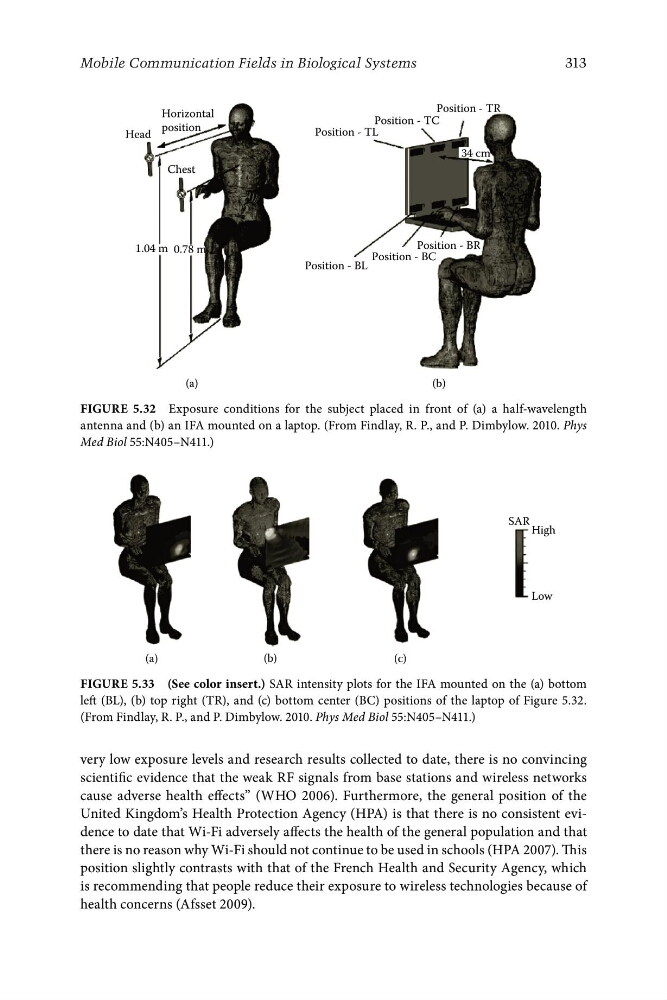
Figure 5.32 Exposure conditions for the subject placed in front of (a) a half-wavelength
antenna and (b) an IFA mounted on a laptop. (From Findlay, R. P., and P. Dimbylow. 2010. Phys
Med Biol 55:N405–N411.)
SAR High
Low
(a)
(b)
(c)
Figure 5.33 (See color insert.) SAR intensity plots for the IFA mounted on the (a) bottom
left (BL), (b) top right (TR), and (c) bottom center (BC) positions of the laptop of Figure 5.32.
(From Findlay, R. P., and P. Dimbylow. 2010. Phys Med Biol 55:N405–N411.)
very low exposure levels and research results collected to date, there is no convincing
scientific evidence that the weak RF signals from base stations and wireless networks
cause adverse health effects” (WHO 2006). Furthermore, the general position of the
United Kingdom’s Health Protection Agency (HPA) is that there is no consistent evidence to date that Wi-Fi adversely affects the health of the general population and that
there is no reason why Wi-Fi should not continue to be used in schools (HPA 2007). This
position slightly contrasts with that of the French Health and Security Agency, which
is recommending that people reduce their exposure to wireless technologies because of
health concerns (Afsset 2009).
Mobile Communication Fields in Biological Systems
Position - BL
Position - BC
Position - BR
Position - TL
Position - TC
Position - TR
1.04 m
Head
Chest
Horizontal
position
0.78 m
34 cm
(a)
(b)
Figure 5.32 Exposure conditions for the subject placed in front of (a) a half-wavelength
antenna and (b) an IFA mounted on a laptop. (From Findlay, R. P., and P. Dimbylow. 2010. Phys
Med Biol 55:N405–N411.)
SAR High
Low
(a)
(b)
(c)
Figure 5.33 (See color insert.) SAR intensity plots for the IFA mounted on the (a) bottom
left (BL), (b) top right (TR), and (c) bottom center (BC) positions of the laptop of Figure 5.32.
(From Findlay, R. P., and P. Dimbylow. 2010. Phys Med Biol 55:N405–N411.)
very low exposure levels and research results collected to date, there is no convincing
scientific evidence that the weak RF signals from base stations and wireless networks
cause adverse health effects” (WHO 2006). Furthermore, the general position of the
United Kingdom’s Health Protection Agency (HPA) is that there is no consistent evidence to date that Wi-Fi adversely affects the health of the general population and that
there is no reason why Wi-Fi should not continue to be used in schools (HPA 2007). This
position slightly contrasts with that of the French Health and Security Agency, which
is recommending that people reduce their exposure to wireless technologies because of
health concerns (Afsset 2009).