

specifically designed for the synthesis of suitable and desired fuels. Fourthgeneration biofuels are used to extract lipid extensively using synthetic biology
techniques. This technique also aims to harvest high-quality biofuels having high
octane number which indicates the quality of fuels (Hays and Ducat 2015). It also
enhances carbon dioxide sequestration using bioengineered microalgae (Dutta et al.
2014). Carbon dioxide sequestration is the conversion of inorganic CO 2 to organic
compounds by the help of photosynthetic organisms (Stitt et al. 2010). These
biofuels are synthesized from inexhaustible raw materials which are inexpensive
and easily available worldwide. Unused agricultural lands and water bodies can be
used as producing site for this biofuel category without destruction of biomass.
2.3 Role of Microorganism in Biofuel Production
The source of the fossil fuels is declining day by day, and at the same time, the world
population is growing, so we can assume that fossil fuels will be finished after a
certain time. Hence, biofuels are considered as a better option of energy that can
fulfill the need of energy in the future. Biofuels are synthesized from biomasses
plant, algae, or microbial cells. There are several mechanisms involved in the
transformation of biomass into biofuels. Several microbial species are also used
for the degradation of lignocellulosic biomass and production of hydrolytic enzymes
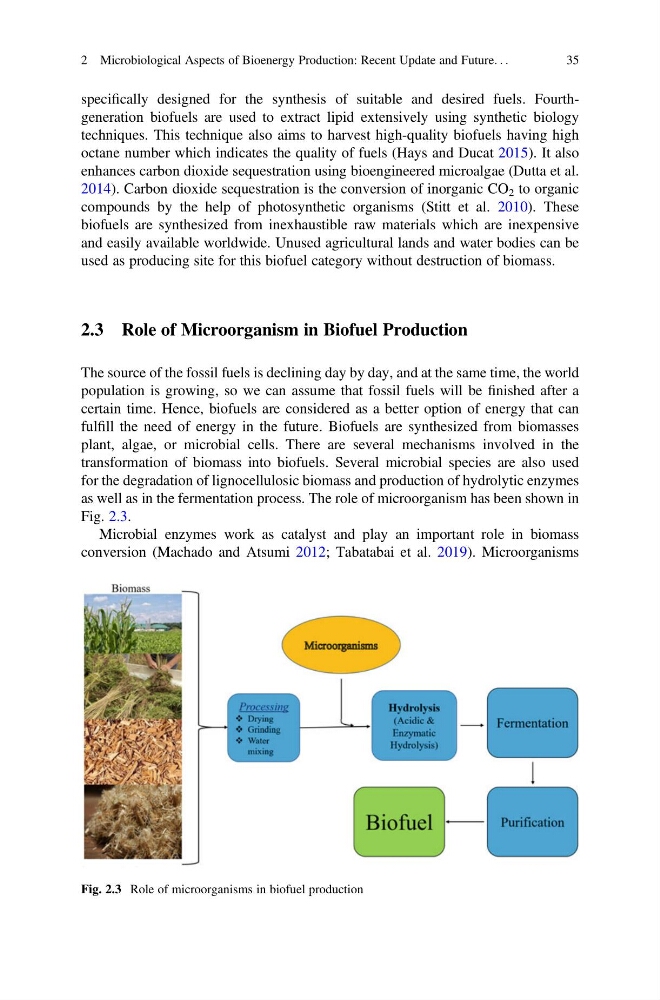
as well as in the fermentation process. The role of microorganism has been shown in
Fig. 2.3.
Microbial enzymes work as catalyst and play an important role in biomass
conversion (Machado and Atsumi 2012; Tabatabai et al. 2019). Microorganisms
Fig. 2.3 Role of microorganisms in biofuel production
2 Microbiological Aspects of Bioenergy Production: Recent Update and Future. . .
35
techniques. This technique also aims to harvest high-quality biofuels having high
octane number which indicates the quality of fuels (Hays and Ducat 2015). It also
enhances carbon dioxide sequestration using bioengineered microalgae (Dutta et al.
2014). Carbon dioxide sequestration is the conversion of inorganic CO 2 to organic
compounds by the help of photosynthetic organisms (Stitt et al. 2010). These
biofuels are synthesized from inexhaustible raw materials which are inexpensive
and easily available worldwide. Unused agricultural lands and water bodies can be
used as producing site for this biofuel category without destruction of biomass.
2.3 Role of Microorganism in Biofuel Production
The source of the fossil fuels is declining day by day, and at the same time, the world
population is growing, so we can assume that fossil fuels will be finished after a
certain time. Hence, biofuels are considered as a better option of energy that can
fulfill the need of energy in the future. Biofuels are synthesized from biomasses
plant, algae, or microbial cells. There are several mechanisms involved in the
transformation of biomass into biofuels. Several microbial species are also used
for the degradation of lignocellulosic biomass and production of hydrolytic enzymes
as well as in the fermentation process. The role of microorganism has been shown in
Fig. 2.3.
Microbial enzymes work as catalyst and play an important role in biomass
conversion (Machado and Atsumi 2012; Tabatabai et al. 2019). Microorganisms
Fig. 2.3 Role of microorganisms in biofuel production
2 Microbiological Aspects of Bioenergy Production: Recent Update and Future. . .
35