

4 Anthropogenic Water Reservoirs in Poland
69
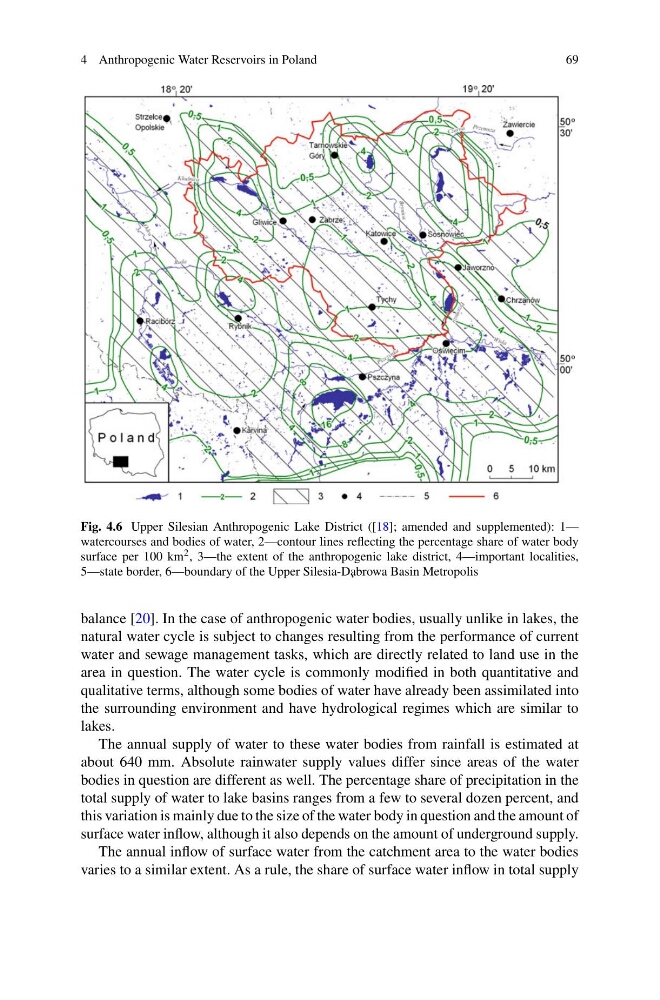
Fig. 4.6 Upper Silesian Anthropogenic Lake District ([18]; amended and supplemented): 1—
watercourses and bodies of water, 2—contour lines reflecting the percentage share of water body
surface per 100 km 2 , 3—the extent of the anthropogenic lake district, 4—important localities,
5—state border, 6—boundary of the Upper Silesia-D˛ abrowa Basin Metropolis
balance [20]. In the case of anthropogenic water bodies, usually unlike in lakes, the
natural water cycle is subject to changes resulting from the performance of current
water and sewage management tasks, which are directly related to land use in the
area in question. The water cycle is commonly modified in both quantitative and
qualitative terms, although some bodies of water have already been assimilated into
the surrounding environment and have hydrological regimes which are similar to
lakes.
The annual supply of water to these water bodies from rainfall is estimated at
about 640 mm. Absolute rainwater supply values differ since areas of the water
bodies in question are different as well. The percentage share of precipitation in the
total supply of water to lake basins ranges from a few to several dozen percent, and
this variation is mainly due to the size of the water body in question and the amount of
surface water inflow, although it also depends on the amount of underground supply.
The annual inflow of surface water from the catchment area to the water bodies
varies to a similar extent. As a rule, the share of surface water inflow in total supply
69
Fig. 4.6 Upper Silesian Anthropogenic Lake District ([18]; amended and supplemented): 1—
watercourses and bodies of water, 2—contour lines reflecting the percentage share of water body
surface per 100 km 2 , 3—the extent of the anthropogenic lake district, 4—important localities,
5—state border, 6—boundary of the Upper Silesia-D˛ abrowa Basin Metropolis
balance [20]. In the case of anthropogenic water bodies, usually unlike in lakes, the
natural water cycle is subject to changes resulting from the performance of current
water and sewage management tasks, which are directly related to land use in the
area in question. The water cycle is commonly modified in both quantitative and
qualitative terms, although some bodies of water have already been assimilated into
the surrounding environment and have hydrological regimes which are similar to
lakes.
The annual supply of water to these water bodies from rainfall is estimated at
about 640 mm. Absolute rainwater supply values differ since areas of the water
bodies in question are different as well. The percentage share of precipitation in the
total supply of water to lake basins ranges from a few to several dozen percent, and
this variation is mainly due to the size of the water body in question and the amount of
surface water inflow, although it also depends on the amount of underground supply.
The annual inflow of surface water from the catchment area to the water bodies
varies to a similar extent. As a rule, the share of surface water inflow in total supply