

442
R. Graf and K. Pyszny
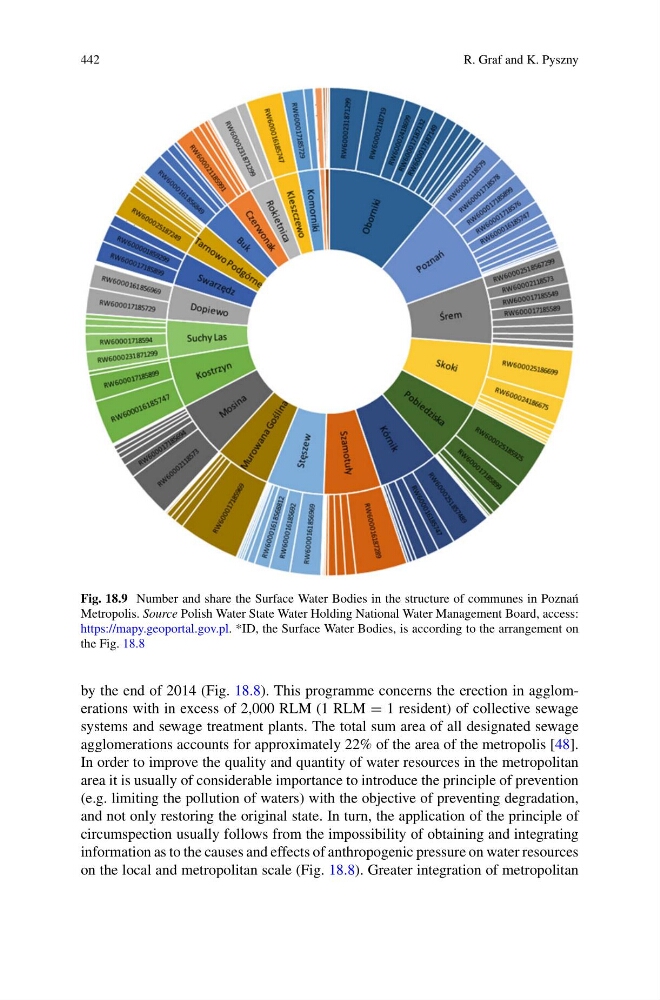
Fig. 18.9 Number and share the Surface Water Bodies in the structure of communes in Pozna´ n
Metropolis. Source Polish Water State Water Holding National Water Management Board, access:
https://mapy.geoportal.gov.pl. *ID, the Surface Water Bodies, is according to the arrangement on
the Fig. 18.8
by the end of 2014 (Fig. 18.8). This programme concerns the erection in agglomerations with in excess of 2,000 RLM (1 RLM = 1 resident) of collective sewage
systems and sewage treatment plants. The total sum area of all designated sewage
agglomerations accounts for approximately 22% of the area of the metropolis [48].
In order to improve the quality and quantity of water resources in the metropolitan
area it is usually of considerable importance to introduce the principle of prevention
(e.g. limiting the pollution of waters) with the objective of preventing degradation,
and not only restoring the original state. In turn, the application of the principle of
circumspection usually follows from the impossibility of obtaining and integrating
information as to the causes and effects of anthropogenic pressure on water resources
on the local and metropolitan scale (Fig. 18.8). Greater integration of metropolitan
R. Graf and K. Pyszny
Fig. 18.9 Number and share the Surface Water Bodies in the structure of communes in Pozna´ n
Metropolis. Source Polish Water State Water Holding National Water Management Board, access:
https://mapy.geoportal.gov.pl. *ID, the Surface Water Bodies, is according to the arrangement on
the Fig. 18.8
by the end of 2014 (Fig. 18.8). This programme concerns the erection in agglomerations with in excess of 2,000 RLM (1 RLM = 1 resident) of collective sewage
systems and sewage treatment plants. The total sum area of all designated sewage
agglomerations accounts for approximately 22% of the area of the metropolis [48].
In order to improve the quality and quantity of water resources in the metropolitan
area it is usually of considerable importance to introduce the principle of prevention
(e.g. limiting the pollution of waters) with the objective of preventing degradation,
and not only restoring the original state. In turn, the application of the principle of
circumspection usually follows from the impossibility of obtaining and integrating
information as to the causes and effects of anthropogenic pressure on water resources
on the local and metropolitan scale (Fig. 18.8). Greater integration of metropolitan