

322
E. Neverova-Dziopak
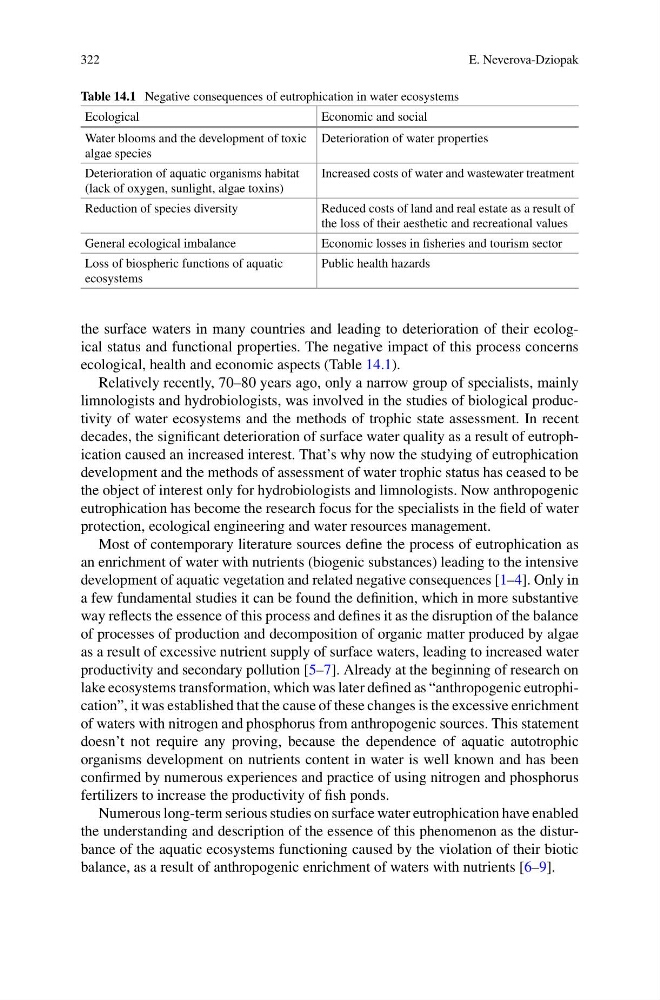
Table 14.1 Negative consequences of eutrophication in water ecosystems
Ecological
Economic and social
Water blooms and the development of toxic
algae species
Deterioration of water properties
Deterioration of aquatic organisms habitat
(lack of oxygen, sunlight, algae toxins)
Increased costs of water and wastewater treatment
Reduction of species diversity
Reduced costs of land and real estate as a result of
the loss of their aesthetic and recreational values
General ecological imbalance
Economic losses in fisheries and tourism sector
Loss of biospheric functions of aquatic
ecosystems
Public health hazards
the surface waters in many countries and leading to deterioration of their ecological status and functional properties. The negative impact of this process concerns
ecological, health and economic aspects (Table 14.1).
Relatively recently, 70–80 years ago, only a narrow group of specialists, mainly
limnologists and hydrobiologists, was involved in the studies of biological productivity of water ecosystems and the methods of trophic state assessment. In recent
decades, the significant deterioration of surface water quality as a result of eutrophication caused an increased interest. That’s why now the studying of eutrophication
development and the methods of assessment of water trophic status has ceased to be
the object of interest only for hydrobiologists and limnologists. Now anthropogenic
eutrophication has become the research focus for the specialists in the field of water
protection, ecological engineering and water resources management.
Most of contemporary literature sources define the process of eutrophication as
an enrichment of water with nutrients (biogenic substances) leading to the intensive
development of aquatic vegetation and related negative consequences [1–4]. Only in
a few fundamental studies it can be found the definition, which in more substantive
way reflects the essence of this process and defines it as the disruption of the balance
of processes of production and decomposition of organic matter produced by algae
as a result of excessive nutrient supply of surface waters, leading to increased water
productivity and secondary pollution [5–7]. Already at the beginning of research on
lake ecosystems transformation, which was later defined as “anthropogenic eutrophication”, it was established that the cause of these changes is the excessive enrichment
of waters with nitrogen and phosphorus from anthropogenic sources. This statement
doesn’t not require any proving, because the dependence of aquatic autotrophic
organisms development on nutrients content in water is well known and has been
confirmed by numerous experiences and practice of using nitrogen and phosphorus
fertilizers to increase the productivity of fish ponds.
Numerous long-term serious studies on surface water eutrophication have enabled
the understanding and description of the essence of this phenomenon as the disturbance of the aquatic ecosystems functioning caused by the violation of their biotic
balance, as a result of anthropogenic enrichment of waters with nutrients [6–9].
E. Neverova-Dziopak
Table 14.1 Negative consequences of eutrophication in water ecosystems
Ecological
Economic and social
Water blooms and the development of toxic
algae species
Deterioration of water properties
Deterioration of aquatic organisms habitat
(lack of oxygen, sunlight, algae toxins)
Increased costs of water and wastewater treatment
Reduction of species diversity
Reduced costs of land and real estate as a result of
the loss of their aesthetic and recreational values
General ecological imbalance
Economic losses in fisheries and tourism sector
Loss of biospheric functions of aquatic
ecosystems
Public health hazards
the surface waters in many countries and leading to deterioration of their ecological status and functional properties. The negative impact of this process concerns
ecological, health and economic aspects (Table 14.1).
Relatively recently, 70–80 years ago, only a narrow group of specialists, mainly
limnologists and hydrobiologists, was involved in the studies of biological productivity of water ecosystems and the methods of trophic state assessment. In recent
decades, the significant deterioration of surface water quality as a result of eutrophication caused an increased interest. That’s why now the studying of eutrophication
development and the methods of assessment of water trophic status has ceased to be
the object of interest only for hydrobiologists and limnologists. Now anthropogenic
eutrophication has become the research focus for the specialists in the field of water
protection, ecological engineering and water resources management.
Most of contemporary literature sources define the process of eutrophication as
an enrichment of water with nutrients (biogenic substances) leading to the intensive
development of aquatic vegetation and related negative consequences [1–4]. Only in
a few fundamental studies it can be found the definition, which in more substantive
way reflects the essence of this process and defines it as the disruption of the balance
of processes of production and decomposition of organic matter produced by algae
as a result of excessive nutrient supply of surface waters, leading to increased water
productivity and secondary pollution [5–7]. Already at the beginning of research on
lake ecosystems transformation, which was later defined as “anthropogenic eutrophication”, it was established that the cause of these changes is the excessive enrichment
of waters with nitrogen and phosphorus from anthropogenic sources. This statement
doesn’t not require any proving, because the dependence of aquatic autotrophic
organisms development on nutrients content in water is well known and has been
confirmed by numerous experiences and practice of using nitrogen and phosphorus
fertilizers to increase the productivity of fish ponds.
Numerous long-term serious studies on surface water eutrophication have enabled
the understanding and description of the essence of this phenomenon as the disturbance of the aquatic ecosystems functioning caused by the violation of their biotic
balance, as a result of anthropogenic enrichment of waters with nutrients [6–9].