

13 Environmental and Anthropogenic Determinants of Water Chemistry …
301
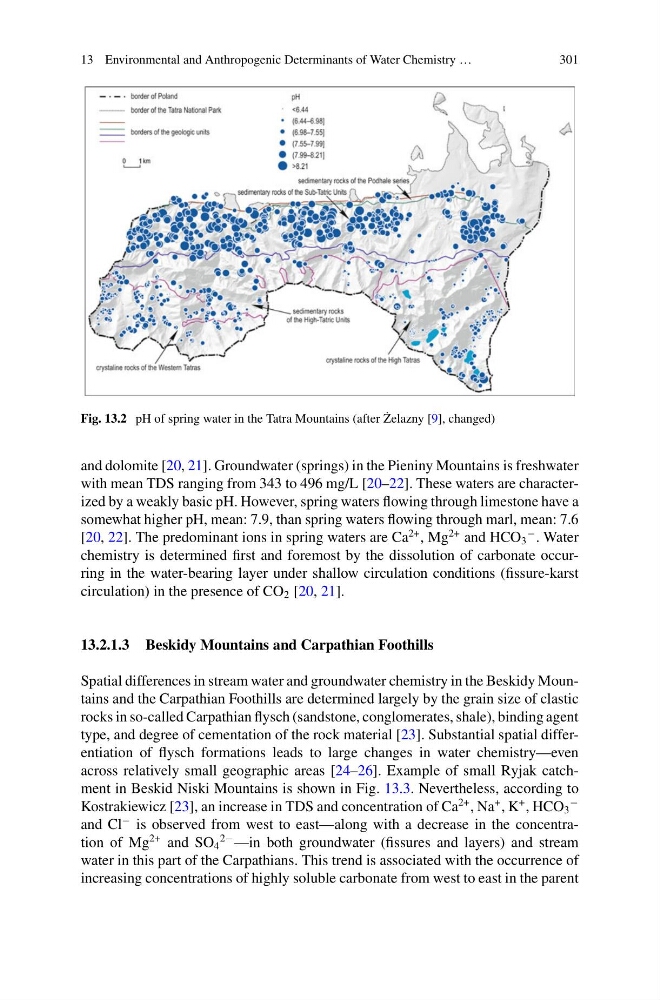
Fig. 13.2 pH of spring water in the Tatra Mountains (after ˙
Zelazny [9], changed)
and dolomite [20, 21]. Groundwater (springs) in the Pieniny Mountains is freshwater
with mean TDS ranging from 343 to 496 mg/L [20–22]. These waters are characterized by a weakly basic pH. However, spring waters flowing through limestone have a
somewhat higher pH, mean: 7.9, than spring waters flowing through marl, mean: 7.6
[20, 22]. The predominant ions in spring waters are Ca
2+ , Mg
2+ and HCO 3
− . Water
chemistry is determined first and foremost by the dissolution of carbonate occurring in the water-bearing layer under shallow circulation conditions (fissure-karst
circulation) in the presence of CO 2 [20, 21].
13.2.1.3 Beskidy Mountains and Carpathian Foothills
Spatial differences in stream water and groundwater chemistry in the Beskidy Mountains and the Carpathian Foothills are determined largely by the grain size of clastic
rocks in so-called Carpathian flysch (sandstone, conglomerates, shale), binding agent
type, and degree of cementation of the rock material [23]. Substantial spatial differentiation of flysch formations leads to large changes in water chemistry—even
across relatively small geographic areas [24–26]. Example of small Ryjak catchment in Beskid Niski Mountains is shown in Fig. 13.3. Nevertheless, according to
Kostrakiewicz [23], an increase in TDS and concentration of Ca
2+ , Na
+ , K
+ , HCO 3
−
and Cl
− is observed from west to east—along with a decrease in the concentration of Mg
2+ and SO 4
2− —in both groundwater (fissures and layers) and stream
water in this part of the Carpathians. This trend is associated with the occurrence of
increasing concentrations of highly soluble carbonate from west to east in the parent
301
Fig. 13.2 pH of spring water in the Tatra Mountains (after ˙
Zelazny [9], changed)
and dolomite [20, 21]. Groundwater (springs) in the Pieniny Mountains is freshwater
with mean TDS ranging from 343 to 496 mg/L [20–22]. These waters are characterized by a weakly basic pH. However, spring waters flowing through limestone have a
somewhat higher pH, mean: 7.9, than spring waters flowing through marl, mean: 7.6
[20, 22]. The predominant ions in spring waters are Ca
2+ , Mg
2+ and HCO 3
− . Water
chemistry is determined first and foremost by the dissolution of carbonate occurring in the water-bearing layer under shallow circulation conditions (fissure-karst
circulation) in the presence of CO 2 [20, 21].
13.2.1.3 Beskidy Mountains and Carpathian Foothills
Spatial differences in stream water and groundwater chemistry in the Beskidy Mountains and the Carpathian Foothills are determined largely by the grain size of clastic
rocks in so-called Carpathian flysch (sandstone, conglomerates, shale), binding agent
type, and degree of cementation of the rock material [23]. Substantial spatial differentiation of flysch formations leads to large changes in water chemistry—even
across relatively small geographic areas [24–26]. Example of small Ryjak catchment in Beskid Niski Mountains is shown in Fig. 13.3. Nevertheless, according to
Kostrakiewicz [23], an increase in TDS and concentration of Ca
2+ , Na
+ , K
+ , HCO 3
−
and Cl
− is observed from west to east—along with a decrease in the concentration of Mg
2+ and SO 4
2− —in both groundwater (fissures and layers) and stream
water in this part of the Carpathians. This trend is associated with the occurrence of
increasing concentrations of highly soluble carbonate from west to east in the parent