

10 Ingression and Ascension of Saline Waters on the Polish Coast of the Baltic Sea
219
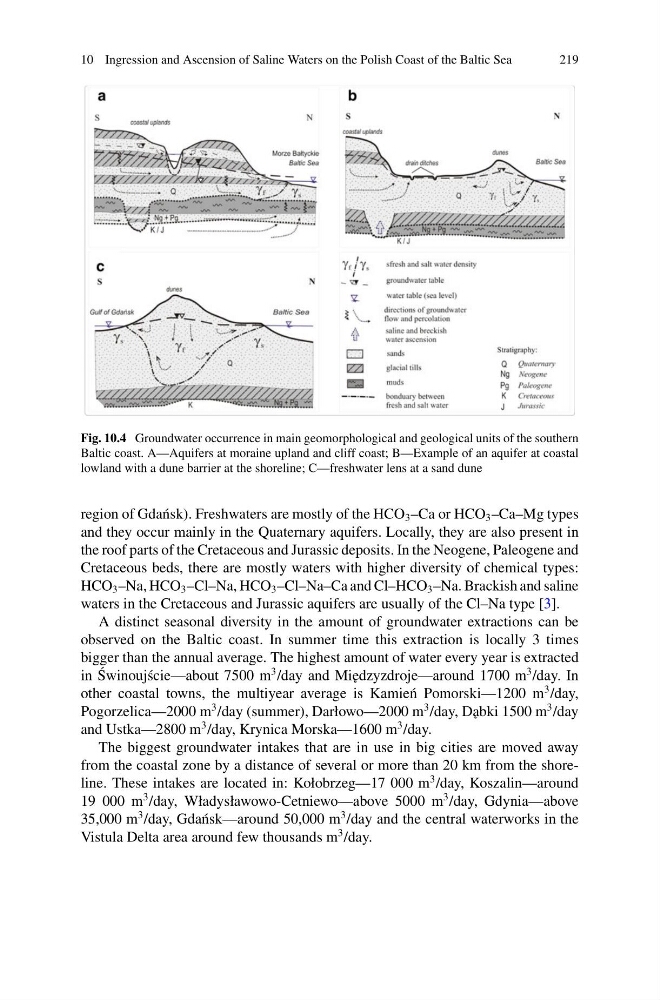
Fig. 10.4 Groundwater occurrence in main geomorphological and geological units of the southern
Baltic coast. A—Aquifers at moraine upland and cliff coast; B—Example of an aquifer at coastal
lowland with a dune barrier at the shoreline; C—freshwater lens at a sand dune
region of Gda´ nsk). Freshwaters are mostly of the HCO 3 –Ca or HCO 3 –Ca–Mg types
and they occur mainly in the Quaternary aquifers. Locally, they are also present in
the roof parts of the Cretaceous and Jurassic deposits. In the Neogene, Paleogene and
Cretaceous beds, there are mostly waters with higher diversity of chemical types:
HCO 3 –Na, HCO 3 –Cl–Na, HCO 3 –Cl–Na–Ca and Cl–HCO 3 –Na. Brackish and saline
waters in the Cretaceous and Jurassic aquifers are usually of the Cl–Na type [3].
A distinct seasonal diversity in the amount of groundwater extractions can be
observed on the Baltic coast. In summer time this extraction is locally 3 times
bigger than the annual average. The highest amount of water every year is extracted
in ´
Swinouj´ scie—about 7500 m
3 /day and Mi˛ edzyzdroje—around 1700 m
3 /day. In
other coastal towns, the multiyear average is Kamie´ n Pomorski—1200 m
3 /day,
Pogorzelica—2000 m
3 /day (summer), Darłowo—2000 m
3 /day, D˛ abki 1500 m
3 /day
and Ustka—2800 m
3 /day, Krynica Morska—1600 m
3 /day.
The biggest groundwater intakes that are in use in big cities are moved away
from the coastal zone by a distance of several or more than 20 km from the shoreline. These intakes are located in: Kołobrzeg—17 000 m
3 /day, Koszalin—around
19 000 m
3 /day, Władysławowo-Cetniewo—above 5000 m
3 /day, Gdynia—above
35,000 m
3 /day, Gda´ nsk—around 50,000 m
3 /day and the central waterworks in the
Vistula Delta area around few thousands m
3 /day.
219
Fig. 10.4 Groundwater occurrence in main geomorphological and geological units of the southern
Baltic coast. A—Aquifers at moraine upland and cliff coast; B—Example of an aquifer at coastal
lowland with a dune barrier at the shoreline; C—freshwater lens at a sand dune
region of Gda´ nsk). Freshwaters are mostly of the HCO 3 –Ca or HCO 3 –Ca–Mg types
and they occur mainly in the Quaternary aquifers. Locally, they are also present in
the roof parts of the Cretaceous and Jurassic deposits. In the Neogene, Paleogene and
Cretaceous beds, there are mostly waters with higher diversity of chemical types:
HCO 3 –Na, HCO 3 –Cl–Na, HCO 3 –Cl–Na–Ca and Cl–HCO 3 –Na. Brackish and saline
waters in the Cretaceous and Jurassic aquifers are usually of the Cl–Na type [3].
A distinct seasonal diversity in the amount of groundwater extractions can be
observed on the Baltic coast. In summer time this extraction is locally 3 times
bigger than the annual average. The highest amount of water every year is extracted
in ´
Swinouj´ scie—about 7500 m
3 /day and Mi˛ edzyzdroje—around 1700 m
3 /day. In
other coastal towns, the multiyear average is Kamie´ n Pomorski—1200 m
3 /day,
Pogorzelica—2000 m
3 /day (summer), Darłowo—2000 m
3 /day, D˛ abki 1500 m
3 /day
and Ustka—2800 m
3 /day, Krynica Morska—1600 m
3 /day.
The biggest groundwater intakes that are in use in big cities are moved away
from the coastal zone by a distance of several or more than 20 km from the shoreline. These intakes are located in: Kołobrzeg—17 000 m
3 /day, Koszalin—around
19 000 m
3 /day, Władysławowo-Cetniewo—above 5000 m
3 /day, Gdynia—above
35,000 m
3 /day, Gda´ nsk—around 50,000 m
3 /day and the central waterworks in the
Vistula Delta area around few thousands m
3 /day.