

7 Water Quality in Main Dam Reservoirs in Poland
151
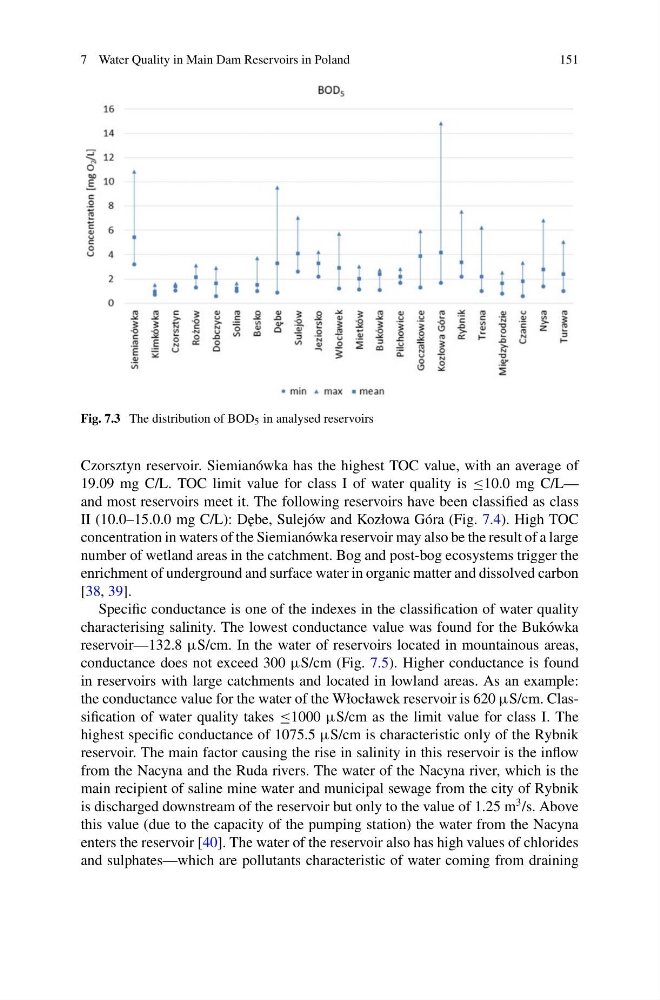
Fig. 7.3 The distribution of BOD 5 in analysed reservoirs
Czorsztyn reservoir. Siemianówka has the highest TOC value, with an average of
19.09 mg C/L. TOC limit value for class I of water quality is ≤10.0 mg C/L—
and most reservoirs meet it. The following reservoirs have been classified as class
II (10.0–15.0.0 mg C/L): D˛ ebe, Sulejów and Kozłowa Góra (Fig. 7.4). High TOC
concentration in waters of the Siemianówka reservoir may also be the result of a large
number of wetland areas in the catchment. Bog and post-bog ecosystems trigger the
enrichment of underground and surface water in organic matter and dissolved carbon
[38, 39].
Specific conductance is one of the indexes in the classification of water quality
characterising salinity. The lowest conductance value was found for the Bukówka
reservoir—132.8 µS/cm. In the water of reservoirs located in mountainous areas,
conductance does not exceed 300 µS/cm (Fig. 7.5). Higher conductance is found
in reservoirs with large catchments and located in lowland areas. As an example:
the conductance value for the water of the Włocławek reservoir is 620 µS/cm. Classification of water quality takes ≤1000 µS/cm as the limit value for class I. The
highest specific conductance of 1075.5 µS/cm is characteristic only of the Rybnik
reservoir. The main factor causing the rise in salinity in this reservoir is the inflow
from the Nacyna and the Ruda rivers. The water of the Nacyna river, which is the
main recipient of saline mine water and municipal sewage from the city of Rybnik
is discharged downstream of the reservoir but only to the value of 1.25 m
3 /s. Above
this value (due to the capacity of the pumping station) the water from the Nacyna
enters the reservoir [40]. The water of the reservoir also has high values of chlorides
and sulphates—which are pollutants characteristic of water coming from draining
151
Fig. 7.3 The distribution of BOD 5 in analysed reservoirs
Czorsztyn reservoir. Siemianówka has the highest TOC value, with an average of
19.09 mg C/L. TOC limit value for class I of water quality is ≤10.0 mg C/L—
and most reservoirs meet it. The following reservoirs have been classified as class
II (10.0–15.0.0 mg C/L): D˛ ebe, Sulejów and Kozłowa Góra (Fig. 7.4). High TOC
concentration in waters of the Siemianówka reservoir may also be the result of a large
number of wetland areas in the catchment. Bog and post-bog ecosystems trigger the
enrichment of underground and surface water in organic matter and dissolved carbon
[38, 39].
Specific conductance is one of the indexes in the classification of water quality
characterising salinity. The lowest conductance value was found for the Bukówka
reservoir—132.8 µS/cm. In the water of reservoirs located in mountainous areas,
conductance does not exceed 300 µS/cm (Fig. 7.5). Higher conductance is found
in reservoirs with large catchments and located in lowland areas. As an example:
the conductance value for the water of the Włocławek reservoir is 620 µS/cm. Classification of water quality takes ≤1000 µS/cm as the limit value for class I. The
highest specific conductance of 1075.5 µS/cm is characteristic only of the Rybnik
reservoir. The main factor causing the rise in salinity in this reservoir is the inflow
from the Nacyna and the Ruda rivers. The water of the Nacyna river, which is the
main recipient of saline mine water and municipal sewage from the city of Rybnik
is discharged downstream of the reservoir but only to the value of 1.25 m
3 /s. Above
this value (due to the capacity of the pumping station) the water from the Nacyna
enters the reservoir [40]. The water of the reservoir also has high values of chlorides
and sulphates—which are pollutants characteristic of water coming from draining