

sediment processes properly [20, 44] as well as periphyton scouring [32], which are
both key processes for a proper estimation of water quality [41, 42].
The Riverstrahler model requires a detailed description of the hydrographic
network for which elementary basins (EBs), defined as portions of the watershed
drained by a segment of river between two confluences or between a spring and the
first confluence, are characterised by their slope, width and length and their position
within the upstream–downstream scheme of river confluences, i.e. their stream order
[8]. This structure of the Seine River’s drainage network was obtained from the
IGN database (CarTHAgE
® ) and from an elevation model (50 m, http://
professionnels.ign.fr/bdalti). According to the required resolution of the application,
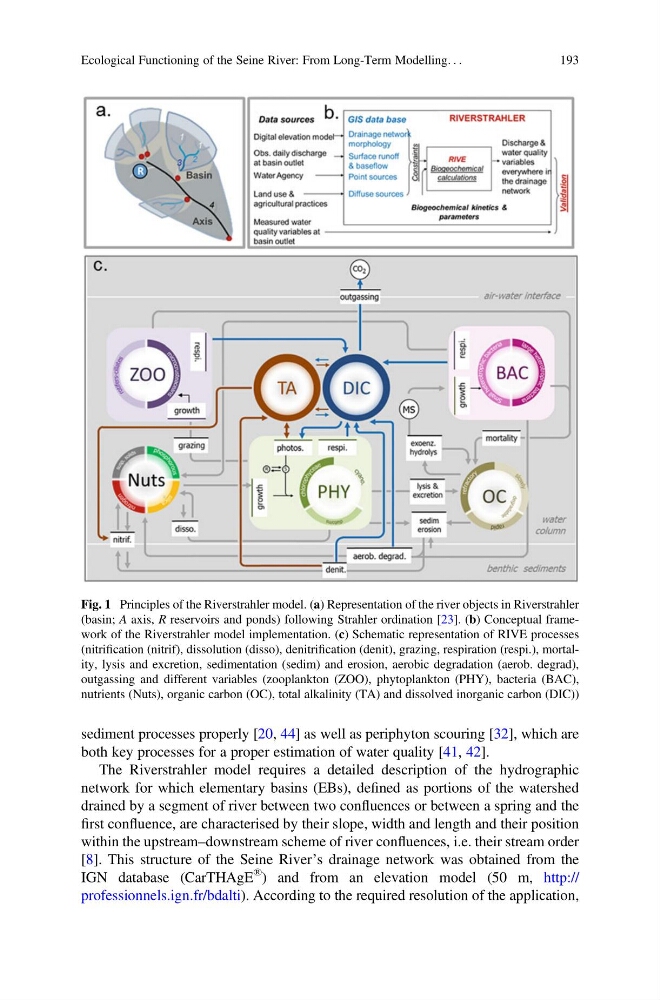
Fig. 1 Principles of the Riverstrahler model. (a) Representation of the river objects in Riverstrahler
(basin; A axis, R reservoirs and ponds) following Strahler ordination [23]. (b) Conceptual framework of the Riverstrahler model implementation. (c) Schematic representation of RIVE processes
(nitrification (nitrif), dissolution (disso), denitrification (denit), grazing, respiration (respi.), mortality, lysis and excretion, sedimentation (sedim) and erosion, aerobic degradation (aerob. degrad),
outgassing and different variables (zooplankton (ZOO), phytoplankton (PHY), bacteria (BAC),
nutrients (Nuts), organic carbon (OC), total alkalinity (TA) and dissolved inorganic carbon (DIC))
Ecological Functioning of the Seine River: From Long-Term Modelling. . .
193
both key processes for a proper estimation of water quality [41, 42].
The Riverstrahler model requires a detailed description of the hydrographic
network for which elementary basins (EBs), defined as portions of the watershed
drained by a segment of river between two confluences or between a spring and the
first confluence, are characterised by their slope, width and length and their position
within the upstream–downstream scheme of river confluences, i.e. their stream order
[8]. This structure of the Seine River’s drainage network was obtained from the
IGN database (CarTHAgE
® ) and from an elevation model (50 m, http://
professionnels.ign.fr/bdalti). According to the required resolution of the application,
Fig. 1 Principles of the Riverstrahler model. (a) Representation of the river objects in Riverstrahler
(basin; A axis, R reservoirs and ponds) following Strahler ordination [23]. (b) Conceptual framework of the Riverstrahler model implementation. (c) Schematic representation of RIVE processes
(nitrification (nitrif), dissolution (disso), denitrification (denit), grazing, respiration (respi.), mortality, lysis and excretion, sedimentation (sedim) and erosion, aerobic degradation (aerob. degrad),
outgassing and different variables (zooplankton (ZOO), phytoplankton (PHY), bacteria (BAC),
nutrients (Nuts), organic carbon (OC), total alkalinity (TA) and dissolved inorganic carbon (DIC))
Ecological Functioning of the Seine River: From Long-Term Modelling. . .
193