

the floodplains totalled F23a ¼ 120 Æ 10 kg year
À1 and F24 ¼ 140 Æ 11 kg year
À1
(Σ15), respectively. The entire database of PAH contents in sediment (n ¼ 183) was
used to quantify the storage on river beds, although a greater weight was given to
samples collected upstream of the Paris conurbation because 92% of the waterbody
area was located upstream of the urban areas. The estimated amount of PAHs stored
on the river bed was F23b ¼ 640 Æ 50 kg year
À1 (Σ15). The flux estimations were
marred by uncertainty due to the difficulty properly quantifying the amount of
sediment being deposited every year. However, the deposition rates were consistent
with the amount of material delivered to the Seine River through erosion and the SS
flux at the study area outlet. Moreover, the database was complete enough to ensure
the good spatial and temporal representativeness of the PAH contents in upstream
SS. Therefore, the flux estimations were awarded a grade of 2.
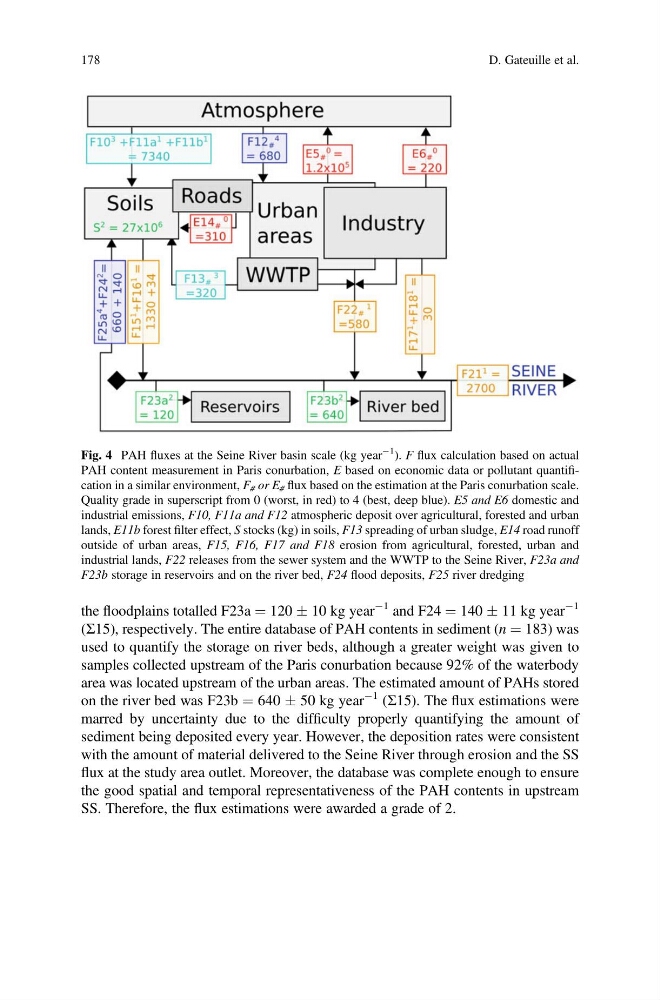
Fig. 4 PAH fluxes at the Seine River basin scale (kg year
À1
). F flux calculation based on actual
PAH content measurement in Paris conurbation, E based on economic data or pollutant quantification in a similar environment, F # or E # flux based on the estimation at the Paris conurbation scale.
Quality grade in superscript from 0 (worst, in red) to 4 (best, deep blue). E5 and E6 domestic and
industrial emissions, F10, F11a and F12 atmospheric deposit over agricultural, forested and urban
lands, E11b forest filter effect, S stocks (kg) in soils, F13 spreading of urban sludge, E14 road runoff
outside of urban areas, F15, F16, F17 and F18 erosion from agricultural, forested, urban and
industrial lands, F22 releases from the sewer system and the WWTP to the Seine River, F23a and
F23b storage in reservoirs and on the river bed, F24 flood deposits, F25 river dredging
178
D. Gateuille et al.
À1 and F24 ¼ 140 Æ 11 kg year
À1
(Σ15), respectively. The entire database of PAH contents in sediment (n ¼ 183) was
used to quantify the storage on river beds, although a greater weight was given to
samples collected upstream of the Paris conurbation because 92% of the waterbody
area was located upstream of the urban areas. The estimated amount of PAHs stored
on the river bed was F23b ¼ 640 Æ 50 kg year
À1 (Σ15). The flux estimations were
marred by uncertainty due to the difficulty properly quantifying the amount of
sediment being deposited every year. However, the deposition rates were consistent
with the amount of material delivered to the Seine River through erosion and the SS
flux at the study area outlet. Moreover, the database was complete enough to ensure
the good spatial and temporal representativeness of the PAH contents in upstream
SS. Therefore, the flux estimations were awarded a grade of 2.
Fig. 4 PAH fluxes at the Seine River basin scale (kg year
À1
). F flux calculation based on actual
PAH content measurement in Paris conurbation, E based on economic data or pollutant quantification in a similar environment, F # or E # flux based on the estimation at the Paris conurbation scale.
Quality grade in superscript from 0 (worst, in red) to 4 (best, deep blue). E5 and E6 domestic and
industrial emissions, F10, F11a and F12 atmospheric deposit over agricultural, forested and urban
lands, E11b forest filter effect, S stocks (kg) in soils, F13 spreading of urban sludge, E14 road runoff
outside of urban areas, F15, F16, F17 and F18 erosion from agricultural, forested, urban and
industrial lands, F22 releases from the sewer system and the WWTP to the Seine River, F23a and
F23b storage in reservoirs and on the river bed, F24 flood deposits, F25 river dredging
178
D. Gateuille et al.