

69
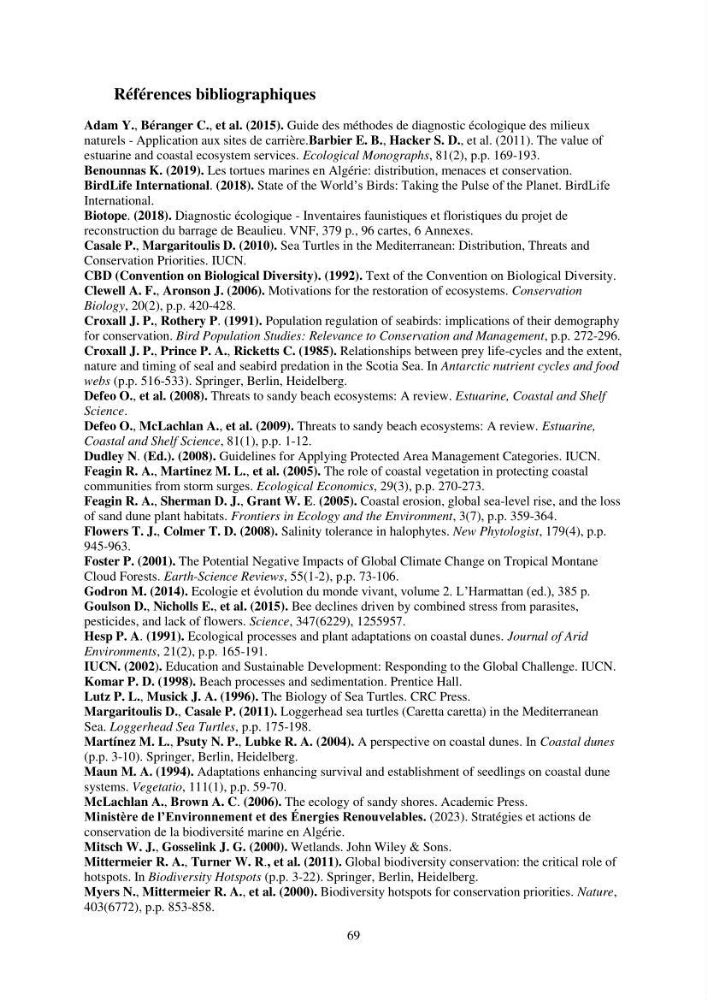
Références bibliographiques
Adam Y., Béranger C., et al. (2015). Guide des méthodes de diagnostic écologique des milieux
naturels - Application aux sites de carrière.Barbier E. B., Hacker S. D., et al. (2011). The value of
estuarine and coastal ecosystem services. Ecological Monographs, 81(2), p.p. 169-193.
Benounnas K. (2019). Les tortues marines en Algérie: distribution, menaces et conservation.
BirdLife International. (2018). State of the World’s Birds: Taking the Pulse of the Planet. BirdLife
International.
Biotope. (2018). Diagnostic écologique - Inventaires faunistiques et floristiques du projet de
reconstruction du barrage de Beaulieu. VNF, 379 p., 96 cartes, 6 Annexes.
Casale P., Margaritoulis D. (2010). Sea Turtles in the Mediterranean: Distribution, Threats and
Conservation Priorities. IUCN.
CBD (Convention on Biological Diversity). (1992). Text of the Convention on Biological Diversity.
Clewell A. F., Aronson J. (2006). Motivations for the restoration of ecosystems. Conservation
Biology, 20(2), p.p. 420-428.
Croxall J. P., Rothery P. (1991). Population regulation of seabirds: implications of their demography
for conservation. Bird Population Studies: Relevance to Conservation and Management, p.p. 272-296.
Croxall J. P., Prince P. A., Ricketts C. (1985). Relationships between prey life-cycles and the extent,
nature and timing of seal and seabird predation in the Scotia Sea. In Antarctic nutrient cycles and food
webs (p.p. 516-533). Springer, Berlin, Heidelberg.
Defeo O., et al. (2008). Threats to sandy beach ecosystems: A review. Estuarine, Coastal and Shelf
Science.
Defeo O., McLachlan A., et al. (2009). Threats to sandy beach ecosystems: A review. Estuarine,
Coastal and Shelf Science, 81(1), p.p. 1-12.
Dudley N. (Ed.). (2008). Guidelines for Applying Protected Area Management Categories. IUCN.
Feagin R. A., Martinez M. L., et al. (2005). The role of coastal vegetation in protecting coastal
communities from storm surges. Ecological Economics, 29(3), p.p. 270-273.
Feagin R. A., Sherman D. J., Grant W. E. (2005). Coastal erosion, global sea-level rise, and the loss
of sand dune plant habitats. Frontiers in Ecology and the Environment, 3(7), p.p. 359-364.
Flowers T. J., Colmer T. D. (2008). Salinity tolerance in halophytes. New Phytologist, 179(4), p.p.
945-963.
Foster P. (2001). The Potential Negative Impacts of Global Climate Change on Tropical Montane
Cloud Forests. Earth-Science Reviews, 55(1-2), p.p. 73-106.
Godron M. (2014). Ecologie et évolution du monde vivant, volume 2. L’Harmattan (ed.), 385 p.
Goulson D., Nicholls E., et al. (2015). Bee declines driven by combined stress from parasites,
pesticides, and lack of flowers. Science, 347(6229), 1255957.
Hesp P. A. (1991). Ecological processes and plant adaptations on coastal dunes. Journal of Arid
Environments, 21(2), p.p. 165-191.
IUCN. (2002). Education and Sustainable Development: Responding to the Global Challenge. IUCN.
Komar P. D. (1998). Beach processes and sedimentation. Prentice Hall.
Lutz P. L., Musick J. A. (1996). The Biology of Sea Turtles. CRC Press.
Margaritoulis D., Casale P. (2011). Loggerhead sea turtles (Caretta caretta) in the Mediterranean
Sea. Loggerhead Sea Turtles, p.p. 175-198.
Martínez M. L., Psuty N. P., Lubke R. A. (2004). A perspective on coastal dunes. In Coastal dunes
(p.p. 3-10). Springer, Berlin, Heidelberg.
Maun M. A. (1994). Adaptations enhancing survival and establishment of seedlings on coastal dune
systems. Vegetatio, 111(1), p.p. 59-70.
McLachlan A., Brown A. C. (2006). The ecology of sandy shores. Academic Press.
Ministère de l’Environnement et des Énergies Renouvelables. (2023). Stratégies et actions de
conservation de la biodiversité marine en Algérie.
Mitsch W. J., Gosselink J. G. (2000). Wetlands. John Wiley & Sons.
Mittermeier R. A., Turner W. R., et al. (2011). Global biodiversity conservation: the critical role of
hotspots. In Biodiversity Hotspots (p.p. 3-22). Springer, Berlin, Heidelberg.
Myers N., Mittermeier R. A., et al. (2000). Biodiversity hotspots for conservation priorities. Nature,
403(6772), p.p. 853-858.
Références bibliographiques
Adam Y., Béranger C., et al. (2015). Guide des méthodes de diagnostic écologique des milieux
naturels - Application aux sites de carrière.Barbier E. B., Hacker S. D., et al. (2011). The value of
estuarine and coastal ecosystem services. Ecological Monographs, 81(2), p.p. 169-193.
Benounnas K. (2019). Les tortues marines en Algérie: distribution, menaces et conservation.
BirdLife International. (2018). State of the World’s Birds: Taking the Pulse of the Planet. BirdLife
International.
Biotope. (2018). Diagnostic écologique - Inventaires faunistiques et floristiques du projet de
reconstruction du barrage de Beaulieu. VNF, 379 p., 96 cartes, 6 Annexes.
Casale P., Margaritoulis D. (2010). Sea Turtles in the Mediterranean: Distribution, Threats and
Conservation Priorities. IUCN.
CBD (Convention on Biological Diversity). (1992). Text of the Convention on Biological Diversity.
Clewell A. F., Aronson J. (2006). Motivations for the restoration of ecosystems. Conservation
Biology, 20(2), p.p. 420-428.
Croxall J. P., Rothery P. (1991). Population regulation of seabirds: implications of their demography
for conservation. Bird Population Studies: Relevance to Conservation and Management, p.p. 272-296.
Croxall J. P., Prince P. A., Ricketts C. (1985). Relationships between prey life-cycles and the extent,
nature and timing of seal and seabird predation in the Scotia Sea. In Antarctic nutrient cycles and food
webs (p.p. 516-533). Springer, Berlin, Heidelberg.
Defeo O., et al. (2008). Threats to sandy beach ecosystems: A review. Estuarine, Coastal and Shelf
Science.
Defeo O., McLachlan A., et al. (2009). Threats to sandy beach ecosystems: A review. Estuarine,
Coastal and Shelf Science, 81(1), p.p. 1-12.
Dudley N. (Ed.). (2008). Guidelines for Applying Protected Area Management Categories. IUCN.
Feagin R. A., Martinez M. L., et al. (2005). The role of coastal vegetation in protecting coastal
communities from storm surges. Ecological Economics, 29(3), p.p. 270-273.
Feagin R. A., Sherman D. J., Grant W. E. (2005). Coastal erosion, global sea-level rise, and the loss
of sand dune plant habitats. Frontiers in Ecology and the Environment, 3(7), p.p. 359-364.
Flowers T. J., Colmer T. D. (2008). Salinity tolerance in halophytes. New Phytologist, 179(4), p.p.
945-963.
Foster P. (2001). The Potential Negative Impacts of Global Climate Change on Tropical Montane
Cloud Forests. Earth-Science Reviews, 55(1-2), p.p. 73-106.
Godron M. (2014). Ecologie et évolution du monde vivant, volume 2. L’Harmattan (ed.), 385 p.
Goulson D., Nicholls E., et al. (2015). Bee declines driven by combined stress from parasites,
pesticides, and lack of flowers. Science, 347(6229), 1255957.
Hesp P. A. (1991). Ecological processes and plant adaptations on coastal dunes. Journal of Arid
Environments, 21(2), p.p. 165-191.
IUCN. (2002). Education and Sustainable Development: Responding to the Global Challenge. IUCN.
Komar P. D. (1998). Beach processes and sedimentation. Prentice Hall.
Lutz P. L., Musick J. A. (1996). The Biology of Sea Turtles. CRC Press.
Margaritoulis D., Casale P. (2011). Loggerhead sea turtles (Caretta caretta) in the Mediterranean
Sea. Loggerhead Sea Turtles, p.p. 175-198.
Martínez M. L., Psuty N. P., Lubke R. A. (2004). A perspective on coastal dunes. In Coastal dunes
(p.p. 3-10). Springer, Berlin, Heidelberg.
Maun M. A. (1994). Adaptations enhancing survival and establishment of seedlings on coastal dune
systems. Vegetatio, 111(1), p.p. 59-70.
McLachlan A., Brown A. C. (2006). The ecology of sandy shores. Academic Press.
Ministère de l’Environnement et des Énergies Renouvelables. (2023). Stratégies et actions de
conservation de la biodiversité marine en Algérie.
Mitsch W. J., Gosselink J. G. (2000). Wetlands. John Wiley & Sons.
Mittermeier R. A., Turner W. R., et al. (2011). Global biodiversity conservation: the critical role of
hotspots. In Biodiversity Hotspots (p.p. 3-22). Springer, Berlin, Heidelberg.
Myers N., Mittermeier R. A., et al. (2000). Biodiversity hotspots for conservation priorities. Nature,
403(6772), p.p. 853-858.