

LITERATURE REVIEW
(a)
(b)
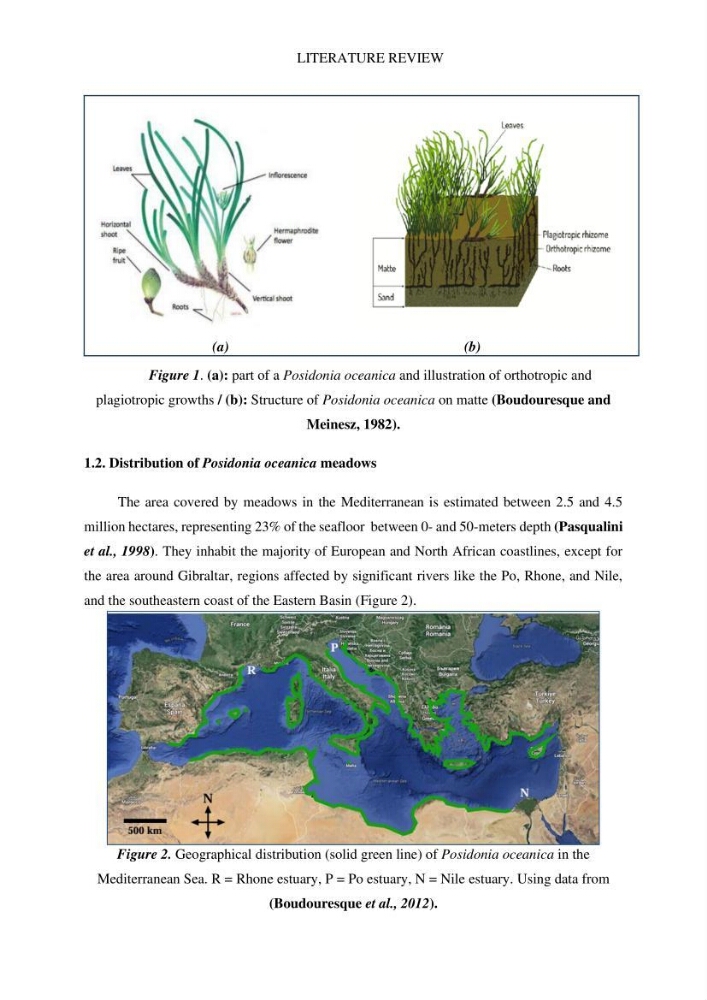
Figure 1. (a): part of a Posidonia oceanica and illustration of orthotropic and
plagiotropic growths / (b): Structure of Posidonia oceanica on matte (Boudouresque and
Meinesz, 1982).
1.2. Distribution of Posidonia oceanica meadows
The area covered by meadows in the Mediterranean is estimated between 2.5 and 4.5
million hectares, representing 23% of the seafloor between 0- and 50-meters depth (Pasqualini
et al., 1998). They inhabit the majority of European and North African coastlines, except for
the area around Gibraltar, regions affected by significant rivers like the Po, Rhone, and Nile,
and the southeastern coast of the Eastern Basin (Figure 2).
Figure 2. Geographical distribution (solid green line) of Posidonia oceanica in the
Mediterranean Sea. R = Rhone estuary, P = Po estuary, N = Nile estuary. Using data from
(Boudouresque et al., 2012).
(a)
(b)
Figure 1. (a): part of a Posidonia oceanica and illustration of orthotropic and
plagiotropic growths / (b): Structure of Posidonia oceanica on matte (Boudouresque and
Meinesz, 1982).
1.2. Distribution of Posidonia oceanica meadows
The area covered by meadows in the Mediterranean is estimated between 2.5 and 4.5
million hectares, representing 23% of the seafloor between 0- and 50-meters depth (Pasqualini
et al., 1998). They inhabit the majority of European and North African coastlines, except for
the area around Gibraltar, regions affected by significant rivers like the Po, Rhone, and Nile,
and the southeastern coast of the Eastern Basin (Figure 2).
Figure 2. Geographical distribution (solid green line) of Posidonia oceanica in the
Mediterranean Sea. R = Rhone estuary, P = Po estuary, N = Nile estuary. Using data from
(Boudouresque et al., 2012).