

vi
adsorbers. Here, the effect of the type of metal oxide nanoparticles, their sizes,
amount and deposition methods on the morphological properties and performances
of the membrane are discussed. Chapter 7 by Berrettoni et al. highlights the sequestration capabilities of metal hexacyanoferrates for different heavy metals. This
chapter gives also the basics of the electrochemistry and key applications such as
the recovery of the rare- earth cesium from wastewaters. Chapter 8 by Sabir et al.
presents the use of agriculture waste absorbents for heavy metal removal. Chapter 9
by Vishnu et al. focuses on the synthesis, characteristics and use of nanoparticles as
adsorbent to remove metals. Methods for metal removal from wastewater are further
discussed in Chapter 10 by Maharana et al., with focus on low cost adsorbents such
as industrial solid waste-red mud, fly ash and rice husk. Dyes from effluents of textile, paper, plastic and cosmetic industries are reviewed in Chapter 11 by Wołowicz
and Wawrzkiewicz, with adsorbents such as activated carbons, low cost adsorbents,
natural materials, biosorbents, nanomaterials, composites and ion exchange resins.
Chapter 12 by Pelin Demircivi details the removal of boron from wastewater using
various adsorbents adapted to, for example, the type of functional groups on the
surface and the charge of surface. Waste fruit cortexes can be used to remove metals,
as shown in Chapter 13 by Shangeetha Ganesan. Chapter 14 by Biswas and Nag
lists the various sources of metal contaminations and their hazardous effects. Types,
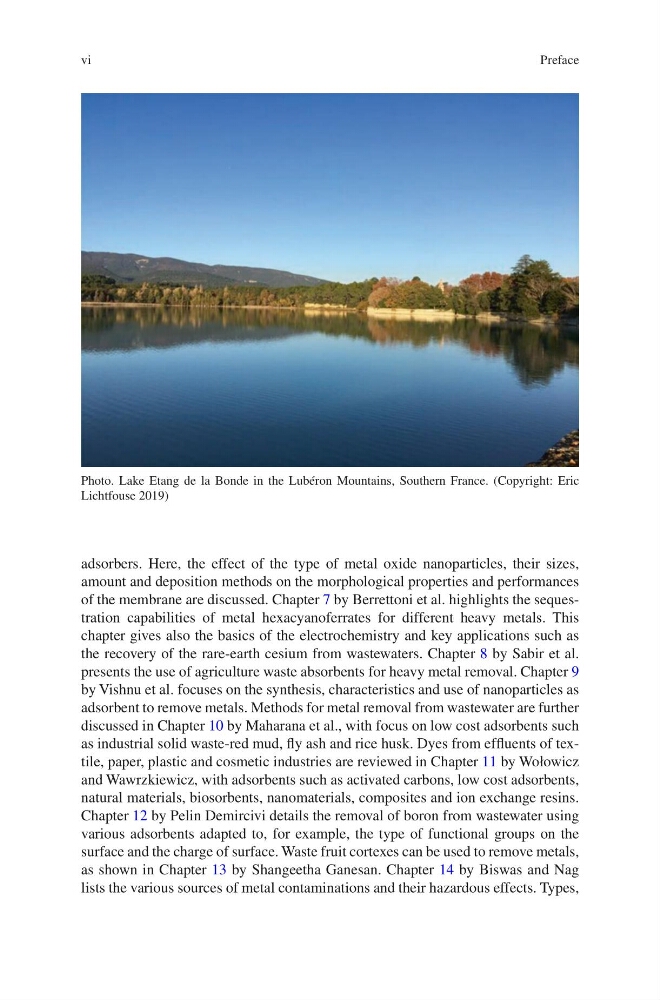
Photo. Lake Etang de la Bonde in the Lubéron Mountains, Southern France. (Copyright: Eric
Lichtfouse 2019)
Preface
adsorbers. Here, the effect of the type of metal oxide nanoparticles, their sizes,
amount and deposition methods on the morphological properties and performances
of the membrane are discussed. Chapter 7 by Berrettoni et al. highlights the sequestration capabilities of metal hexacyanoferrates for different heavy metals. This
chapter gives also the basics of the electrochemistry and key applications such as
the recovery of the rare- earth cesium from wastewaters. Chapter 8 by Sabir et al.
presents the use of agriculture waste absorbents for heavy metal removal. Chapter 9
by Vishnu et al. focuses on the synthesis, characteristics and use of nanoparticles as
adsorbent to remove metals. Methods for metal removal from wastewater are further
discussed in Chapter 10 by Maharana et al., with focus on low cost adsorbents such
as industrial solid waste-red mud, fly ash and rice husk. Dyes from effluents of textile, paper, plastic and cosmetic industries are reviewed in Chapter 11 by Wołowicz
and Wawrzkiewicz, with adsorbents such as activated carbons, low cost adsorbents,
natural materials, biosorbents, nanomaterials, composites and ion exchange resins.
Chapter 12 by Pelin Demircivi details the removal of boron from wastewater using
various adsorbents adapted to, for example, the type of functional groups on the
surface and the charge of surface. Waste fruit cortexes can be used to remove metals,
as shown in Chapter 13 by Shangeetha Ganesan. Chapter 14 by Biswas and Nag
lists the various sources of metal contaminations and their hazardous effects. Types,
Photo. Lake Etang de la Bonde in the Lubéron Mountains, Southern France. (Copyright: Eric
Lichtfouse 2019)
Preface