

42
biosorption. The parameters studied to optimize the use of adsorbent in the therapy
of sewage comprise:
1. Chemical behavior of sorbent and sorbate
2. Amount of toxic metals
3. Physical parameters of the aqueous solution
4. Adsorption kinetics
5. Isotherm of adsorption
6. Time of contact
Minimal or no chemical modification is required before use of these wastes.
Therefore, these materials possessed weak adsorption and selection characteristics
(Hegazi 2013).
2.8 Chemo-Substituted Agronomic By-Products
as Adsorbent
Due to intensified industrial activity and environmental stress, the need for powerful
adsorbents has appeared. Several works have been performed to solve this issue to
remove efficient materials through chemical modification and treatment of these
wastes. Lignified cellulosic agricultural waste materials are a plentiful source of
potential metal-sorbing biomass (Sivakumar et al. 2001). As a general rule, agricultural waste products consist of lignin and cellulose constituents hemicellulose, lipids, extractives, enzymes, starches, and glucose and its simple derivatives, water,
ash, and hydrocarbons and similar chemical species containing range of functional
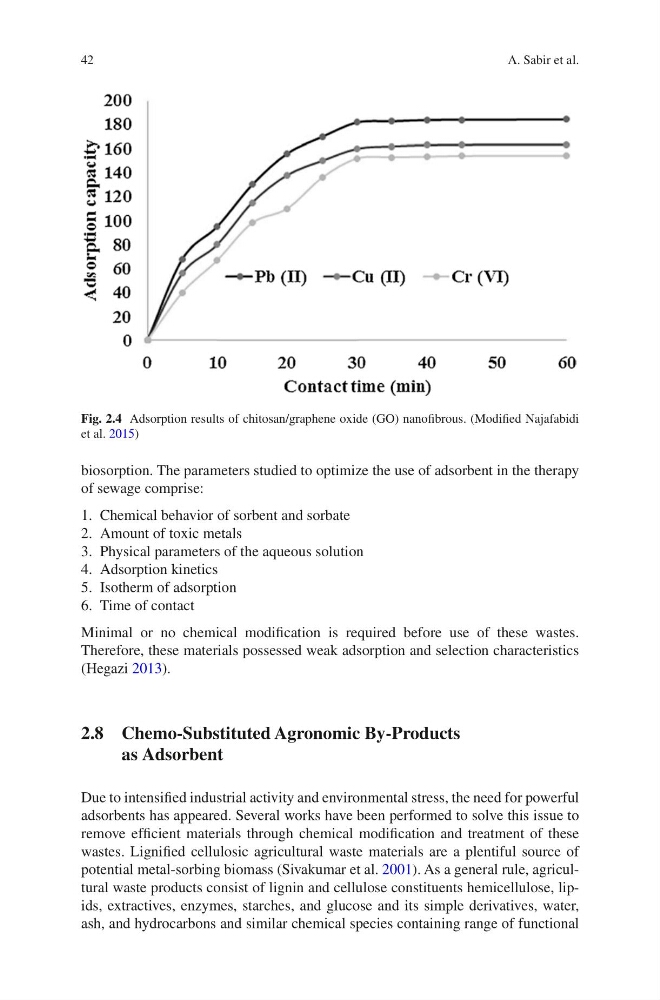
Fig. 2.4 Adsorption results of chitosan/graphene oxide (GO) nanofibrous. (Modified Najafabidi
et al. 2015)
A. Sabir et al.
biosorption. The parameters studied to optimize the use of adsorbent in the therapy
of sewage comprise:
1. Chemical behavior of sorbent and sorbate
2. Amount of toxic metals
3. Physical parameters of the aqueous solution
4. Adsorption kinetics
5. Isotherm of adsorption
6. Time of contact
Minimal or no chemical modification is required before use of these wastes.
Therefore, these materials possessed weak adsorption and selection characteristics
(Hegazi 2013).
2.8 Chemo-Substituted Agronomic By-Products
as Adsorbent
Due to intensified industrial activity and environmental stress, the need for powerful
adsorbents has appeared. Several works have been performed to solve this issue to
remove efficient materials through chemical modification and treatment of these
wastes. Lignified cellulosic agricultural waste materials are a plentiful source of
potential metal-sorbing biomass (Sivakumar et al. 2001). As a general rule, agricultural waste products consist of lignin and cellulose constituents hemicellulose, lipids, extractives, enzymes, starches, and glucose and its simple derivatives, water,
ash, and hydrocarbons and similar chemical species containing range of functional
Fig. 2.4 Adsorption results of chitosan/graphene oxide (GO) nanofibrous. (Modified Najafabidi
et al. 2015)
A. Sabir et al.