

386
process are polymers, metallic salts, alum, clay, aluminum, ferric chloride, and calcium chloride. The major disadvantages in this process are process control, sludge
handling, and non-ionic impurities in the effluent (Ruan et al. 2019; Ahmad et al.
2015). Jindal et al. (2016) found 75% removal of dye by using polyaluminium chloride coagulant and ferrous sulfate heptahydrate as flocculants (Jindal et al. 2016).
Electrocoagulation is an alternative and advanced electrochemical treatment.
Here, the coagulants are produced inside the reactor by electrolytic oxidation of
anode materials, such as aluminum, stainless steel, graphite, carbon, and iron without any addition of chemicals. That species neutralize the suspended particles and
agglomerate to form larger particles for settle down. Electrocoagulation is very efficient for dye removal in high pH. But the major disadvantage is that the procedure
is very costly for the use in industries (Aleboyeh et al. 2008).
Chemical precipitation is the simplest technique for the industrial effluent treatment in which different chemicals are used such as hydroxides, sulfides, and carbonates which react with dissolved molecules of dyes for the formation of insoluble
particles to settle down. After that, to separate the sludge the effluent can be decanted
(Ahmad et al. 2015).
Oxidation is an important wastewater treatment method using different oxidizing
agents. Mainly two types of oxidations are done like the chemical oxidation process
and ultraviolet-assisted advanced oxidation process using chlorine, ozone, hydrogen peroxide, or Fenton’s reagent for the treatment of wastewater (Gupta and Suhas
2009). Chemical oxidation removes the dye from wastewater using chlorine, ozone,
or hydrogen peroxide by formation of strong non-selective hydroxyl radicals, which
break down the conjugated double bonds such as complex aromatic rings of dyes
1) Treatment by bacteria
2) Treatment by fungi and yeasts
3) Treatment by algae
1) Coagulation and flocculation
2) Electro-coagulation
3) Chemical precipitation
4) Oxidation
5) Ion exchange
6) Irradiation
7) Membrane filtration
8) Adsorption
Conventional Methods for Dye removal from Water
Physico-chemical
Biological
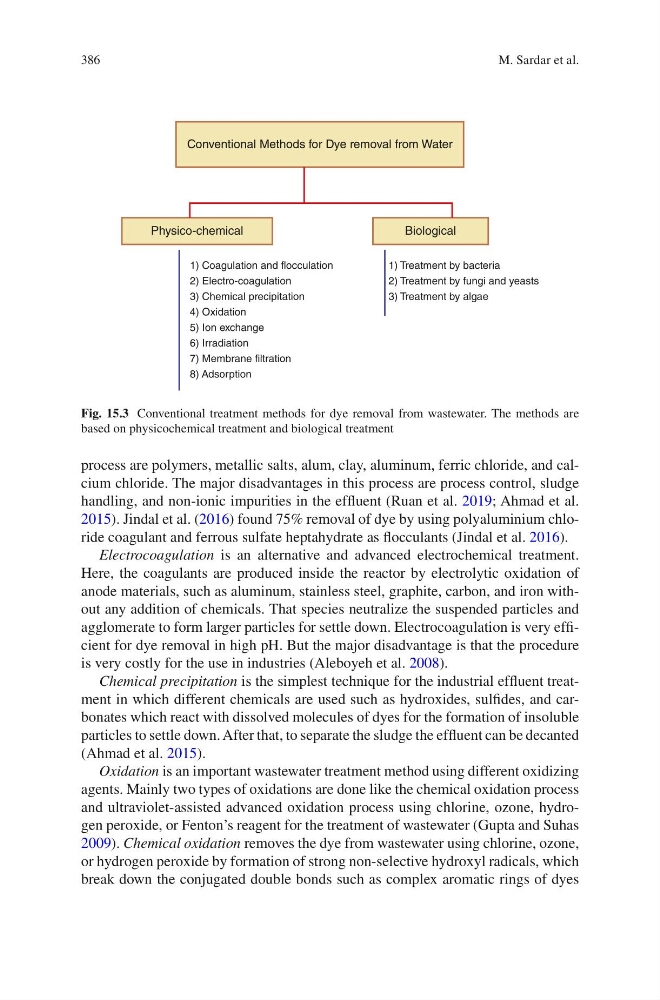
Fig. 15.3 Conventional treatment methods for dye removal from wastewater. The methods are
based on physicochemical treatment and biological treatment
M. Sardar et al.
process are polymers, metallic salts, alum, clay, aluminum, ferric chloride, and calcium chloride. The major disadvantages in this process are process control, sludge
handling, and non-ionic impurities in the effluent (Ruan et al. 2019; Ahmad et al.
2015). Jindal et al. (2016) found 75% removal of dye by using polyaluminium chloride coagulant and ferrous sulfate heptahydrate as flocculants (Jindal et al. 2016).
Electrocoagulation is an alternative and advanced electrochemical treatment.
Here, the coagulants are produced inside the reactor by electrolytic oxidation of
anode materials, such as aluminum, stainless steel, graphite, carbon, and iron without any addition of chemicals. That species neutralize the suspended particles and
agglomerate to form larger particles for settle down. Electrocoagulation is very efficient for dye removal in high pH. But the major disadvantage is that the procedure
is very costly for the use in industries (Aleboyeh et al. 2008).
Chemical precipitation is the simplest technique for the industrial effluent treatment in which different chemicals are used such as hydroxides, sulfides, and carbonates which react with dissolved molecules of dyes for the formation of insoluble
particles to settle down. After that, to separate the sludge the effluent can be decanted
(Ahmad et al. 2015).
Oxidation is an important wastewater treatment method using different oxidizing
agents. Mainly two types of oxidations are done like the chemical oxidation process
and ultraviolet-assisted advanced oxidation process using chlorine, ozone, hydrogen peroxide, or Fenton’s reagent for the treatment of wastewater (Gupta and Suhas
2009). Chemical oxidation removes the dye from wastewater using chlorine, ozone,
or hydrogen peroxide by formation of strong non-selective hydroxyl radicals, which
break down the conjugated double bonds such as complex aromatic rings of dyes
1) Treatment by bacteria
2) Treatment by fungi and yeasts
3) Treatment by algae
1) Coagulation and flocculation
2) Electro-coagulation
3) Chemical precipitation
4) Oxidation
5) Ion exchange
6) Irradiation
7) Membrane filtration
8) Adsorption
Conventional Methods for Dye removal from Water
Physico-chemical
Biological
Fig. 15.3 Conventional treatment methods for dye removal from wastewater. The methods are
based on physicochemical treatment and biological treatment
M. Sardar et al.