

288
capacity compared to sawdust after the chemical pretreatment, e.g., sorption of
methylene blue and red basic 22 on the beech sawdust treated using CaCl 2 (Batzias
and Sidiras 2004) or sawdust obtained from the Dalbergia sissoo (Indian Rosewood)
tree treated by formaldehyde (Garg et al. 2003).
Other solid agricultural wastes were also utilized for the removal of different
types of dyes from aqueous solution, e.g., peels such as banana peels (Annadurai
et al. 2002), orange peels (Doulati Ardejani et al. 2007; Rajeshwarisivaraj et al.
2001), garlic peels (Hameed and Ahmad 2008), pithes, e.g., banana pithes
(Namasivayam et al. 1998), Egyptian bagasse pithes (Chen et al. 2001; Ho and
McKay 2003), coir pithes (Namasivayam et al. 2001a, b), and rice husk (Chuah
et al. 2005; McKay et al. 1999). The sorption capacities of such materials are collected and compared in Table 11.2.
The other groups of wastes used as adsorbents are by-products come from industry. Red mud, metal hydroxide sludge, as well as fly ash are included in the group of
low-cost adsorbents. Sludge comes from the electroplating industry, and it is the
dried waste obtained by metal ions precipitation using calcium hydroxide, whereas
the fly ash originates in great amounts from combustion processes. Despite the fact
that fly ash can contain some toxic substances, e.g., heavy metal ions, it is widely
applied in industry and in dyes removal, e.g., the fly ash produced in the sugar
industry containing small amounts of toxic metal ions is proposed for efficient dye
removal. However, adsorption efficiency and chemical composition of fly ash
depend largely on its origin and treatment procedure. Moreover, the high content of
silica (60–65%), magnetite, Fe 2 O 3 (6–15%), and alumina (25–30%) as well as
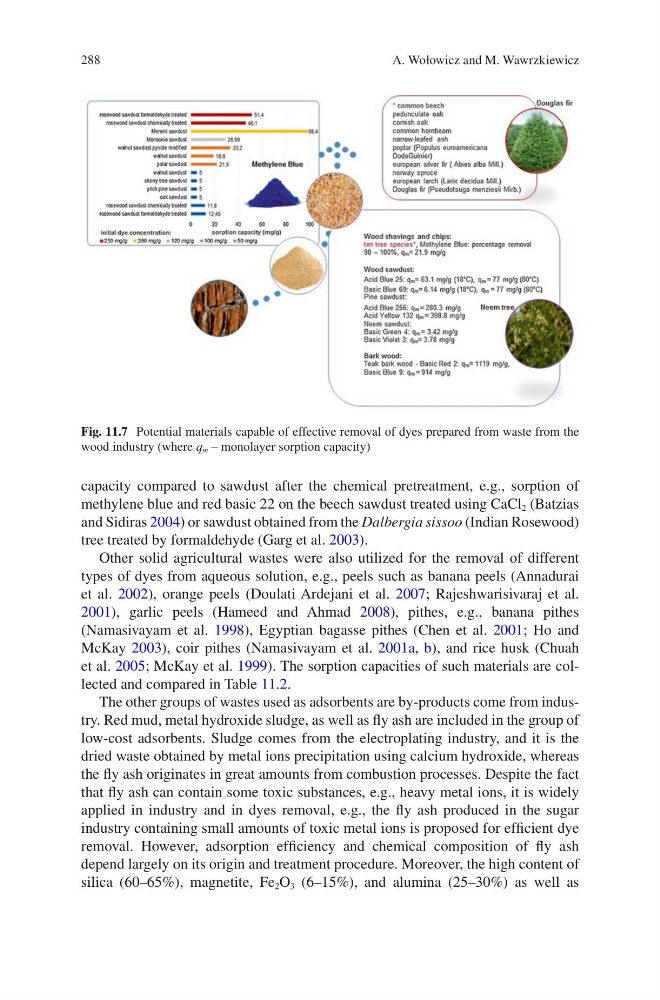
Fig. 11.7 Potential materials capable of effective removal of dyes prepared from waste from the
wood industry (where q m – monolayer sorption capacity)
A. Wołowicz and M. Wawrzkiewicz
capacity compared to sawdust after the chemical pretreatment, e.g., sorption of
methylene blue and red basic 22 on the beech sawdust treated using CaCl 2 (Batzias
and Sidiras 2004) or sawdust obtained from the Dalbergia sissoo (Indian Rosewood)
tree treated by formaldehyde (Garg et al. 2003).
Other solid agricultural wastes were also utilized for the removal of different
types of dyes from aqueous solution, e.g., peels such as banana peels (Annadurai
et al. 2002), orange peels (Doulati Ardejani et al. 2007; Rajeshwarisivaraj et al.
2001), garlic peels (Hameed and Ahmad 2008), pithes, e.g., banana pithes
(Namasivayam et al. 1998), Egyptian bagasse pithes (Chen et al. 2001; Ho and
McKay 2003), coir pithes (Namasivayam et al. 2001a, b), and rice husk (Chuah
et al. 2005; McKay et al. 1999). The sorption capacities of such materials are collected and compared in Table 11.2.
The other groups of wastes used as adsorbents are by-products come from industry. Red mud, metal hydroxide sludge, as well as fly ash are included in the group of
low-cost adsorbents. Sludge comes from the electroplating industry, and it is the
dried waste obtained by metal ions precipitation using calcium hydroxide, whereas
the fly ash originates in great amounts from combustion processes. Despite the fact
that fly ash can contain some toxic substances, e.g., heavy metal ions, it is widely
applied in industry and in dyes removal, e.g., the fly ash produced in the sugar
industry containing small amounts of toxic metal ions is proposed for efficient dye
removal. However, adsorption efficiency and chemical composition of fly ash
depend largely on its origin and treatment procedure. Moreover, the high content of
silica (60–65%), magnetite, Fe 2 O 3 (6–15%), and alumina (25–30%) as well as
Fig. 11.7 Potential materials capable of effective removal of dyes prepared from waste from the
wood industry (where q m – monolayer sorption capacity)
A. Wołowicz and M. Wawrzkiewicz