

13
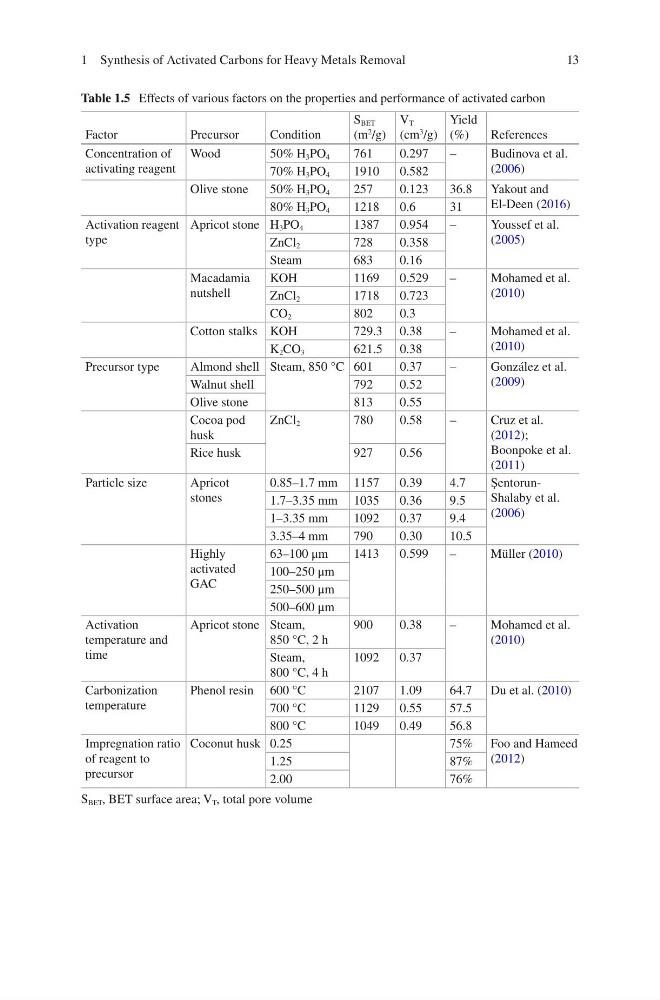
Table 1.5 Effects of various factors on the properties and performance of activated carbon
Factor
Precursor
Condition
S BET
(m
2
/g)
V T
(cm
3
/g)
Yield
(%)
References
Concentration of
activating reagent
Wood
50% H 3 PO 4
761
0.297
–
Budinova et al.
(2006)
70% H 3 PO 4
1910
0.582
Olive stone
50% H 3 PO 4
257
0.123
36.8 Yakout and
El-Deen (2016)
80% H 3 PO 4
1218
0.6
31
Activation reagent
type
Apricot stone H 3 PO 4
1387
0.954
–
Youssef et al.
(2005)
ZnCl 2
728
0.358
Steam
683
0.16
Macadamia
nutshell
KOH
1169
0.529
–
Mohamed et al.
(2010)
ZnCl 2
1718
0.723
CO 2
802
0.3
Cotton stalks KOH
729.3 0.38
–
Mohamed et al.
(2010)
K 2 CO 3
621.5 0.38
Precursor type
Almond shell Steam, 850 °C 601
0.37
–
González et al.
(2009)
Walnut shell
792
0.52
Olive stone
813
0.55
Cocoa pod
husk
ZnCl 2
780
0.58
–
Cruz et al.
(2012);
Boonpoke et al.
(2011)
Rice husk
927
0.56
Particle size
Apricot
stones
0.85–1.7 mm 1157
0.39
4.7
ŞentorunShalaby et al.
(2006)
1.7–3.35 mm 1035
0.36
9.5
1–3.35 mm
1092
0.37
9.4
3.35–4 mm
790
0.30
10.5
Highly
activated
GAC
63–100 μm
1413
0.599
–
Müller (2010)
100–250 μm
250–500 μm
500–600 μm
Activation
temperature and
time
Apricot stone Steam,
850 °C, 2 h
900
0.38
–
Mohamed et al.
(2010)
Steam,
800 °C, 4 h
1092
0.37
Carbonization
temperature
Phenol resin 600 °C
2107
1.09
64.7 Du et al. (2010)
700 °C
1129
0.55
57.5
800 °C
1049
0.49
56.8
Impregnation ratio
of reagent to
precursor
Coconut husk 0.25
75% Foo and Hameed
(2012)
1.25
87%
2.00
76%
S BET , BET surface area; V T , total pore volume
1 Synthesis of Activated Carbons for Heavy Metals Removal
Table 1.5 Effects of various factors on the properties and performance of activated carbon
Factor
Precursor
Condition
S BET
(m
2
/g)
V T
(cm
3
/g)
Yield
(%)
References
Concentration of
activating reagent
Wood
50% H 3 PO 4
761
0.297
–
Budinova et al.
(2006)
70% H 3 PO 4
1910
0.582
Olive stone
50% H 3 PO 4
257
0.123
36.8 Yakout and
El-Deen (2016)
80% H 3 PO 4
1218
0.6
31
Activation reagent
type
Apricot stone H 3 PO 4
1387
0.954
–
Youssef et al.
(2005)
ZnCl 2
728
0.358
Steam
683
0.16
Macadamia
nutshell
KOH
1169
0.529
–
Mohamed et al.
(2010)
ZnCl 2
1718
0.723
CO 2
802
0.3
Cotton stalks KOH
729.3 0.38
–
Mohamed et al.
(2010)
K 2 CO 3
621.5 0.38
Precursor type
Almond shell Steam, 850 °C 601
0.37
–
González et al.
(2009)
Walnut shell
792
0.52
Olive stone
813
0.55
Cocoa pod
husk
ZnCl 2
780
0.58
–
Cruz et al.
(2012);
Boonpoke et al.
(2011)
Rice husk
927
0.56
Particle size
Apricot
stones
0.85–1.7 mm 1157
0.39
4.7
ŞentorunShalaby et al.
(2006)
1.7–3.35 mm 1035
0.36
9.5
1–3.35 mm
1092
0.37
9.4
3.35–4 mm
790
0.30
10.5
Highly
activated
GAC
63–100 μm
1413
0.599
–
Müller (2010)
100–250 μm
250–500 μm
500–600 μm
Activation
temperature and
time
Apricot stone Steam,
850 °C, 2 h
900
0.38
–
Mohamed et al.
(2010)
Steam,
800 °C, 4 h
1092
0.37
Carbonization
temperature
Phenol resin 600 °C
2107
1.09
64.7 Du et al. (2010)
700 °C
1129
0.55
57.5
800 °C
1049
0.49
56.8
Impregnation ratio
of reagent to
precursor
Coconut husk 0.25
75% Foo and Hameed
(2012)
1.25
87%
2.00
76%
S BET , BET surface area; V T , total pore volume
1 Synthesis of Activated Carbons for Heavy Metals Removal