

engagement between cities and the private sector
to accelerate the deployment of climate solutions’. Therefore, in cooperation with the cleantech cluster CLEAN and the International
Cleantech Network, C40 established the City
Solutions Platform in order to trigger and facilitate ‘early engagement between cities and the
private sector to accelerate the deployment of
climate solutions’ (C40 2017). 100RC aims to
help establish a private sector marketplace for
resilience tools. They should enable providing
the member cities with the ‘critical, often innovative tools to help cities around the world
become more resilient to the shocks and stresses
that are a growing part of the twenty-first century’ (Young 2014). The list of partners is long
and steadily growing. Currently (April 2017),
100RC has 86 partners, of which many are from
the private sector (e.g. Cisco, Jacobs, Microsoft,
Siemens and Veolia) (100RC 2018). Having its
focus on disaster resilience, UNISDR is well
aware of the ‘lack of regulation and incentives
for private disaster risk reduction’ and is possessed with the question of ‘How disaster risk is
considered and managed in capital investments,
supply chains and operations will be a decisive
factor on achieving the Sendai Framework targets’ (UNISDR and African Aid and Development Forum 2016). To tackle this issue,
UNISDR established the Private Sector Alliance
for Disaster Resilient Societies ARISE that aims
to encourage the creation of private public partnerships, initially consisting of over 140 private
sector entities and affiliates (ibd.).
However, at this point, many interviewees did
not regard the current private sectors engagement
as sufficient and criticised that many networks
missed the opportunity to involve private partners. C40, for instance, has been numerously
pointed out as a network that only dedicates
minimal attention to this gap, although it was
widely recognised as a weakness. However, it
was acknowledged that C40 is now starting to
tackle this point. The situation was a bit different
in 100RC, where the private sector involvement
was perceived as quite big. One CRO confirmed
that it was also an overall goal of the network to
build a marketplace, not just for public administrations to share their knowledge but also for
business to develop solutions. Another CRO
pointed out that bringing in private and growing
markets was so deeply a part of 100RC that it has
become a difficult relationship, since the private
sector is supposed to be mostly concerned with
the bottom line. Also, the growing number of
businesses involved in the network made it more
and more difficult to oversee the whole process.
What are the obstacles for city-to-city learning in networks and what opportunities for
improvements exist?
The most common obstacles that hindered
C2CL were limited resources (time, staff,
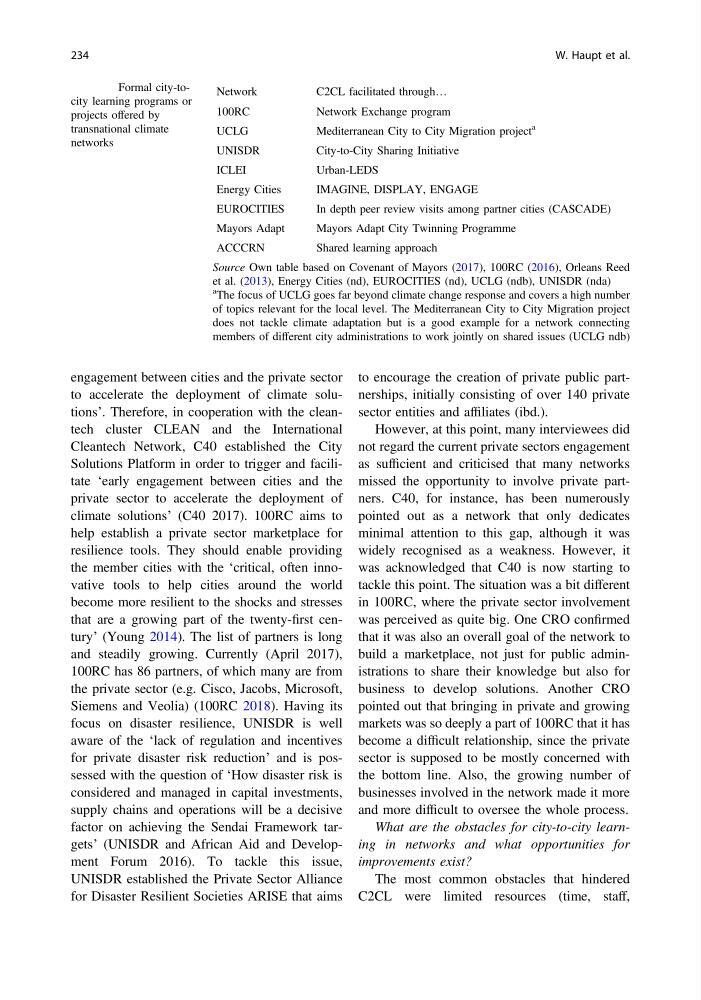
Table 4 Formal city-tocity learning programs or
projects offered by
transnational climate
networks
Network
C2CL facilitated through…
100RC
Network Exchange program
UCLG
Mediterranean City to City Migration project
a
UNISDR
City-to-City Sharing Initiative
ICLEI
Urban-LEDS
Energy Cities
IMAGINE, DISPLAY, ENGAGE
EUROCITIES
In depth peer review visits among partner cities (CASCADE)
Mayors Adapt
Mayors Adapt City Twinning Programme
ACCCRN
Shared learning approach
Source Own table based on Covenant of Mayors (2017), 100RC (2016), Orleans Reed
et al. (2013), Energy Cities (nd), EUROCITIES (nd), UCLG (ndb), UNISDR (nda)
a The focus of UCLG goes far beyond climate change response and covers a high number
of topics relevant for the local level. The Mediterranean City to City Migration project
does not tackle climate adaptation but is a good example for a network connecting
members of different city administrations to work jointly on shared issues (UCLG ndb)
234
W. Haupt et al.
to accelerate the deployment of climate solutions’. Therefore, in cooperation with the cleantech cluster CLEAN and the International
Cleantech Network, C40 established the City
Solutions Platform in order to trigger and facilitate ‘early engagement between cities and the
private sector to accelerate the deployment of
climate solutions’ (C40 2017). 100RC aims to
help establish a private sector marketplace for
resilience tools. They should enable providing
the member cities with the ‘critical, often innovative tools to help cities around the world
become more resilient to the shocks and stresses
that are a growing part of the twenty-first century’ (Young 2014). The list of partners is long
and steadily growing. Currently (April 2017),
100RC has 86 partners, of which many are from
the private sector (e.g. Cisco, Jacobs, Microsoft,
Siemens and Veolia) (100RC 2018). Having its
focus on disaster resilience, UNISDR is well
aware of the ‘lack of regulation and incentives
for private disaster risk reduction’ and is possessed with the question of ‘How disaster risk is
considered and managed in capital investments,
supply chains and operations will be a decisive
factor on achieving the Sendai Framework targets’ (UNISDR and African Aid and Development Forum 2016). To tackle this issue,
UNISDR established the Private Sector Alliance
for Disaster Resilient Societies ARISE that aims
to encourage the creation of private public partnerships, initially consisting of over 140 private
sector entities and affiliates (ibd.).
However, at this point, many interviewees did
not regard the current private sectors engagement
as sufficient and criticised that many networks
missed the opportunity to involve private partners. C40, for instance, has been numerously
pointed out as a network that only dedicates
minimal attention to this gap, although it was
widely recognised as a weakness. However, it
was acknowledged that C40 is now starting to
tackle this point. The situation was a bit different
in 100RC, where the private sector involvement
was perceived as quite big. One CRO confirmed
that it was also an overall goal of the network to
build a marketplace, not just for public administrations to share their knowledge but also for
business to develop solutions. Another CRO
pointed out that bringing in private and growing
markets was so deeply a part of 100RC that it has
become a difficult relationship, since the private
sector is supposed to be mostly concerned with
the bottom line. Also, the growing number of
businesses involved in the network made it more
and more difficult to oversee the whole process.
What are the obstacles for city-to-city learning in networks and what opportunities for
improvements exist?
The most common obstacles that hindered
C2CL were limited resources (time, staff,
Table 4 Formal city-tocity learning programs or
projects offered by
transnational climate
networks
Network
C2CL facilitated through…
100RC
Network Exchange program
UCLG
Mediterranean City to City Migration project
a
UNISDR
City-to-City Sharing Initiative
ICLEI
Urban-LEDS
Energy Cities
IMAGINE, DISPLAY, ENGAGE
EUROCITIES
In depth peer review visits among partner cities (CASCADE)
Mayors Adapt
Mayors Adapt City Twinning Programme
ACCCRN
Shared learning approach
Source Own table based on Covenant of Mayors (2017), 100RC (2016), Orleans Reed
et al. (2013), Energy Cities (nd), EUROCITIES (nd), UCLG (ndb), UNISDR (nda)
a The focus of UCLG goes far beyond climate change response and covers a high number
of topics relevant for the local level. The Mediterranean City to City Migration project
does not tackle climate adaptation but is a good example for a network connecting
members of different city administrations to work jointly on shared issues (UCLG ndb)
234
W. Haupt et al.