

water extraction costs. The proposed legislation
did not address these issues, potentially jeopardizing agricultural production for millions of
farms.
Theoretically, phasing out agricultural input
subsidies could be considered as a negative
shock for the rural economy. There are a few
studies available that have analyzed the effects of
subsidy elimination on rural life and agricultural
activities in Iran. As agricultural subsidies used
to support farmers for energy and other inputs,
these studies cover different subsidy elimination
conditions. These studies mainly used data
available before the reform of 2010, and they are
mostly based on economic theories and ad hoc
hypotheses. Musavi et al. (2013) used a production function with the available data for the
1974–2005 period; their research showed a 100%
increase in the energy price, which will increase
production costs by 9%. Additionally, because of
increases in the prices of agricultural products,
the value of agricultural production will increase
by 4.34%. Government expenditure also
decreases by more than 20% due to a 100%
increase in energy prices. Shahraki et al. (2016)
studied the subsidy reduction on water prices and
water abstraction costs. A computable general
equilibrium model (CGE) was applied to data
from 2001. They showed that a 100% increase in
water extraction costs would reduce rural production by around 5.33% and rural consumption
by more than 30%. Alijani et al. (2012) also used
a CGE model to analyze the reduction of the
whole production subsidy. The results show that
a 100% decrease in the production subsidies
would reduce the production of field crops and
tree crops by 9.78% and 2.45%, respectively.
The investment in the field and tree crop production and agricultural services would go down
by 12.45%, 7.65%, and 24.45%, respectively.
Additionally, employment in the field and tree
crop production and agricultural services will
drop by 17.9%, 14.46%, and 19.46%, respectively. They also conclude that importing agricultural products would increase dramatically, in
turn jeopardizing food self-sufficiency goals.
Overall, existing research suggests that the
elimination of subsidies would make one of the
key production factors more expensive and, as a
result, negatively impact agricultural production.
3.2.3 Parliament
Another important actor in the legalization of the
subsidy reform is the Iranian parliament, which is
also known as the “Islamic Consultative
Assembly”, or “Iranian Majlis”. Electoral districts are represented by one or more members
who are elected in two-stage majoritarian elections. As a legislative body, its goal is to observe
the activities of the government and to approve
the legislation, which then has to be ratified by
the Guardian Council. For instance, the parliament approved the subsidy reform. Up until
2018, there were 207 electoral district areas
spread throughout 31 provinces and 290 members of parliament (MPs) should have been
elected.
12 Five electoral districts belong to religious minorities. Elections have been based on
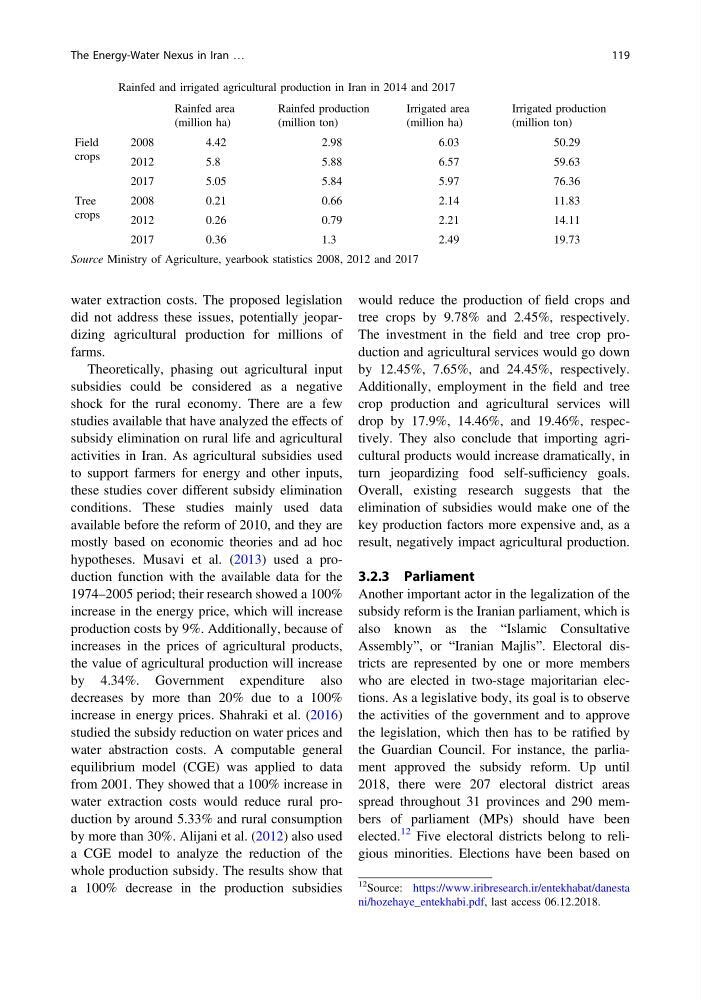
Table 6 Rainfed and irrigated agricultural production in Iran in 2014 and 2017
Rainfed area
(million ha)
Rainfed production
(million ton)
Irrigated area
(million ha)
Irrigated production
(million ton)
Field
crops
2008
4.42
2.98
6.03
50.29
2012
5.8
5.88
6.57
59.63
2017
5.05
5.84
5.97
76.36
Tree
crops
2008
0.21
0.66
2.14
11.83
2012
0.26
0.79
2.21
14.11
2017
0.36
1.3
2.49
19.73
Source Ministry of Agriculture, yearbook statistics 2008, 2012 and 2017
12
Source: https://www.iribresearch.ir/entekhabat/danesta
ni/hozehaye_entekhabi.pdf, last access 06.12.2018.
The Energy-Water Nexus in Iran …
119
did not address these issues, potentially jeopardizing agricultural production for millions of
farms.
Theoretically, phasing out agricultural input
subsidies could be considered as a negative
shock for the rural economy. There are a few
studies available that have analyzed the effects of
subsidy elimination on rural life and agricultural
activities in Iran. As agricultural subsidies used
to support farmers for energy and other inputs,
these studies cover different subsidy elimination
conditions. These studies mainly used data
available before the reform of 2010, and they are
mostly based on economic theories and ad hoc
hypotheses. Musavi et al. (2013) used a production function with the available data for the
1974–2005 period; their research showed a 100%
increase in the energy price, which will increase
production costs by 9%. Additionally, because of
increases in the prices of agricultural products,
the value of agricultural production will increase
by 4.34%. Government expenditure also
decreases by more than 20% due to a 100%
increase in energy prices. Shahraki et al. (2016)
studied the subsidy reduction on water prices and
water abstraction costs. A computable general
equilibrium model (CGE) was applied to data
from 2001. They showed that a 100% increase in
water extraction costs would reduce rural production by around 5.33% and rural consumption
by more than 30%. Alijani et al. (2012) also used
a CGE model to analyze the reduction of the
whole production subsidy. The results show that
a 100% decrease in the production subsidies
would reduce the production of field crops and
tree crops by 9.78% and 2.45%, respectively.
The investment in the field and tree crop production and agricultural services would go down
by 12.45%, 7.65%, and 24.45%, respectively.
Additionally, employment in the field and tree
crop production and agricultural services will
drop by 17.9%, 14.46%, and 19.46%, respectively. They also conclude that importing agricultural products would increase dramatically, in
turn jeopardizing food self-sufficiency goals.
Overall, existing research suggests that the
elimination of subsidies would make one of the
key production factors more expensive and, as a
result, negatively impact agricultural production.
3.2.3 Parliament
Another important actor in the legalization of the
subsidy reform is the Iranian parliament, which is
also known as the “Islamic Consultative
Assembly”, or “Iranian Majlis”. Electoral districts are represented by one or more members
who are elected in two-stage majoritarian elections. As a legislative body, its goal is to observe
the activities of the government and to approve
the legislation, which then has to be ratified by
the Guardian Council. For instance, the parliament approved the subsidy reform. Up until
2018, there were 207 electoral district areas
spread throughout 31 provinces and 290 members of parliament (MPs) should have been
elected.
12 Five electoral districts belong to religious minorities. Elections have been based on
Table 6 Rainfed and irrigated agricultural production in Iran in 2014 and 2017
Rainfed area
(million ha)
Rainfed production
(million ton)
Irrigated area
(million ha)
Irrigated production
(million ton)
Field
crops
2008
4.42
2.98
6.03
50.29
2012
5.8
5.88
6.57
59.63
2017
5.05
5.84
5.97
76.36
Tree
crops
2008
0.21
0.66
2.14
11.83
2012
0.26
0.79
2.21
14.11
2017
0.36
1.3
2.49
19.73
Source Ministry of Agriculture, yearbook statistics 2008, 2012 and 2017
12
Source: https://www.iribresearch.ir/entekhabat/danesta
ni/hozehaye_entekhabi.pdf, last access 06.12.2018.
The Energy-Water Nexus in Iran …
119