

At the same time, social benefits indicate that the
government will benefit to actively subsidize
conservation efforts as a sufficient condition for
the abatement of soil erosion. In this light, the
existing agroforestry program should be regarded
as only a beginning, and the government must
seriously look beyond it, towards a massive land
reform program in the SSA of Cameroon supported by conservation-oriented subsidies.
In addition, taking into account the preservation of the hydroelectric potential of Lagdo Lake
in deciding what agricultural activities to
encourage is of considerable importance in terms
of public decisions. While highlighting the
existence of a positive territorial externality
linked to land use, the environmental performance of agriculture will be strengthened further,
which will encourage the implementation of
agro-environmental policies in favour of the
activity and its joint products.
Policies that allow landowners to capture the
value of environmental services could provide
powerful
incentives
for
promoting
environmentally-friendly land use practices
(Pagiola et al. 2004). Therefore, it is important to
develop mechanisms that pay land users for
environmental services including conserving
soil, so that the additional income stream makes
environmentally-friendly land use practices privately profitable. While growing annual crops,
incentives should also be given to adopting soil
and water conservation technologies including
non-tillage practices, mulching, contour and alley
farming, and terrace construction, which can
reduce soil erosion and other environmental costs
substantially.
From a theoretical point of view, the application of the damage function is more common
in the valorisation of the effects of pollution on
health, and it is applied here in the valuation of
environmental services rendered by agriculture.
The limits of this environmental service valuation are based on a number of important
points. First of all, the basic hypothesis assumes
that the anti-erosion installations can completely
stop the sediment drain to the lake, which is not
evident because the anti-erosion installations can
only help to reduce the quantities of sediments that
leak into the lake. Secondly, with natural reserves
making up 68% of the total area of the watershed,
agriculture can only occupy 32% of this area. This
means that agriculture cannot totally stop the erosion that occurs in the watershed. Moreover, the
study does not quantify the volume of sediments
that can be stopped by each type of anti-erosive
installation. To the extent that plots cannot be fully
developed, the study also does not mention the total
area required for the development of anti-erosive
techniques in the watershed. In addition, the
MEADEN study assumes that the volume of
deposited sediments is constant from year to year
and that the amount lost is exactly equal to the
volume of sediment deposited in the lake. Finally,
from the point of view of the consumption of the
generated power, this paper does not provide the
different proportions of consumption of the energy
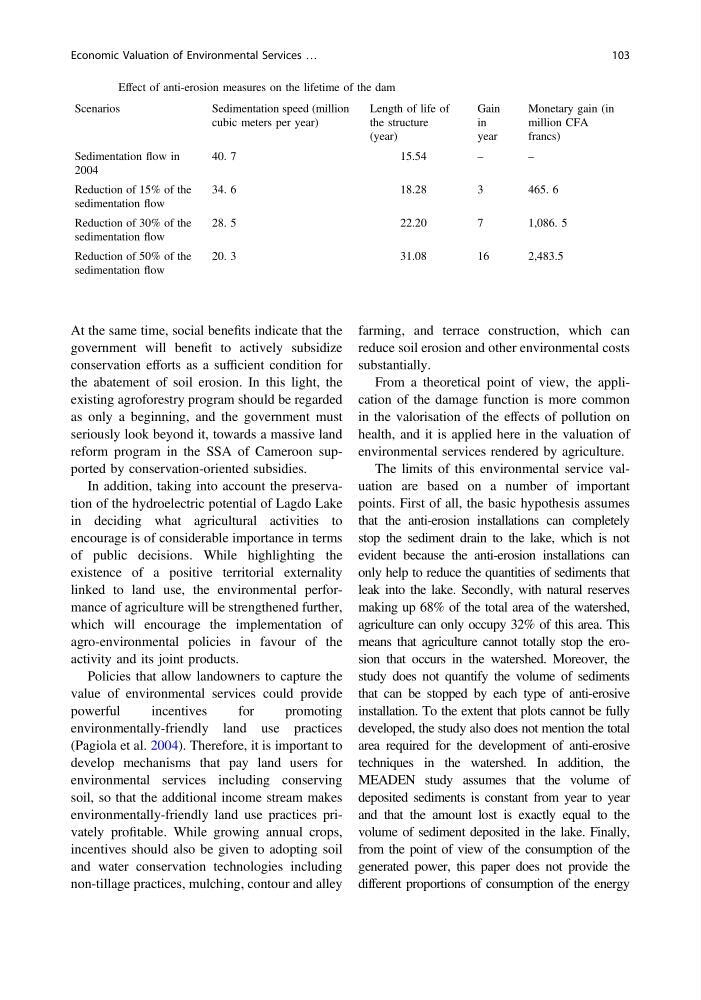
Table 5 Effect of anti-erosion measures on the lifetime of the dam
Scenarios
Sedimentation speed (million
cubic meters per year)
Length of life of
the structure
(year)
Gain
in
year
Monetary gain (in
million CFA
francs)
Sedimentation flow in
2004
40. 7
15.54
–
–
Reduction of 15% of the
sedimentation flow
34. 6
18.28
3
465. 6
Reduction of 30% of the
sedimentation flow
28. 5
22.20
7
1,086. 5
Reduction of 50% of the
sedimentation flow
20. 3
31.08
16
2,483.5
Economic Valuation of Environmental Services …
103
government will benefit to actively subsidize
conservation efforts as a sufficient condition for
the abatement of soil erosion. In this light, the
existing agroforestry program should be regarded
as only a beginning, and the government must
seriously look beyond it, towards a massive land
reform program in the SSA of Cameroon supported by conservation-oriented subsidies.
In addition, taking into account the preservation of the hydroelectric potential of Lagdo Lake
in deciding what agricultural activities to
encourage is of considerable importance in terms
of public decisions. While highlighting the
existence of a positive territorial externality
linked to land use, the environmental performance of agriculture will be strengthened further,
which will encourage the implementation of
agro-environmental policies in favour of the
activity and its joint products.
Policies that allow landowners to capture the
value of environmental services could provide
powerful
incentives
for
promoting
environmentally-friendly land use practices
(Pagiola et al. 2004). Therefore, it is important to
develop mechanisms that pay land users for
environmental services including conserving
soil, so that the additional income stream makes
environmentally-friendly land use practices privately profitable. While growing annual crops,
incentives should also be given to adopting soil
and water conservation technologies including
non-tillage practices, mulching, contour and alley
farming, and terrace construction, which can
reduce soil erosion and other environmental costs
substantially.
From a theoretical point of view, the application of the damage function is more common
in the valorisation of the effects of pollution on
health, and it is applied here in the valuation of
environmental services rendered by agriculture.
The limits of this environmental service valuation are based on a number of important
points. First of all, the basic hypothesis assumes
that the anti-erosion installations can completely
stop the sediment drain to the lake, which is not
evident because the anti-erosion installations can
only help to reduce the quantities of sediments that
leak into the lake. Secondly, with natural reserves
making up 68% of the total area of the watershed,
agriculture can only occupy 32% of this area. This
means that agriculture cannot totally stop the erosion that occurs in the watershed. Moreover, the
study does not quantify the volume of sediments
that can be stopped by each type of anti-erosive
installation. To the extent that plots cannot be fully
developed, the study also does not mention the total
area required for the development of anti-erosive
techniques in the watershed. In addition, the
MEADEN study assumes that the volume of
deposited sediments is constant from year to year
and that the amount lost is exactly equal to the
volume of sediment deposited in the lake. Finally,
from the point of view of the consumption of the
generated power, this paper does not provide the
different proportions of consumption of the energy
Table 5 Effect of anti-erosion measures on the lifetime of the dam
Scenarios
Sedimentation speed (million
cubic meters per year)
Length of life of
the structure
(year)
Gain
in
year
Monetary gain (in
million CFA
francs)
Sedimentation flow in
2004
40. 7
15.54
–
–
Reduction of 15% of the
sedimentation flow
34. 6
18.28
3
465. 6
Reduction of 30% of the
sedimentation flow
28. 5
22.20
7
1,086. 5
Reduction of 50% of the
sedimentation flow
20. 3
31.08
16
2,483.5
Economic Valuation of Environmental Services …
103