

103
health risks due to the long-term consumption of contaminated crops (Abraham
et al. 2018).
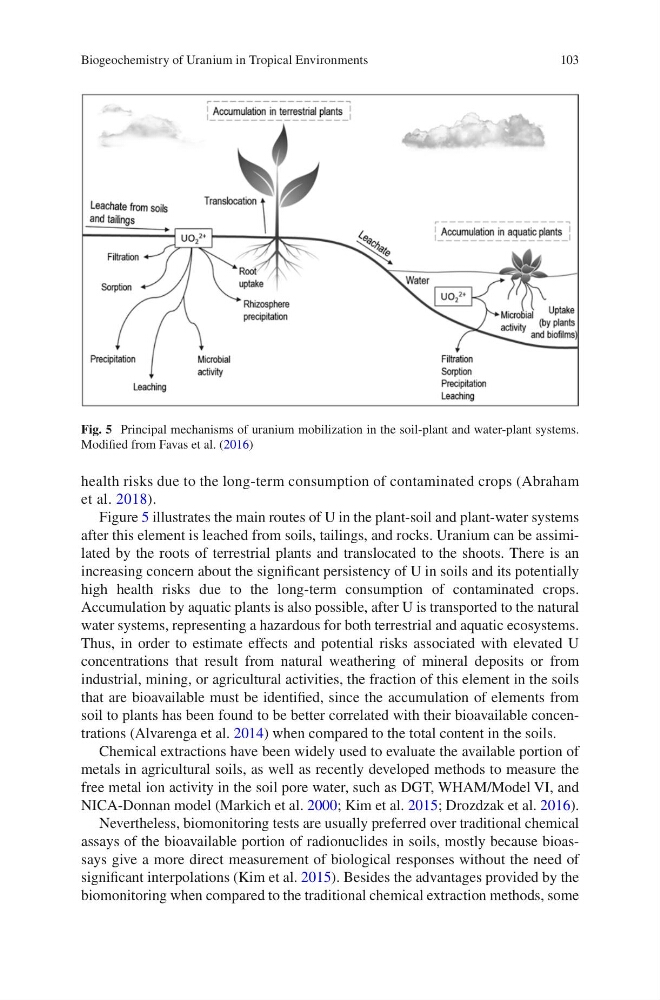
Figure 5 illustrates the main routes of U in the plant-soil and plant-water systems
after this element is leached from soils, tailings, and rocks. Uranium can be assimilated by the roots of terrestrial plants and translocated to the shoots. There is an
increasing concern about the significant persistency of U in soils and its potentially
high health risks due to the long-term consumption of contaminated crops.
Accumulation by aquatic plants is also possible, after U is transported to the natural
water systems, representing a hazardous for both terrestrial and aquatic ecosystems.
Thus, in order to estimate effects and potential risks associated with elevated U
concentrations that result from natural weathering of mineral deposits or from
industrial, mining, or agricultural activities, the fraction of this element in the soils
that are bioavailable must be identified, since the accumulation of elements from
soil to plants has been found to be better correlated with their bioavailable concentrations (Alvarenga et al. 2014) when compared to the total content in the soils.
Chemical extractions have been widely used to evaluate the available portion of
metals in agricultural soils, as well as recently developed methods to measure the
free metal ion activity in the soil pore water, such as DGT, WHAM/Model VI, and
NICA-Donnan model (Markich et al. 2000; Kim et al. 2015; Drozdzak et al. 2016).
Nevertheless, biomonitoring tests are usually preferred over traditional chemical
assays of the bioavailable portion of radionuclides in soils, mostly because bioassays give a more direct measurement of biological responses without the need of
significant interpolations (Kim et al. 2015). Besides the advantages provided by the
biomonitoring when compared to the traditional chemical extraction methods, some
Fig. 5 Principal mechanisms of uranium mobilization in the soil-plant and water-plant systems.
Modified from Favas et al. (2016)
Biogeochemistry of Uranium in Tropical Environments
health risks due to the long-term consumption of contaminated crops (Abraham
et al. 2018).
Figure 5 illustrates the main routes of U in the plant-soil and plant-water systems
after this element is leached from soils, tailings, and rocks. Uranium can be assimilated by the roots of terrestrial plants and translocated to the shoots. There is an
increasing concern about the significant persistency of U in soils and its potentially
high health risks due to the long-term consumption of contaminated crops.
Accumulation by aquatic plants is also possible, after U is transported to the natural
water systems, representing a hazardous for both terrestrial and aquatic ecosystems.
Thus, in order to estimate effects and potential risks associated with elevated U
concentrations that result from natural weathering of mineral deposits or from
industrial, mining, or agricultural activities, the fraction of this element in the soils
that are bioavailable must be identified, since the accumulation of elements from
soil to plants has been found to be better correlated with their bioavailable concentrations (Alvarenga et al. 2014) when compared to the total content in the soils.
Chemical extractions have been widely used to evaluate the available portion of
metals in agricultural soils, as well as recently developed methods to measure the
free metal ion activity in the soil pore water, such as DGT, WHAM/Model VI, and
NICA-Donnan model (Markich et al. 2000; Kim et al. 2015; Drozdzak et al. 2016).
Nevertheless, biomonitoring tests are usually preferred over traditional chemical
assays of the bioavailable portion of radionuclides in soils, mostly because bioassays give a more direct measurement of biological responses without the need of
significant interpolations (Kim et al. 2015). Besides the advantages provided by the
biomonitoring when compared to the traditional chemical extraction methods, some
Fig. 5 Principal mechanisms of uranium mobilization in the soil-plant and water-plant systems.
Modified from Favas et al. (2016)
Biogeochemistry of Uranium in Tropical Environments