

performance and the factors that determine these differences
in terms of profitability, cost efficiency, and risk effects.
The contribution of this study lies in the fact that it adds a
comprehensive comparative analysis of the performance of
CBs and IBs in the MENA region, and more specifically in
the UAE, using cost efficiency and profitability as measures
of bank performance. By investigating the impact of
bank-specific characteristics, risk-taking and ownership
structure on bank profitability, this study also contributes to
the analysis of the financial crisis impact on the UAE
banking systems (both CBs and IBs) as well as their performance over an extended period of 11 years (2005–2015).
The main research question addressed in this study is related
to the difference in bank performance between CBs and IBs
in the UAE. More specifically, we address the following two
questions: (i) Are there significant differences in the performance of CBs and IBs in the UAE based on their efficiency and profitability? and (ii) Do the bank-level
characteristics, capital adequacy and risk measures, and/or
ownership structure explain these differences? To answer to
these questions, we formulate a number of research
hypothesis to test the difference in the performance of the
conventional and Islamic banking system, as well as the
influence of different factors such as bank-level characteristics, capital adequacy, risk measures, and ownership
structure which are expected to be significant determinants
of a bank’s profitability and efficiency. More specifically, the
following null and alternative hypotheses are tested:
H01: There is no significant difference between conventional and Islamic banking systems in cost
efficiency.
HA1: There is a significant difference between conventional and Islamic banking systems in cost
efficiency.
H02: There is no significant difference between conventional and Islamic banking systems in profitability.
HA2: There is a significant difference between conventional and Islamic banking systems in profitability.
H03: There is no significantly different effect of capital
adequacy on banks’ cost efficiency between the
conventional and Islamic banking systems.
HA3: There is a significantly different effect of capital
adequacy on banks’ cost efficiency between the
conventional and Islamic banking systems.
H04: There is no significantly different effect of capital
adequacy on banks’ profitability between the conventional and Islamic banking systems.
HA4: There is a significantly different effect of capital
adequacy on banks’ profitability between the conventional and Islamic banking systems.
H05: There is no significantly different effect of
risk-taking on banks’ cost efficiency between the
conventional and Islamic banking systems.
HA5: There is a significantly different effect of risk-taking
on banks’ cost efficiency between the conventional
and Islamic banking systems.
H06: There is no significantly different effect of
risk-taking on banks’ profitability between the
conventional and Islamic banking systems.
HA6: There is a significantly different effect of risk-taking
on banks’ profitability between the conventional
and Islamic banking systems.
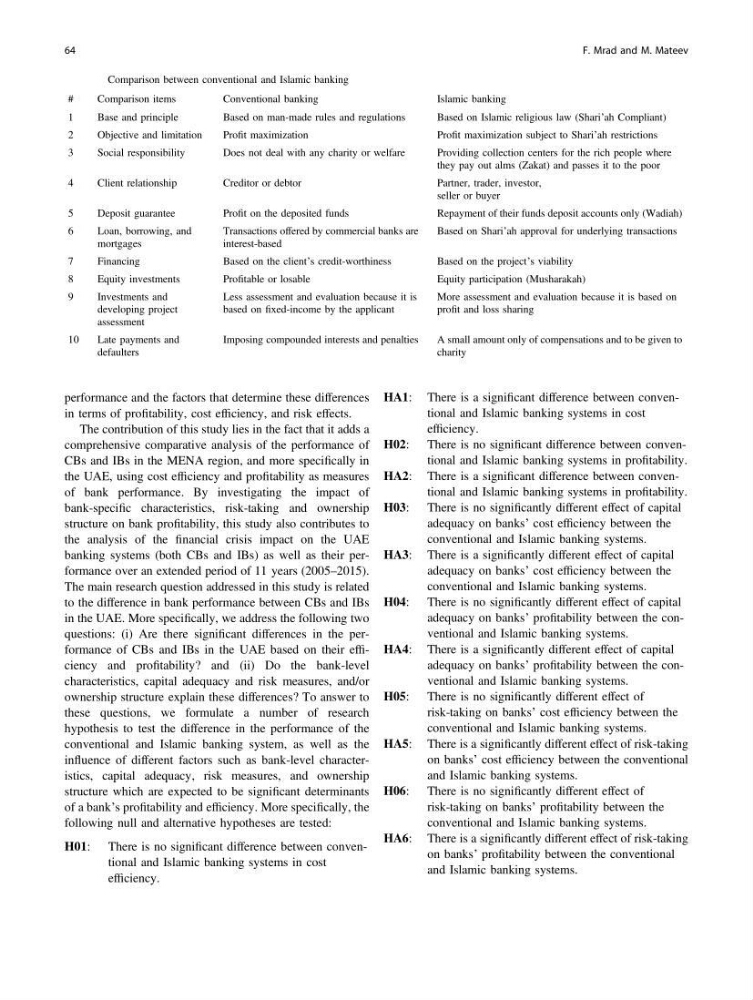
Table 1 Comparison between conventional and Islamic banking
#
Comparison items
Conventional banking
Islamic banking
1
Base and principle
Based on man-made rules and regulations
Based on Islamic religious law (Shari’ah Compliant)
2
Objective and limitation
Profit maximization
Profit maximization subject to Shari’ah restrictions
3
Social responsibility
Does not deal with any charity or welfare
Providing collection centers for the rich people where
they pay out alms (Zakat) and passes it to the poor
4
Client relationship
Creditor or debtor
Partner, trader, investor,
seller or buyer
5
Deposit guarantee
Profit on the deposited funds
Repayment of their funds deposit accounts only (Wadiah)
6
Loan, borrowing, and
mortgages
Transactions offered by commercial banks are
interest-based
Based on Shari’ah approval for underlying transactions
7
Financing
Based on the client’s credit-worthiness
Based on the project’s viability
8
Equity investments
Profitable or losable
Equity participation (Musharakah)
9
Investments and
developing project
assessment
Less assessment and evaluation because it is
based on fixed-income by the applicant
More assessment and evaluation because it is based on
profit and loss sharing
10
Late payments and
defaulters
Imposing compounded interests and penalties
A small amount only of compensations and to be given to
charity
64
F. Mrad and M. Mateev
in terms of profitability, cost efficiency, and risk effects.
The contribution of this study lies in the fact that it adds a
comprehensive comparative analysis of the performance of
CBs and IBs in the MENA region, and more specifically in
the UAE, using cost efficiency and profitability as measures
of bank performance. By investigating the impact of
bank-specific characteristics, risk-taking and ownership
structure on bank profitability, this study also contributes to
the analysis of the financial crisis impact on the UAE
banking systems (both CBs and IBs) as well as their performance over an extended period of 11 years (2005–2015).
The main research question addressed in this study is related
to the difference in bank performance between CBs and IBs
in the UAE. More specifically, we address the following two
questions: (i) Are there significant differences in the performance of CBs and IBs in the UAE based on their efficiency and profitability? and (ii) Do the bank-level
characteristics, capital adequacy and risk measures, and/or
ownership structure explain these differences? To answer to
these questions, we formulate a number of research
hypothesis to test the difference in the performance of the
conventional and Islamic banking system, as well as the
influence of different factors such as bank-level characteristics, capital adequacy, risk measures, and ownership
structure which are expected to be significant determinants
of a bank’s profitability and efficiency. More specifically, the
following null and alternative hypotheses are tested:
H01: There is no significant difference between conventional and Islamic banking systems in cost
efficiency.
HA1: There is a significant difference between conventional and Islamic banking systems in cost
efficiency.
H02: There is no significant difference between conventional and Islamic banking systems in profitability.
HA2: There is a significant difference between conventional and Islamic banking systems in profitability.
H03: There is no significantly different effect of capital
adequacy on banks’ cost efficiency between the
conventional and Islamic banking systems.
HA3: There is a significantly different effect of capital
adequacy on banks’ cost efficiency between the
conventional and Islamic banking systems.
H04: There is no significantly different effect of capital
adequacy on banks’ profitability between the conventional and Islamic banking systems.
HA4: There is a significantly different effect of capital
adequacy on banks’ profitability between the conventional and Islamic banking systems.
H05: There is no significantly different effect of
risk-taking on banks’ cost efficiency between the
conventional and Islamic banking systems.
HA5: There is a significantly different effect of risk-taking
on banks’ cost efficiency between the conventional
and Islamic banking systems.
H06: There is no significantly different effect of
risk-taking on banks’ profitability between the
conventional and Islamic banking systems.
HA6: There is a significantly different effect of risk-taking
on banks’ profitability between the conventional
and Islamic banking systems.
Table 1 Comparison between conventional and Islamic banking
#
Comparison items
Conventional banking
Islamic banking
1
Base and principle
Based on man-made rules and regulations
Based on Islamic religious law (Shari’ah Compliant)
2
Objective and limitation
Profit maximization
Profit maximization subject to Shari’ah restrictions
3
Social responsibility
Does not deal with any charity or welfare
Providing collection centers for the rich people where
they pay out alms (Zakat) and passes it to the poor
4
Client relationship
Creditor or debtor
Partner, trader, investor,
seller or buyer
5
Deposit guarantee
Profit on the deposited funds
Repayment of their funds deposit accounts only (Wadiah)
6
Loan, borrowing, and
mortgages
Transactions offered by commercial banks are
interest-based
Based on Shari’ah approval for underlying transactions
7
Financing
Based on the client’s credit-worthiness
Based on the project’s viability
8
Equity investments
Profitable or losable
Equity participation (Musharakah)
9
Investments and
developing project
assessment
Less assessment and evaluation because it is
based on fixed-income by the applicant
More assessment and evaluation because it is based on
profit and loss sharing
10
Late payments and
defaulters
Imposing compounded interests and penalties
A small amount only of compensations and to be given to
charity
64
F. Mrad and M. Mateev