

incentives from intermediaries to real value-added production, transportation, and sales activities can accompany an
express mandate to reduce the final price to end users.
The political and social power of consumers in the United
States is well documented, from the Boston Tea Party to
Ralph Nader and consumer activism, preference and petition
can change government policies (Glickman 2009). It is
possible for a shift in consumer demands and behavior to
affect an entire industry. As a result, this may push governments to address the price to profit gaps that exist due to
intermediation. Over time, this may create the impetus for
the creation of a national market to facilitate purchase for
consumers at the BOP. This market can be either private or
public, managed by trade agencies or ministries of commerce, and in many countries, it could exist through a
public–private partnership.
The goal of this marketplace is to reduce intermediary
costs that will more readily link final customers with producers. United Nation’s Millennium Development Goals set
out several objectives, regulations, and policy prescriptions
for governments to enhance and encourage environmental
sustainability and reduce world poverty (Akhtar and Mekki
2017). To do this, corporations must shift to creating value
rather than simply abiding by pseudo-value-added activities.
Direct marketing channels to consumers at the BOP will
decrease prices and increase purchasing power. Opportunities exist to create greater profit margins for manufacturers
who could then increase capital expenditures, reinvest in
research and development while providing greater wages to
skilled and unskilled labor.
References
Afzal Hossain, M. (2017). Value added statement: A part of social
responsibility reporting. Journal of Finance and Accounting, 5(2),
74. https://doi.org/10.11648/j.jfa.20170502.11.
Akhtar, S., & Mekki, Y. (2017). Environmental prosperity and
sustainable development practices. Research Journal of Chemistry
and Environment., 21, 65–70.
Burgess, K., & Singh, P. (2006). Supply chain management: A
structured literature review and implications for future research.
International Journal of Operations & Production Management, 26
(7), 703–729.
Burgess, K., Singh, P. J., & Koroglu R. (2006). Supply chain
management: A structured literature review and implications for
future research. International Journal of Operations & Production
Management, 26, 703.
Camilleri, M. (2017). Responsible supply chain management and
stakeholder engagement for corporate reputation (pp. 79–95).
https://doi.org/10.1007/978-3-319-46849-5_5.
Catturi, G. (1994). La teoria dei flussi e degli stocks ed il “sistema dei
valori” d’impresa (The theory of flows and stocks and the corporate
“system of value”). Cedam, Padova.
Charkham, J. (2011). Keeping better company: Corporate governance
ten years on. http://doi.org/10.1093/acprof:oso/9780199243198.
001.0001.
Coviello, N. E., & Brodie, R. J. (2001). Contemporary marketing
practices of consumer and business-to-business firms: How different
are they? The Journal of Business and Industrial Marketing, 16,
382–400.
Cox, B. (1979). Value added an appreciation for the accountants
concerned with industry. Institute of Cost and Management
Accountants, 1978, quoted in Morely, M. F. (1976). The value
added statement in Britain. The Accounting Review, LIV(3), 620,
from Cox, added value and corporate reporting. Management
Accounting, 142–146.
Ellram, L. M. (1991). Supply-chain management: The industrial
organisation perspective. International Journal of Physical Distribution & Logistics Management, 21(1), 13–22.
Evraert, S., & Riahi-Belkaoui, A. (1998). Usefulness of value added
reporting: A review and synthesis of the literature. Managerial
Finance, 24(11), 1–15.
Fagerstrøm, A., Stratton, J. P., & Foxall, G. R. (2015). The impact of
corporate social responsibility activities on the consumer purchasing
situation. Journal of Organizational Behavior Management, 35
(3/4), 184–205. https://doi.org/10.1080/01608061.2015.1093053.
Fort, T., Pierce, J. R., & Schott, P. K. (2017). New perspectives on the
decline of U.S. manufacturing employment. In Houseman, S. N.
(2018). Understanding the decline of U.S. manufacturing employment. W.E. Upjohn Institute. https://doi.org/10.17848/wp18-287.
Freeman, R. E. (1984). Strategic management: A stakeholder approach.
Analysis, 38(01).
Gangopadhyay, S., & Wadhwa, W. (2004). Changing pattern of
household consumption expenditure. Society for economic research
& financial analysis. New Delhi: The Planning Commission,
Government of India.
Glickman, L. B. (2009). Buying power: A history of consumer activism
in America. Chicago: University of Chicago Press.
Haller, A., & Van Staden, C. (2014). The value added statement—An
appropriate instrument for integrated reporting. Accounting, Auditing & Accountability Journal, 27(7), 1190–1216. https://doi.org/10.
1108/aaaj-04-2013-1307.
Haller, A., Van Staden, C., & Landis, C. (2016). Value added as part of
sustainability reporting: Reporting on distributional fairness or
obfuscation? Journal of Business Ethics. https://doi.org/10.1007/
s10551-016-3338-9.
Hannan, M. A., Lipu, M. S. H., Hussain, A., & Mohamed, A. (2017).
A review of lithium-ion battery state of charge estimation and
management system in electric vehicle applications: Challenges and
recommendations. Renewable and Sustainable Energy Reviews, 78,
834–854.
Ianniello, G. (2010). The voluntary disclosure of the value added
statement in annual reports of Italian listed companies. Agricultural
Economics Czech, 56(8), 368–378.
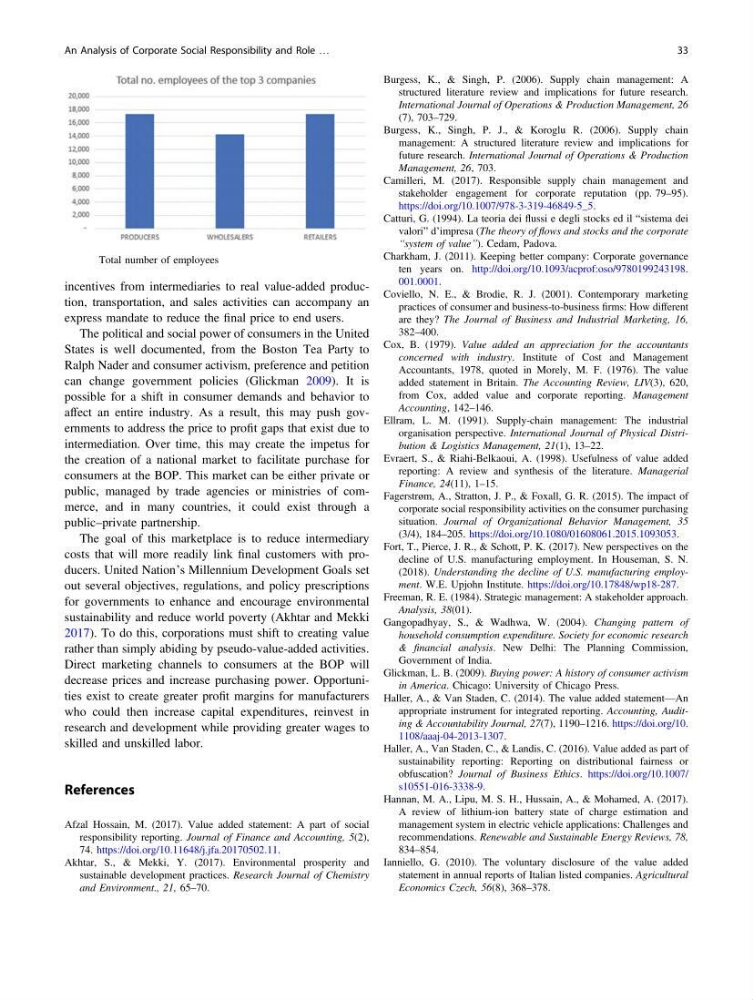
Fig. 8 Total number of employees
An Analysis of Corporate Social Responsibility and Role …
33
express mandate to reduce the final price to end users.
The political and social power of consumers in the United
States is well documented, from the Boston Tea Party to
Ralph Nader and consumer activism, preference and petition
can change government policies (Glickman 2009). It is
possible for a shift in consumer demands and behavior to
affect an entire industry. As a result, this may push governments to address the price to profit gaps that exist due to
intermediation. Over time, this may create the impetus for
the creation of a national market to facilitate purchase for
consumers at the BOP. This market can be either private or
public, managed by trade agencies or ministries of commerce, and in many countries, it could exist through a
public–private partnership.
The goal of this marketplace is to reduce intermediary
costs that will more readily link final customers with producers. United Nation’s Millennium Development Goals set
out several objectives, regulations, and policy prescriptions
for governments to enhance and encourage environmental
sustainability and reduce world poverty (Akhtar and Mekki
2017). To do this, corporations must shift to creating value
rather than simply abiding by pseudo-value-added activities.
Direct marketing channels to consumers at the BOP will
decrease prices and increase purchasing power. Opportunities exist to create greater profit margins for manufacturers
who could then increase capital expenditures, reinvest in
research and development while providing greater wages to
skilled and unskilled labor.
References
Afzal Hossain, M. (2017). Value added statement: A part of social
responsibility reporting. Journal of Finance and Accounting, 5(2),
74. https://doi.org/10.11648/j.jfa.20170502.11.
Akhtar, S., & Mekki, Y. (2017). Environmental prosperity and
sustainable development practices. Research Journal of Chemistry
and Environment., 21, 65–70.
Burgess, K., & Singh, P. (2006). Supply chain management: A
structured literature review and implications for future research.
International Journal of Operations & Production Management, 26
(7), 703–729.
Burgess, K., Singh, P. J., & Koroglu R. (2006). Supply chain
management: A structured literature review and implications for
future research. International Journal of Operations & Production
Management, 26, 703.
Camilleri, M. (2017). Responsible supply chain management and
stakeholder engagement for corporate reputation (pp. 79–95).
https://doi.org/10.1007/978-3-319-46849-5_5.
Catturi, G. (1994). La teoria dei flussi e degli stocks ed il “sistema dei
valori” d’impresa (The theory of flows and stocks and the corporate
“system of value”). Cedam, Padova.
Charkham, J. (2011). Keeping better company: Corporate governance
ten years on. http://doi.org/10.1093/acprof:oso/9780199243198.
001.0001.
Coviello, N. E., & Brodie, R. J. (2001). Contemporary marketing
practices of consumer and business-to-business firms: How different
are they? The Journal of Business and Industrial Marketing, 16,
382–400.
Cox, B. (1979). Value added an appreciation for the accountants
concerned with industry. Institute of Cost and Management
Accountants, 1978, quoted in Morely, M. F. (1976). The value
added statement in Britain. The Accounting Review, LIV(3), 620,
from Cox, added value and corporate reporting. Management
Accounting, 142–146.
Ellram, L. M. (1991). Supply-chain management: The industrial
organisation perspective. International Journal of Physical Distribution & Logistics Management, 21(1), 13–22.
Evraert, S., & Riahi-Belkaoui, A. (1998). Usefulness of value added
reporting: A review and synthesis of the literature. Managerial
Finance, 24(11), 1–15.
Fagerstrøm, A., Stratton, J. P., & Foxall, G. R. (2015). The impact of
corporate social responsibility activities on the consumer purchasing
situation. Journal of Organizational Behavior Management, 35
(3/4), 184–205. https://doi.org/10.1080/01608061.2015.1093053.
Fort, T., Pierce, J. R., & Schott, P. K. (2017). New perspectives on the
decline of U.S. manufacturing employment. In Houseman, S. N.
(2018). Understanding the decline of U.S. manufacturing employment. W.E. Upjohn Institute. https://doi.org/10.17848/wp18-287.
Freeman, R. E. (1984). Strategic management: A stakeholder approach.
Analysis, 38(01).
Gangopadhyay, S., & Wadhwa, W. (2004). Changing pattern of
household consumption expenditure. Society for economic research
& financial analysis. New Delhi: The Planning Commission,
Government of India.
Glickman, L. B. (2009). Buying power: A history of consumer activism
in America. Chicago: University of Chicago Press.
Haller, A., & Van Staden, C. (2014). The value added statement—An
appropriate instrument for integrated reporting. Accounting, Auditing & Accountability Journal, 27(7), 1190–1216. https://doi.org/10.
1108/aaaj-04-2013-1307.
Haller, A., Van Staden, C., & Landis, C. (2016). Value added as part of
sustainability reporting: Reporting on distributional fairness or
obfuscation? Journal of Business Ethics. https://doi.org/10.1007/
s10551-016-3338-9.
Hannan, M. A., Lipu, M. S. H., Hussain, A., & Mohamed, A. (2017).
A review of lithium-ion battery state of charge estimation and
management system in electric vehicle applications: Challenges and
recommendations. Renewable and Sustainable Energy Reviews, 78,
834–854.
Ianniello, G. (2010). The voluntary disclosure of the value added
statement in annual reports of Italian listed companies. Agricultural
Economics Czech, 56(8), 368–378.
Fig. 8 Total number of employees
An Analysis of Corporate Social Responsibility and Role …
33