

system, in other words, the impact of one variable on the
other and vice versa. Considering the main objective of the
current study and the results from the previous research, as
well as to find the reciprocal relationship between education
and sustainable development, the simultaneous equation
approach was used. It represents a system of two equations
that is used to measure the impact of education on the sustainable development in UAE during the period 1990–2017.
The system is solved using two-stage regression analysis.
The results of the system analysis are presented in Table 1.
Table 1 shows that both the education variable and
development variable, measured by the human development
index (HDI), have a significant impact on each other. That is,
education increases the level of the development measured
as HDI, which represents the level of health services, education, income, and life level in any country in general, and
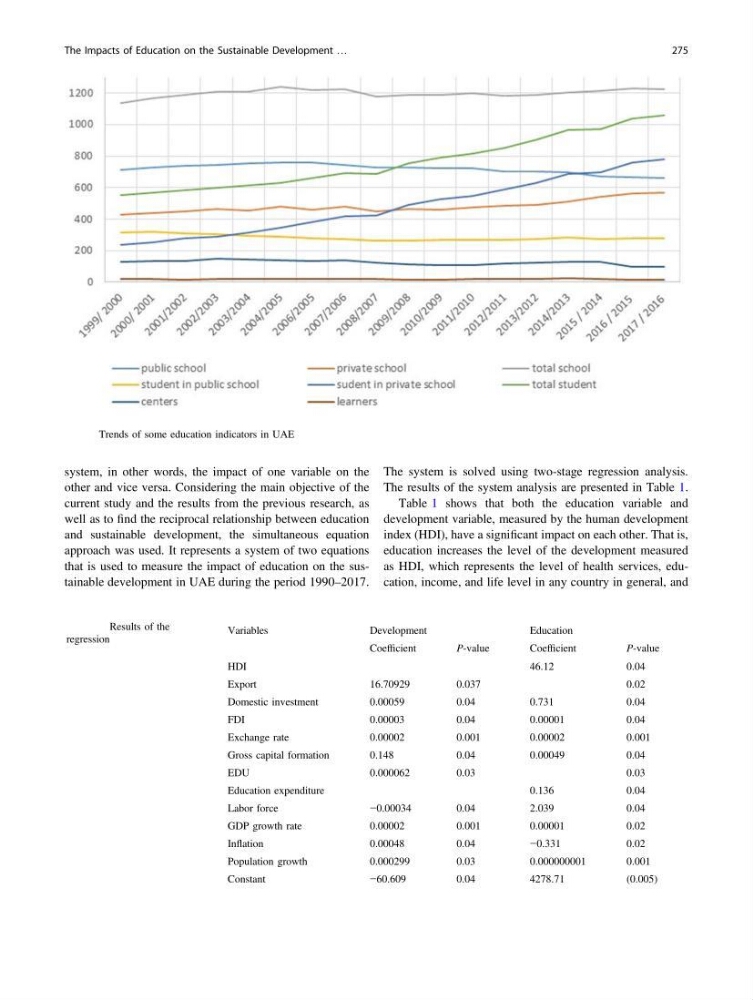
Fig. 1 Trends of some education indicators in UAE
Table 1 Results of the
regression
Variables
Development
Education
Coefficient
P-value
Coefficient
P-value
HDI
46.12
0.04
Export
16.70929
0.037
0.02
Domestic investment
0.00059
0.04
0.731
0.04
FDI
0.00003
0.04
0.00001
0.04
Exchange rate
0.00002
0.001
0.00002
0.001
Gross capital formation
0.148
0.04
0.00049
0.04
EDU
0.000062
0.03
0.03
Education expenditure
0.136
0.04
Labor force
−0.00034
0.04
2.039
0.04
GDP growth rate
0.00002
0.001
0.00001
0.02
Inflation
0.00048
0.04
−0.331
0.02
Population growth
0.000299
0.03
0.000000001
0.001
Constant
−60.609
0.04
4278.71
(0.005)
The Impacts of Education on the Sustainable Development …
275
other and vice versa. Considering the main objective of the
current study and the results from the previous research, as
well as to find the reciprocal relationship between education
and sustainable development, the simultaneous equation
approach was used. It represents a system of two equations
that is used to measure the impact of education on the sustainable development in UAE during the period 1990–2017.
The system is solved using two-stage regression analysis.
The results of the system analysis are presented in Table 1.
Table 1 shows that both the education variable and
development variable, measured by the human development
index (HDI), have a significant impact on each other. That is,
education increases the level of the development measured
as HDI, which represents the level of health services, education, income, and life level in any country in general, and
Fig. 1 Trends of some education indicators in UAE
Table 1 Results of the
regression
Variables
Development
Education
Coefficient
P-value
Coefficient
P-value
HDI
46.12
0.04
Export
16.70929
0.037
0.02
Domestic investment
0.00059
0.04
0.731
0.04
FDI
0.00003
0.04
0.00001
0.04
Exchange rate
0.00002
0.001
0.00002
0.001
Gross capital formation
0.148
0.04
0.00049
0.04
EDU
0.000062
0.03
0.03
Education expenditure
0.136
0.04
Labor force
−0.00034
0.04
2.039
0.04
GDP growth rate
0.00002
0.001
0.00001
0.02
Inflation
0.00048
0.04
−0.331
0.02
Population growth
0.000299
0.03
0.000000001
0.001
Constant
−60.609
0.04
4278.71
(0.005)
The Impacts of Education on the Sustainable Development …
275